
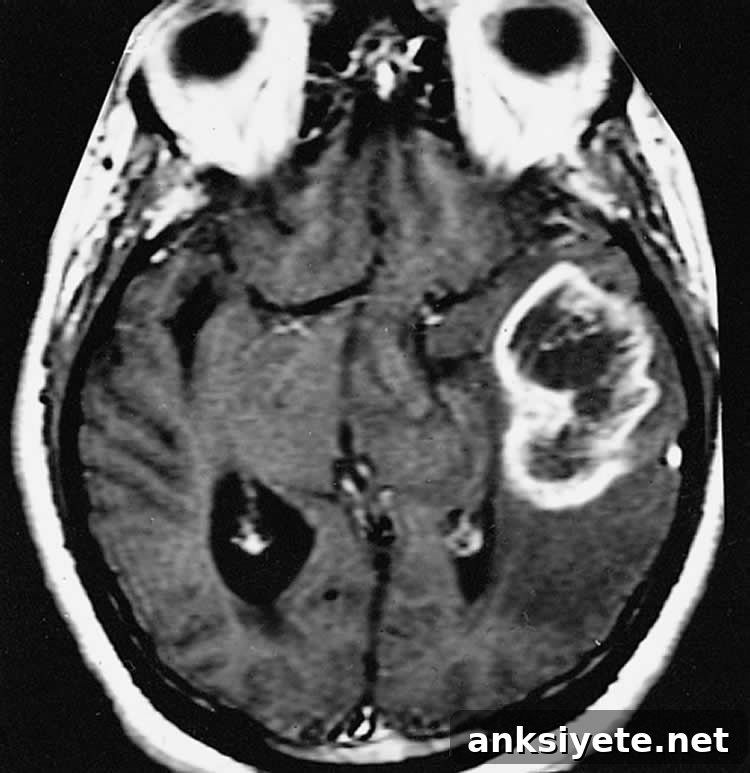
Researchers at the University of California, San Diego School of Medicine have identified an epigenetic mechanism that helps explain why a subset of glioblastomas – the most common and aggressive primary brain tumor – resist targeted drug therapy. The findings were published as a priority report in the journal Oncotarget.
According to Clark C. Chen, MD, PhD, vice-chairman of Research and Academic Development in the UC San Diego Division of Neurosurgery and the study’s lead investigator, tumor DNA sequence alone does not fully determine a glioblastoma’s sensitivity to therapy. Instead, how the tumor’s DNA is organized and interpreted by the cell — its epigenetic state — can have a decisive effect on drug response.
The research team applied comparative gene signature analysis to expression profiles from roughly 900 glioblastoma patients. This analytic approach determines whether specific cellular programs are active or repressed in a tumor. Using these comparisons, the investigators were able to classify glioblastomas according to the dominant cellular processes driving tumor growth rather than by DNA mutations alone. Jie Li, PhD, senior postdoctoral researcher at UC San Diego’s Center for Theoretical and Applied Neuro-Oncology and co–first author of the paper, explained that these classifications reveal biologically meaningful subgroups of glioblastoma with distinct therapeutic vulnerabilities.
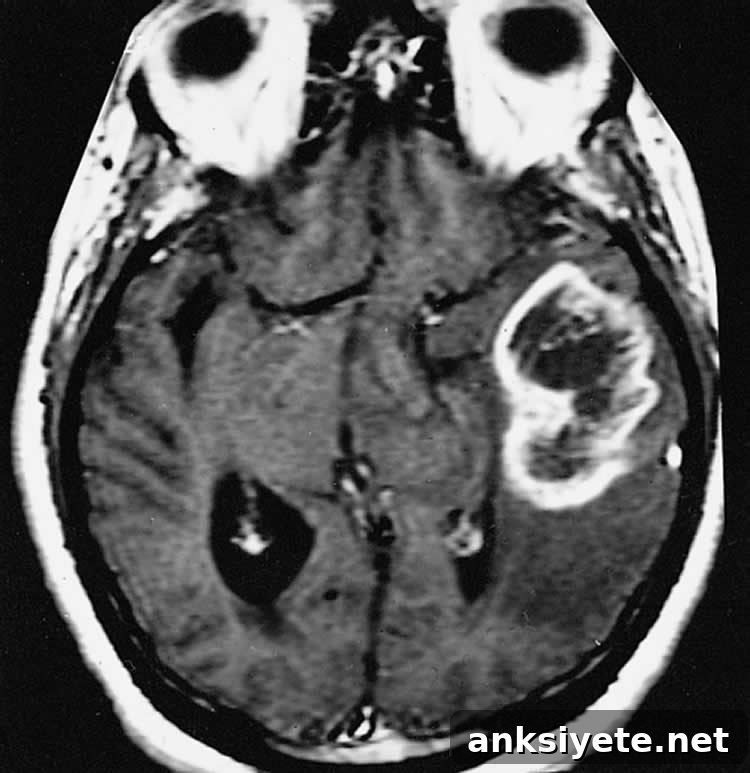
One key cellular program the team investigated was signaling through the Epidermal Growth Factor Receptor (EGFR). They found that in a subgroup of tumors characterized by the CpG Island Methylator Phenotype (G-CIMP+), EGFR signaling is epigenetically suppressed. Crucially, this downregulation is not caused by changes to the EGFR DNA sequence or by common activating mutations. Rather, EGFR is silenced through epigenetic modifications that alter how the gene is read by the cell. As a result, G-CIMP+ glioblastomas do not respond to drugs that target EGFR signaling in the way EGFR-active tumors do, helping to explain clinical drug resistance in these cases.
Zachary J. Taich, co–first author, emphasized the clinical implication: selecting the most effective therapy for glioblastoma patients will require integrating both genetic and epigenetic information from the tumor, not relying on DNA sequencing alone.
Study contributors and support
The paper’s co-authors include Amit Goyal, David Gonda, Johnny Akers, Bandita Adhikari, Kunal Patel and Bob S. Carter (Center for Theoretic and Applied Neuro-Oncology, UC San Diego); Scott Vandenberg (Department of Pathology, UC San Diego); Wei Yan, Zhaoshi Bao and Tao Jiang (Department of Neurosurgery, UC San Diego); Renzhi Wang (Peking Union Medical College Hospital, China); and Ying Mao (Huashan Hospital, Shanghai Medical College, Fudan University, China).
Funding for the research was provided in part by the Sontag Foundation, the Burroughs Wellcome Foundation, the Kimmel Foundation, the Doris Duke Foundation and the Forbeck Foundation.
Contact: Scott LaFee – UCSD
Source: UCSD press release
Image source: The Armed Forces Institute of Pathology (public domain)
Original research: “Epigenetic suppression of EGFR signaling in G-CIMP+ glioblastomas,” Oncotarget. Authors: Jie Li, Zachary J. Taich, Amit Goyal, David Gonda, Johnny Akers, Bandita Adhikari, Kunal Patel, Scott Vandenberg, Wei Yan, Zhaoshi Bao, Bob S. Carter, Renzhi Wang, Ying Mao, Tao Jiang, and Clark C. Chen. Published online August 16, 2014.
Epigenetic suppression of EGFR signaling in G-CIMP+ glioblastomas
The molecular signaling pathways and cell states linked to the CpG Island Methylator Phenotype (G-CIMP) in glioblastoma were investigated using published mRNA signatures of EGFR activation. Across three independent datasets — the Chinese Glioma Genome Atlas (CGGA; n = 155), the REMBRANDT dataset (n = 288), and The Cancer Genome Atlas (TCGA; n = 406) — G-CIMP+ tumors consistently exhibited reduced EGFR signaling. An independent series of 25 fresh-frozen glioblastoma specimens corroborated these results, showing significantly lower levels of phosphorylated ERK (pERK) in G-CIMP+ tumors (p < 0.001), indicating suppressed EGFR pathway activity.
Further analysis of TCGA samples revealed that G-CIMP+ glioblastomas had decreased mRNA expression of EGFR and H-Ras. Experimentally inducing a G-CIMP+ state by introducing the mutant isocitrate dehydrogenase 1 (IDH1-R132H) into glioblastoma models reduced EGFR and H-Ras protein levels and lowered pERK accumulation. These changes were associated with increased repressive histone marks, H3K9me3 and H3K27me3, at the EGFR and H-Ras promoter regions, consistent with epigenetic silencing.
The investigators demonstrated that pERK suppression caused by IDH1-R132H expression could be reversed by expressing a constitutively active H-Ras (H-RasG12V). Functionally, a G-CIMP+ Ink4a-Arf-/- EGFRvIII glioblastoma cell line showed greater resistance to the EGFR inhibitor Gefitinib compared with its isogenic G-CIMP- counterpart. Together, these data indicate that the G-CIMP epigenetic program downregulates EGFR signaling and may serve as a predictive biomarker for the efficacy of EGFR-targeted therapies in glioblastoma patients.
“Epigenetic suppression of EGFR signaling in G-CIMP+ glioblastomas,” Oncotarget, August 16, 2014. Authors: Jie Li et al.