
Summary: Brain activity in the frontoparietal network during memory tasks reveals individual differences in working memory among children, showing a pattern of activation specific to working memory performance.
Source: SfN
A child’s distinctive brain activity predicts the strength of their working memory, according to a study published in the Journal of Neuroscience.
Working memory is the cognitive ability that lets you hold and manipulate information briefly—like remembering a phone number just long enough to enter it. This capacity depends on coordinated activity within the frontoparietal network, a set of brain regions often described as a cognition core. Because working memory changes as children develop and differs between individuals, researchers asked whether patterns of brain activity could reliably indicate a child’s working memory ability.
To address this question, Rosenberg and colleagues analyzed functional MRI (fMRI) data from the Adolescent Brain Cognitive Development (ABCD) study, a large longitudinal dataset that includes scans and behavioral assessments from more than 11,000 children aged nine and ten. The ABCD dataset allows researchers to link individual cognitive performance to brain activation patterns at a large scale and to follow those relationships over time.
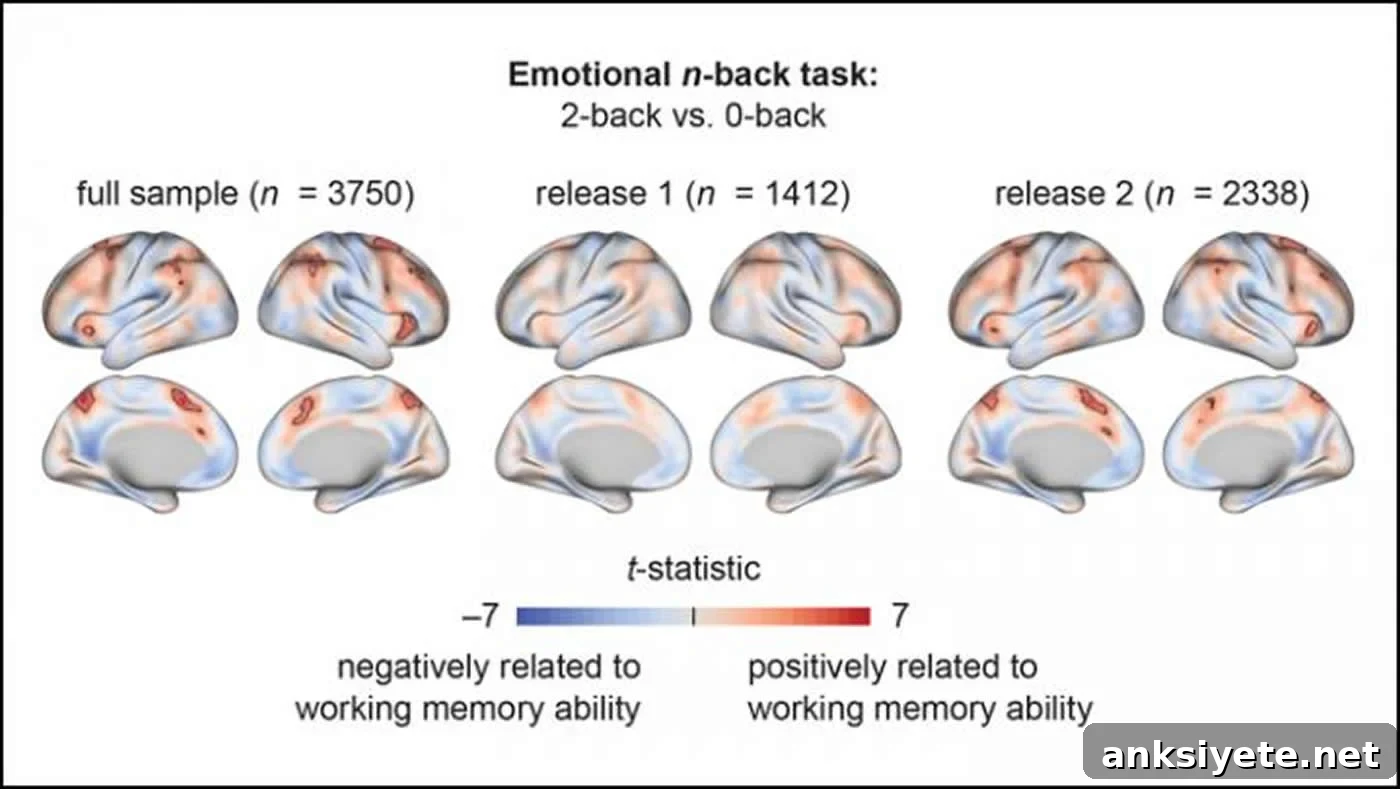
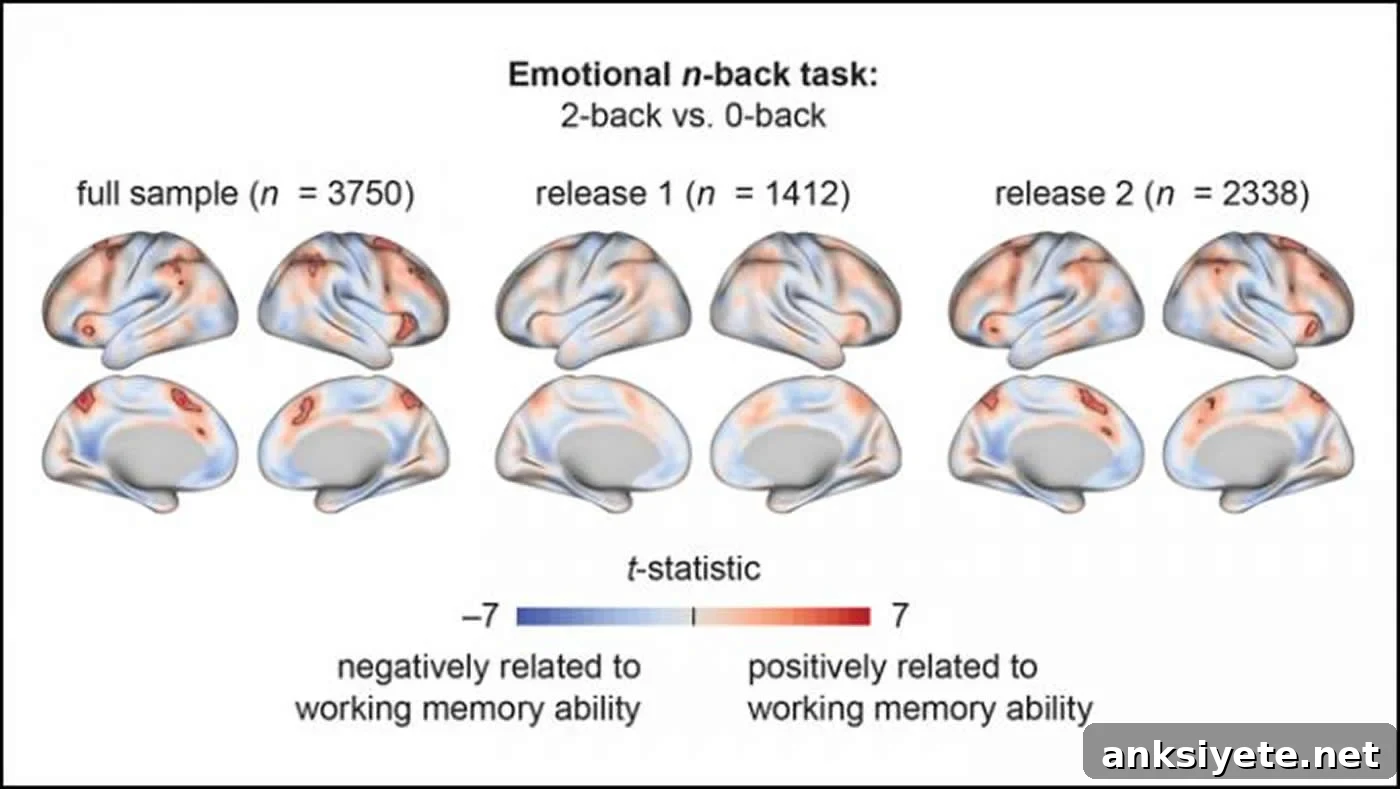
The study found that children with stronger working memory performed better across a range of cognitive tests, including measures of language, short-term memory, and fluid intelligence. Crucially, frontoparietal activation measured during a memory challenge—the emotional n-back task—tracked individual differences in working memory performance. This neural signature appeared specific to working memory: activity linked to emotion processing on the same task, inhibitory control during a stop-signal task, and reward-related activation during a monetary incentive delay task did not correlate with memory abilities.
Because the ABCD study will reassess participants across a 10-year period, these findings create a foundation for future research that can map how the neural signature of working memory changes across adolescence and how early brain patterns relate to later academic and real-world outcomes.
About this neuroscience research article
Source:
SfN
Media Contacts:
Calli McMurray – SfN
Image Source:
Image credited to Rosenberg et al., Journal of Neuroscience (2020).
Original Research: Closed access
“Behavioral and Neural Signatures of Working Memory in Childhood” by Monica D. Rosenberg, Steven A. Martinez, Kristina M. Rapuano, May I. Conley, Alexandra O. Cohen, M. Daniela Cornejo, Donald J. Hagler Jr., Wesley J. Meredith, Kevin M. Anderson, Tor D. Wager, Eric Feczko, Eric Earl, Damien A. Fair, Deanna M. Barch, Richard Watts and BJ Casey. Journal of Neuroscience. DOI: 10.1523/JNEUROSCI.2841-19.2020
Abstract
Behavioral and Neural Signatures of Working Memory in Childhood
Working memory changes throughout development and varies among individuals, but the behavioral and neural patterns that reflect those individual differences in childhood are not fully understood. Using data from over 11,500 nine- to eleven-year-old children enrolled in the Adolescent Brain Cognitive Development study, this research links working memory performance with other cognitive abilities and with fMRI activation during tasks that engage memory processes. Behavioral analyses show strong relationships between working memory, short-term memory, language skills, and fluid intelligence. When comparing out-of-scanner working memory scores with brain activation during an emotional n-back task, activity in the frontoparietal network specifically during the working memory challenge corresponded to individual differences in memory performance. That relationship was domain-specific: brain activation associated with emotion processing, inhibitory control, or reward processing during their respective tasks did not track working memory ability. Together, these results clarify how behavioral and neural markers jointly inform our understanding of individual differences in working memory during late childhood.
Significance statement
Working memory is a core cognitive skill that develops with age and varies across individuals. By analyzing a very large sample of nine- to eleven-year-olds, this study establishes clear links between working memory, broader cognitive abilities, and frontoparietal brain activation during a working memory challenge. The findings provide a robust starting point for longitudinal studies that will track how working memory and its neural correlates evolve through adolescence and how they predict educational attainment and other real-world outcomes.
Feel free to share this neuroscience news.