
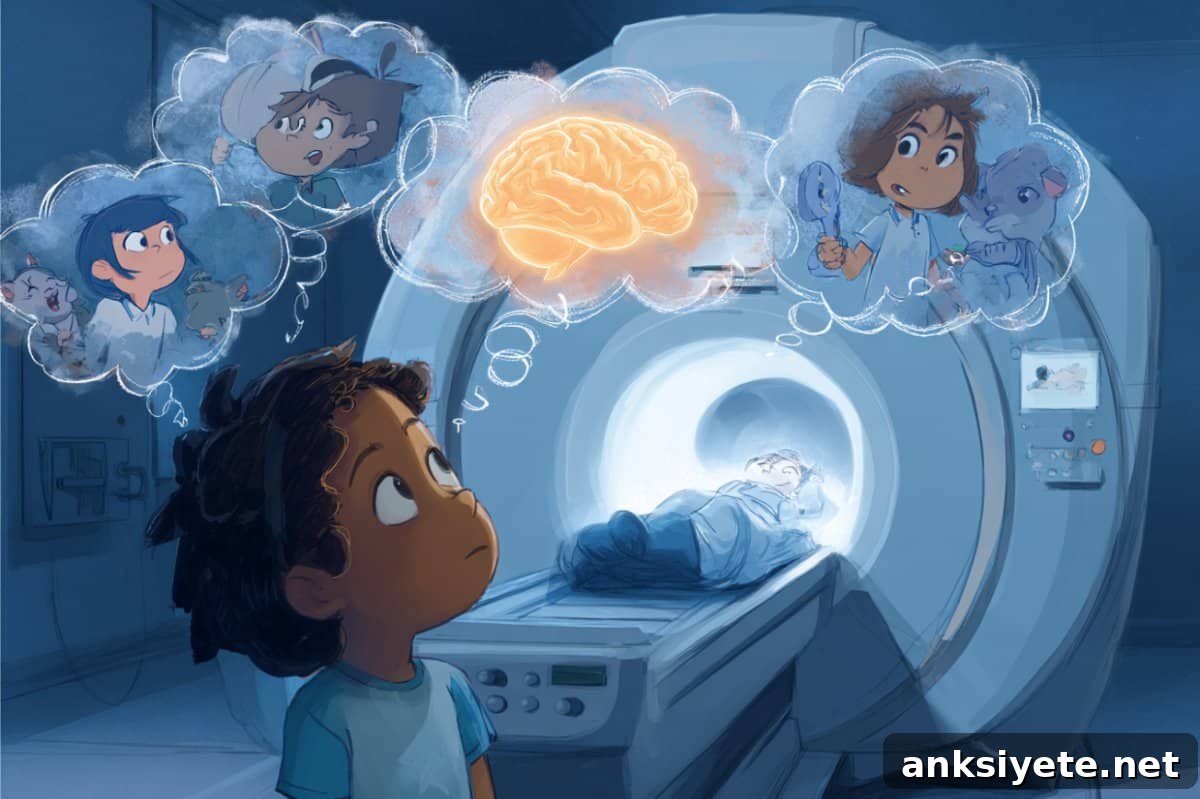
Summary: Understanding what others believe—even when those beliefs are false—is a cornerstone of human social interaction. This ability, often called Theory of Mind (ToM), typically begins to appear between ages three and five. A recent study examined children’s brain activity during movie-watching in an MRI scanner to uncover neural foundations of ToM and how they develop in early childhood.
The researchers report that the cerebellum—traditionally associated with motor control—plays a central role in early social cognition. In young children, this brain region appears to drive information toward the cerebral cortex, effectively scaffolding the later cortical processes that underlie mental-state reasoning, empathy, and successful interpersonal communication.
Key Facts:
- Cerebellar role: The cerebellum contributes to establishing Theory of Mind by supporting early social-cognitive processing.
- Developmental shift: In children, signaling flows from the cerebellum to the cortex, reversing the direction typically seen in adults.
- Clinical relevance: Early cerebellar injury may be linked to persistent social difficulties observed in neurodevelopmental and psychiatric conditions.
Source: Max Planck Society
“We can’t directly see other people’s thoughts, so we must infer them. This capacity is crucial for human communication: it creates shared meaning and helps us choose words that others will understand,” the authors explain, emphasizing that this form of mental empathy emerges in early childhood.
A major developmental milestone for Theory of Mind occurs between three and five years of age. During this period, many children begin to succeed on classic false-belief tasks—tests that measure whether a child can recognize that another person may hold a belief that is untrue. Passing these tasks is widely considered evidence that a child has begun to form representations of others’ mental states.
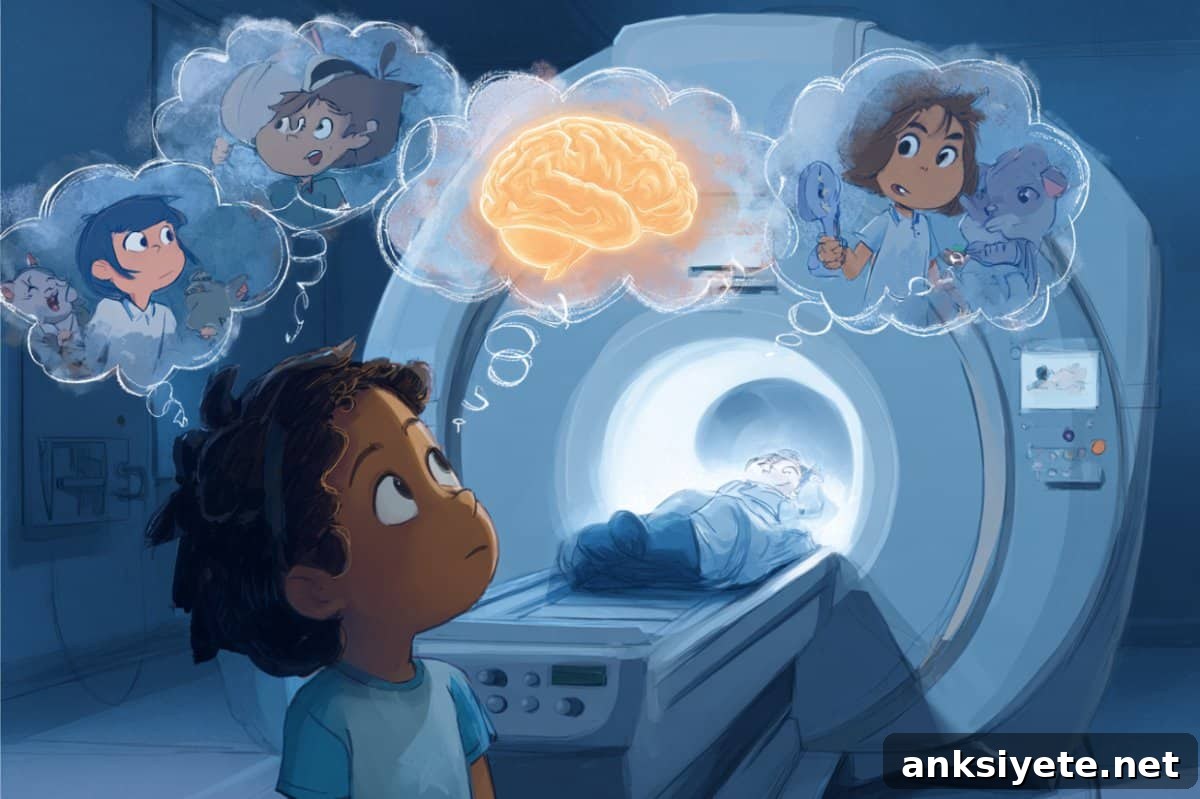
To investigate how social cognition develops during this critical window, researchers at the Max Planck Institute for Human Cognitive and Brain Sciences analyzed functional MRI data collected while children watched naturalistic movie scenes in the scanner. The dataset included 41 children ranging from three to twelve years of age.
“Our first goal was to locate cerebellar regions that are engaged during Theory of Mind processing in developing brains, independent of individual performance on ToM tests,” says Aikaterina Manoli, the study’s first author. “Watching movie clips in the scanner revealed robust cerebellar involvement—specifically in Crus I and II—areas increasingly recognized for roles beyond motor control, including language and higher cognition.”
Neurodevelopmental and psychiatric implications
The study’s findings have potential clinical relevance. Pediatric research shows that early cerebellar injury can lead to long-lasting changes in social behavior. Such outcomes are frequently observed in neurodevelopmental and psychiatric disorders, including autism spectrum disorder and schizophrenia.
Manoli and colleagues note that cerebellar damage in early life is harder to recover from than similar damage in adulthood. Their analysis suggests a developmental reversal in connectivity: in children, the cerebellum sends more information to cerebral cortical regions involved in ToM, whereas in adults the cortex more strongly drives cerebellar activity. This inverted loop implies that the cerebellum may help establish the cortical networks that later support mature mental-state reasoning.
“Our results indicate a meaningful association between early cerebellar function and the emergence of Theory of Mind,” says Sofie Valk, who shares last authorship with Charlotte Grosse Wiesmann. “The cerebellum appears to store and transmit information that supports later prediction of mental states.”
The authors also highlight how their results align with previous evidence linking socio-cognitive deficits in autism to structural and functional cerebellar differences. They suggest further investigation into cerebellar activation in younger children and infants, noting that while verbal false-belief reasoning typically appears between ages three and five, nonverbal indicators of sensitivity to others’ mental states can be observed in infants under two. Future studies should determine how different brain regions contribute to these early, nonverbal social abilities.
About this neuroscience and empathy research news
Author: Aikaterina Manoli
Source: Max Planck Society
Contact: Aikaterina Manoli – Max Planck Society
Image: The image is credited to Neuroscience News
Original Research: Open access.
Title: “Functional recruitment and connectivity of the cerebellum is associated with the emergence of Theory of Mind in early childhood” by Aikaterina Manoli et al., published in Nature Communications.
Abstract
Functional recruitment and connectivity of the cerebellum is associated with the emergence of Theory of Mind in early childhood
Accumulating evidence implicates the human cerebellum in adult social cognition, but its role in the development of Theory of Mind has remained unclear. Using openly available functional MRI data from children with emerging ToM abilities (N = 41, ages 3–12) and adults (N = 78), the study demonstrates that children who pass a false-belief assessment activate cerebellar Crus I–II in response to ToM events during a movie-watching task, mirroring patterns seen in adults.
This cerebellar activation is not significant in children who did not pass the ToM assessment. Functional connectivity between cerebellar and cerebral ToM regions differs according to children’s ToM abilities. Importantly, task-driven connectivity shifts from predominantly cerebellum-to-cortex connections in childhood to cortex-to-cerebellum links in adulthood. The greater reliance on cerebellar-driven connections early in life suggests that the cerebellum plays an essential role in establishing the cognitive architecture for Theory of Mind and the healthy development of social cognition.