
Summary: Researchers at the University of Oregon report that writing online journals focused on gratitude increases altruistic behavior and alters reward-related brain activity.
Source: University of Oregon
Gratitude Journaling Boosts Altruism and Changes Brain Reward Signals
New research from the University of Oregon shows that a simple daily habit—writing about gratitude—can increase altruistic motivations and produce measurable changes in brain activity. The study, published in Frontiers in Human Neuroscience, combined psychological questionnaires with functional MRI (fMRI) to test whether a brief gratitude-journaling intervention could enhance neural markers of pure altruism.
Study design and participants
The study recruited 33 young adult women, ages 18 to 27, to reduce variance related to gender for this initial test. Before any intervention, participants completed questionnaires assessing traits such as gratitude and altruism and then underwent fMRI scanning. During the scans they watched a series of monetary transactions in which money was either donated to a local food bank or routed to themselves. This allowed researchers to measure neural responses when participants observed benefits given to others versus benefits given to themselves.
Baseline findings: gratitude linked to reward responses for others
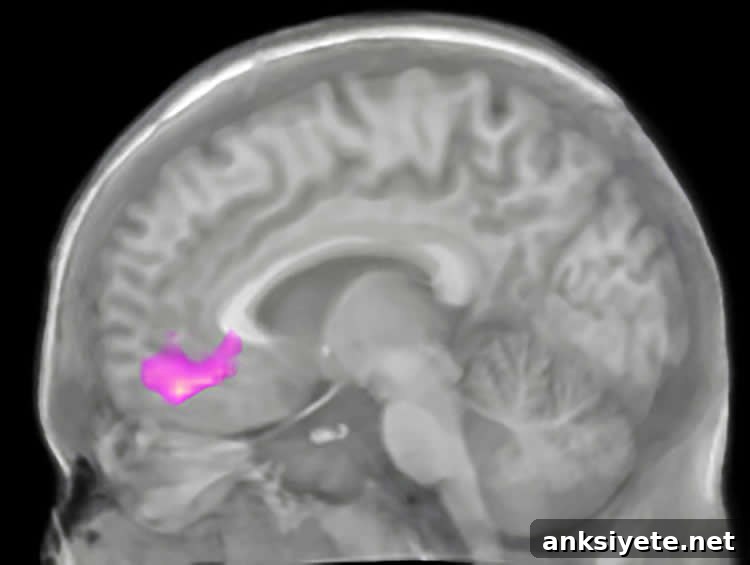
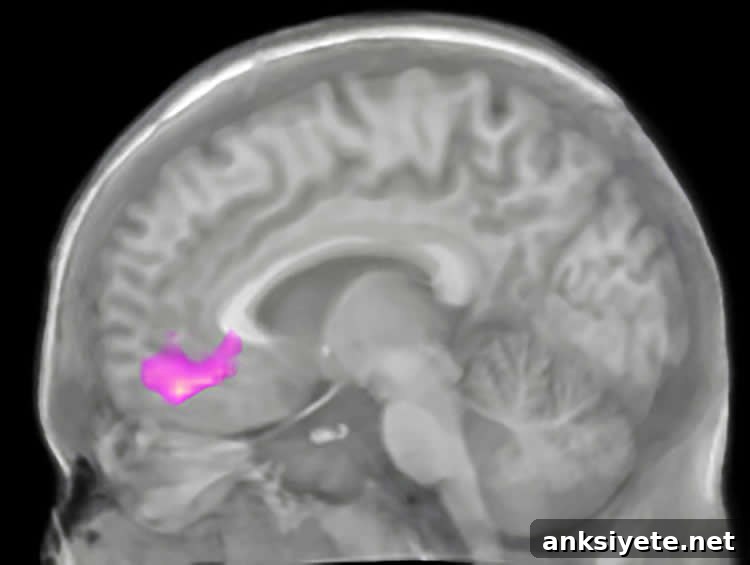
At the first MRI session, people who reported higher trait gratitude and altruism showed stronger reward-related brain responses when the charity received money than when they saw money routed to themselves. Functional MRI results highlighted activity in the ventromedial prefrontal cortex (VMPFC), a region previously associated with valuation and altruistic behavior, as well as involvement of other reward-sensitive areas.
The journaling intervention
After initial assessment, participants were randomly assigned to one of two groups for a three-week writing intervention. Sixteen women completed an online journal with daily prompts that specifically encouraged reflection on feelings of gratitude. The remaining 17 participants completed an active control journal with neutral daily prompts not focused on gratitude. Three weeks later, all participants repeated the questionnaires and the fMRI session that involved viewing the same monetary transactions.
Changes in brain activity and behavior
Compared with the control group, the gratitude-journaling group showed a shift in VMPFC activity: the neural value signal moved toward greater activation when observing money given to the charity rather than to themselves. In other words, after three weeks of gratitude practice, neural responses indicated an increased valuation of benefits to others. The authors interpret these findings as evidence that a value-sensitive region like the VMPFC is flexible and can be modulated by intentional gratitude practice, altering the “neural currency” that underlies altruistic motivation.
Implications
These results add to a growing body of evidence that gratitude practice yields benefits beyond individual well-being. While past work has focused on emotional and physical health gains, the current study emphasizes social and moral dimensions of gratitude by demonstrating increased neural valuation of others’ welfare. The findings suggest that brief, low-cost interventions like daily gratitude journaling can shift underlying neural processes that support altruistic behavior.
Limitations and future directions
The study sample was intentionally limited to young adult women, so questions remain about generalizability to broader populations, including men and older adults. The researchers also note that longer-term follow-up is necessary to determine how durable the changes are and how often journaling must be practiced to maintain effects. Future studies with larger, more diverse samples and longer follow-up periods will be important to assess real-world behavioral outcomes and potential gender differences.
Funding and acknowledgements
The research was supported by grants to Christina M. Karns from the Expanding the Science and Practice of Gratitude Project through the Greater Good Science Center, in partnership with the University of California. Additional support came from the Lewis Center for Neuroimaging at the University of Oregon and The Templeton Religious Trust via the Institute for the Study of Human Flourishing at the University of Oklahoma.
Publication details
The study, titled “The Cultivation of Pure Altruism via Gratitude: A Functional MRI Study of Change with Gratitude Practice,” was authored by Christina M. Karns, William E. Moore III, and Ulrich Mayr and published online in Frontiers in Human Neuroscience on December 12, 2017.
Abstract (concise)
Gratitude is linked to well-being and health, but it also functions as a moral emotion that can motivate prosocial behavior. This study examined whether trait gratitude corresponds to neural indicators of pure altruism—defined as neural valuation of private, passive transfers to a charity versus to oneself—and whether such neural responses can be increased through gratitude practice. In young adult female participants, self-reported gratitude and altruism correlated with neural pure altruism in VMPFC and nucleus accumbens. In a randomized, double-blind three-week intervention, gratitude journaling increased the neural pure altruism response in VMPFC relative to a neutral journaling control, suggesting that value-sensitive cortical regions can adapt with gratitude practice to favor benefits to others.