
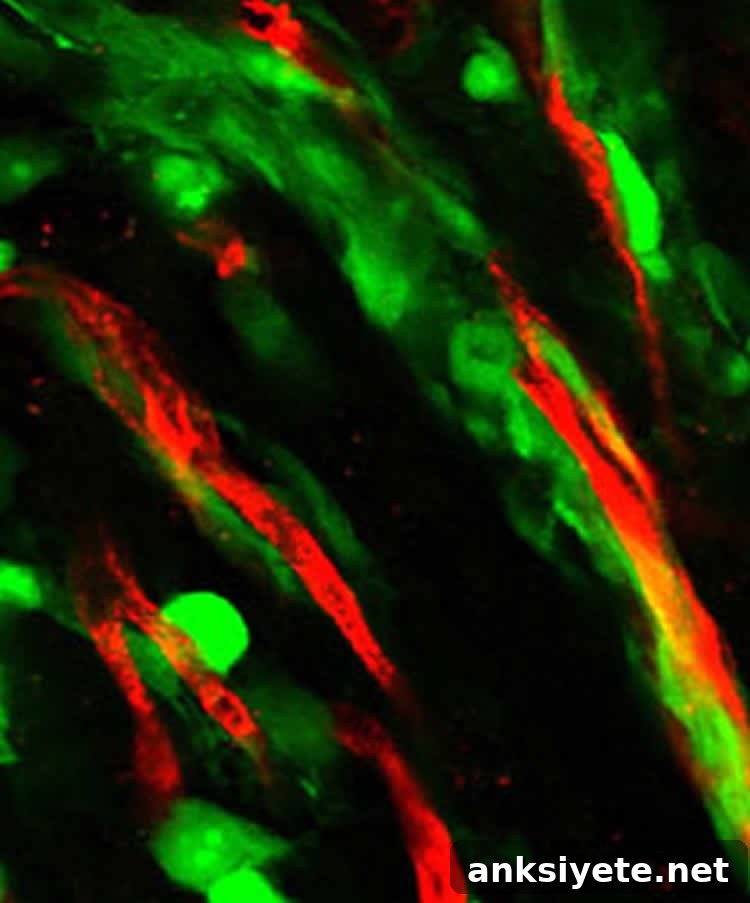
NIH-funded researchers find brain tumor cells disrupt the brain’s protective barrier, offering potential avenues for therapy.
New research in mice suggests that invading glioblastoma cells can take control of cerebral blood vessels early in disease development and weaken the brain’s protective blood-brain barrier (BBB). These findings raise the possibility that some tumor cells may be vulnerable to drugs delivered through the bloodstream earlier than previously believed, opening potential new treatment windows for this aggressive cancer. The study was published in Nature Communications and supported by the National Institute of Neurological Disorders and Stroke (NINDS), part of the National Institutes of Health (NIH).
Glioblastoma is one of the most aggressive and lethal brain cancers. Its rapid spread and resistance to many therapies are in part due to the brain’s natural defenses, which tightly regulate the movement of molecules between the blood and brain tissue. Understanding how glioblastoma cells interact with and alter these protective systems is essential to developing better treatments.
The blood-brain barrier is a complex, highly regulated interface that prevents harmful substances from entering the brain while allowing essential nutrients and signaling molecules to pass. A key structural element of the BBB is the tight junctions between endothelial cells that line cerebral blood vessels. Supporting cells, especially astrocytes, wrap blood vessels with specialized projections called endfeet. Astrocytic endfeet cover roughly 90 percent of the vessel surface and release factors that maintain tight junction integrity and control vessel diameter, thereby regulating blood flow. Together, these components form a precise, protective layer that separates the brain from the bloodstream.
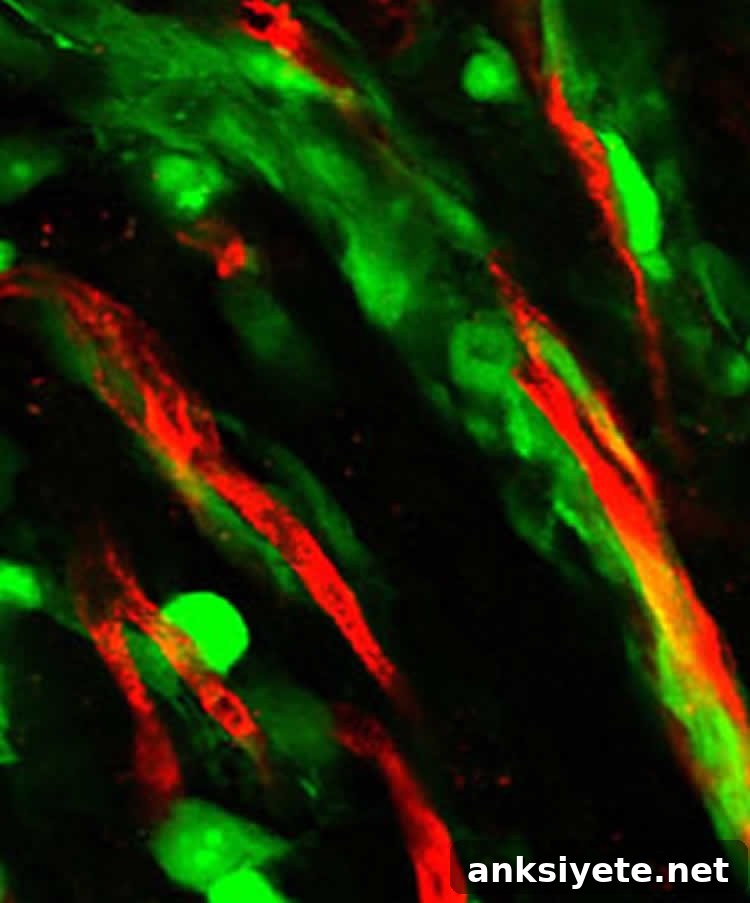
Harald Sontheimer, Ph.D., and colleagues at the University of Alabama at Birmingham examined the interactions among glioblastoma cells, astrocytes and cerebral blood vessels in mouse models. Using fluorescent tracers and advanced imaging approaches, they tracked how tumor cells migrate along the vascular network, how they position themselves relative to astrocytic endfeet, and how those interactions affect blood vessel function and barrier integrity.
The researchers found that most tumor cells located beyond the main tumor mass reside in the narrow space between the astrocytic endfeet and the outer surface of blood vessels. In other words, glioblastoma cells use the dense meshwork of small blood vessels as a scaffold to migrate through brain tissue. While moving along vessels, these cells appear to access nutrients from the blood, supporting their survival and spread.
“The vast majority of tumor cells are associated with blood vessels. These cells appear to be using the vessels as highways to travel great distances within the brain,” said Dr. Sontheimer, summarizing a central observation of the study.
Importantly, the team discovered that invading glioma cells can disrupt the normal signaling between astrocytes and blood vessels. By displacing or otherwise taking over the astrocytic control of vessel function, tumor cells reduce astrocyte-mediated regulation of vessel tone and compromise the tight junctions between endothelial cells. This weakening produces localized breakdowns in the blood-brain barrier. The researchers were surprised to find that even small clusters of tumor cells, and in some cases individual cells, were sufficient to cause early and localized BBB disruption.
“Evidence from our models suggests that early in the disease, invading tumor cells are not completely protected by the blood-brain barrier and may be more vulnerable to drugs delivered to the brain via the blood. If these findings hold true in humans, treatment with anti-invasive agents might be beneficial in newly diagnosed glioblastoma patients,” Dr. Sontheimer noted. He added that these localized breaches could allow for regionally targeted drug delivery to attack tumor cells at their earliest stages of invasion.
Jane Fountain, Ph.D., program director overseeing NINDS’ brain tumor portfolio, commented on the broader implications: “Dr. Sontheimer’s findings provide new insights into how glioblastoma cells invade the brain and manipulate blood flow to their advantage. These observations have the potential to change current therapeutic strategies for treating glioblastoma.”
While the mouse model results are promising, further research is necessary to determine how generalizable these mechanisms are in human glioblastoma and to identify the most effective ways to exploit early BBB disruption for therapy. Future studies will need to clarify the specific molecular signals glioma cells use to displace astrocytes, how these interactions alter endothelial tight junctions, and which pharmaceutical approaches could safely and selectively target invading cells without harming normal brain function.
This work was supported by grants from NINDS (NS036692, NS031234, NS074597, NS082851, NS57098, and NS047466).
Source: Barbara McMakin – NIH/NINDS
Contact: NIH/NINDS press release
Image Source: Sontheimer Lab, University of Alabama at Birmingham; image adapted from the NIH/NINDS press release
Original Research: Stacey Watkins, Stefanie Robel, Ian F. Kimbrough, Stephanie M. Robert, Graham Ellis-Davies and Harald Sontheimer, “Disruption of astrocyte–vascular coupling and the blood–brain barrier by invading glioma cells,” Nature Communications. Published online June 19, 2014; DOI: 10.1038/ncomms5196.