
Summary: Researchers found that children and adolescents with autism spectrum conditions (ASC) are less accurate at recognizing basic emotions from facial expressions, but they tend to make the same kinds of mistakes as their peers without ASC.
Study from the University of Bristol examines how well young people with autism recognize facial emotions
Researchers at the University of Bristol report that young people with autism spectrum conditions (ASC) have measurable difficulty identifying basic facial expressions. Published in the Journal of Autism and Developmental Disorders, this study is one of the larger investigations into emotion recognition in children and adolescents with ASC, and it explored how expression intensity affects recognition.
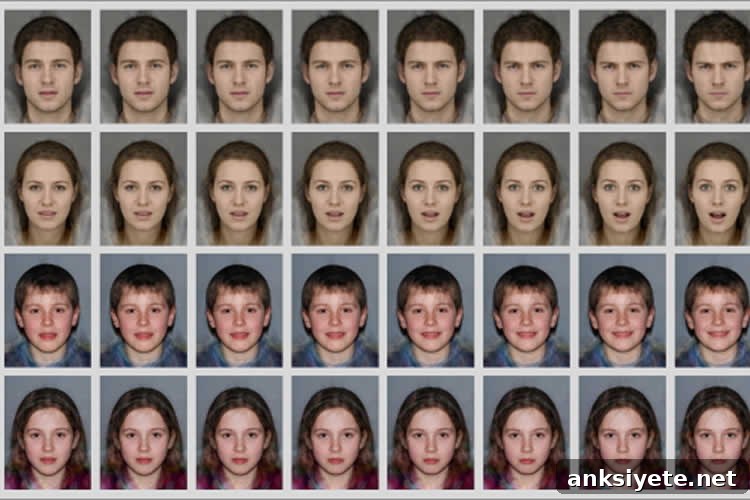
The research team from Bristol’s School of Experimental Psychology tested 63 children and adolescents with an ASC diagnosis and 64 age-matched peers without ASC, all between 6 and 16 years old. Participants completed an online emotion-recognition task in which they viewed images showing six basic emotions — happy, sad, surprised, disgusted, scared, and angry — and selected the label that best matched each expression. Faces were presented at varying intensity levels: some images showed high-intensity, exaggerated expressions that are easier to identify, while others showed low-intensity, subtler expressions that more closely resemble everyday social cues. The study also measured participants’ language and non-verbal reasoning skills to check whether these factors explained differences in emotion recognition.
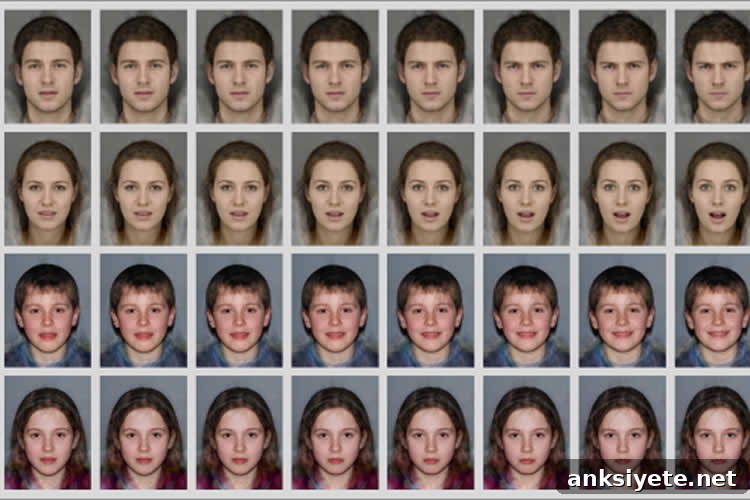
Overall, the study found that participants with ASC were less accurate than controls at labeling facial expressions across intensity levels. Importantly, the pattern of errors was similar across both groups: for example, many young people in both the ASC and non-ASC groups confused fear with surprise, and frequently mixed up disgust and anger. These shared patterns suggest that although accuracy differed, the types of mistaken judgments made by young people with ASC resembled those made by their peers.
One notable result was that group differences were most apparent for the clearest, high-intensity expressions. The authors suggest this may reflect a floor effect for the subtler, low-intensity expressions: many participants without ASC also struggled to identify low-intensity expressions, reducing the observable gap between groups at those levels.
Sarah Griffiths, who conducted the study as part of her PhD at the University of Bristol and is now at the University of Cambridge’s Autism Research Centre, commented that previous research has produced mixed results about whether people with autism show reduced accuracy in emotion recognition. By using an online platform to reach a larger sample, this study provides clearer evidence that, on average, young people with ASC are somewhat less accurate at recognizing emotions from faces.
Professor Chris Jarrold, Professor of Cognitive Development in Bristol’s School of Experimental Psychology, said the findings offer additional evidence that people with ASC can have difficulty recognizing basic emotions from facial expressions. He added that for those who find emotion recognition challenging, targeted teaching of facial emotion cues could help them navigate social interactions more effectively.
To support skills development, the research team developed an educational iPad app called “About Face,” which includes both high- and low-intensity expressions similar to those used in the study so that difficulty can be adapted to a user’s level. The app was designed for use by people with and without ASC.
Funding and publication details
The work was funded by a University of Bristol Science Faculty PhD Scholarship and the MRC-IEU. The full research article, titled “Impaired Recognition of Basic Emotions from Facial Expressions in Young People with Autism Spectrum Disorder: Assessing the Importance of Expression Intensity,” reports the study methods, analyses, and findings in detail and appears in the Journal of Autism and Developmental Disorders. The study measured recognition accuracy of six basic facial expressions at multiple intensity levels and found an overall impairment in the ASC group that was not limited to low-intensity expressions.
World Autism Awareness Day is observed annually on April 2. This research contributes to understanding social perception differences in autism and highlights approaches for supporting emotion-recognition skills in young people.