
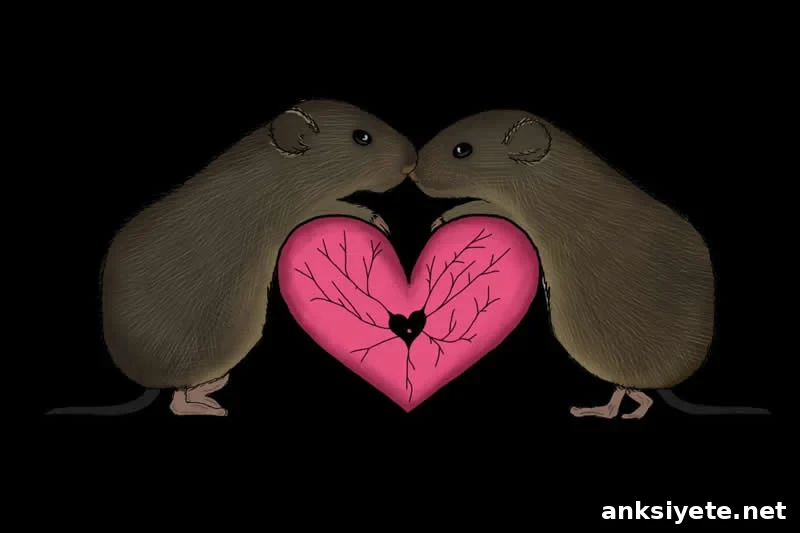
Summary: A new neuroimaging study identifies a specific neural ensemble that activates when monogamous animals run to reunite with their mate. The discovery sheds light on the brain mechanisms that drive long-term pair bonding and could guide future treatments for social behavior disorders. It may also help explain why enforced separation feels so difficult.
Source: University of Colorado at Boulder
New brain imaging research suggests that the drive to reunite with a partner—our longing to be together—may play a crucial role in forming and maintaining lasting bonds, perhaps even more so than how we behave when we are physically together. The study appears in the Proceedings of the National Academy of Sciences.
“To sustain a relationship over time, there must be a motivation to seek out the other person when you are apart,” said Zoe Donaldson, lead author and assistant professor of behavioral neuroscience at the University of Colorado Boulder. “This study is the first to identify a likely neural basis for that motivation to reunite.”
Donaldson and colleagues studied prairie voles, a species known for monogamous pair bonding—one of only a few mammalian species, including humans, that commonly form long-term partnerships. By combining behavioral observation with in vivo calcium imaging and miniature cameras, the team tracked brain activity in these animals as they first met, after three days of mating, and again after twenty days of cohabitation. They also recorded responses when voles encountered unfamiliar conspecifics.
Previous human neuroimaging has highlighted the nucleus accumbens—part of the brain’s reward circuitry—as active during moments of closeness with a romantic partner. Given that prior work, the researchers expected to see clear differences in accumbens activity when voles interacted with their mate versus a stranger. Instead, they found that the overall activity in the nucleus accumbens while animals were together did not differ substantially between partner and stranger.
What did distinguish partners from strangers was activity that occurred when an animal was apart and then approached the other. During those reunion approaches, a distinct cluster of neurons in the nucleus accumbens reliably became active. The size and prominence of this “partner approach ensemble” grew as the pair bond strengthened over time. By contrast, a different set of neurons activated when the vole approached a novel animal.
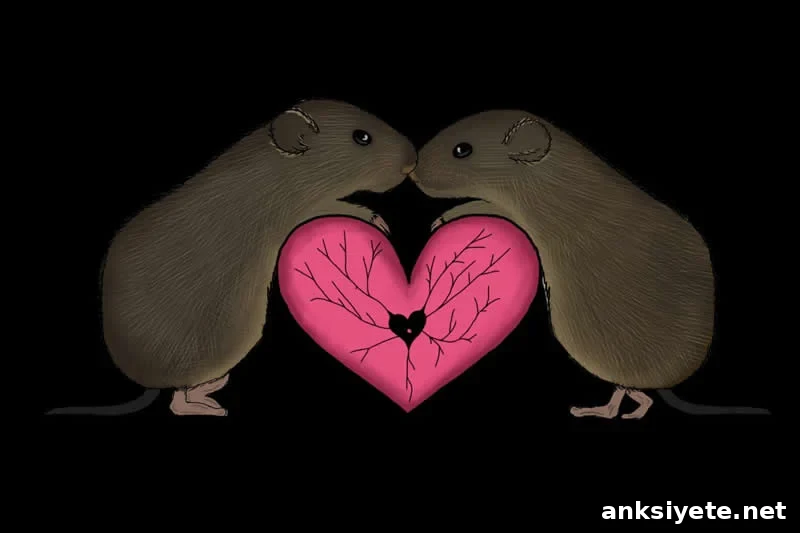
“This pattern suggests that recruiting a specific population of neurons to drive partner-approach behavior may be important for forming and maintaining a bond,” Donaldson explained.
The team proposes that neuromodulators known to influence social behavior—such as oxytocin, dopamine and vasopressin—likely contribute to how these neuronal ensembles form and change with bonding, though the exact chemical mechanisms remain to be demonstrated. The study does not yet show whether the same neuronal code for reunion in voles exists in humans, and further research will be needed to explore parallels across species.
One clear implication of the findings is how deeply social needs are wired into the brain. Donaldson noted that feelings of distress during forced separation—such as social distancing during a pandemic—may reflect a mismatch between evolved neural signals that expect comfort from close relationships and external circumstances that prevent those connections. “It’s like feeling hungry when you can’t eat,” she said. “Instead of missing a meal, we experience an ongoing emotional deprivation.”
Beyond explaining the pain of separation, the discovery points to potential clinical relevance. Identifying the neuronal ensembles that support partner-seeking behavior could guide new approaches to treat conditions that impair social connection, including autism spectrum disorders and major depression. Targeting the circuits and neuromodulatory systems that underlie approach and reunion behaviors may eventually lead to therapies that improve the capacity to form and maintain relationships.
About this research
Source:
University of Colorado at Boulder
Media contact:
Lisa Marshall – University of Colorado at Boulder
Image credit:
Zoe Donaldson
Original research: Closed access. “A neuronal signature for monogamous reunion.” by Zoe Donaldson et al., PNAS. DOI: 10.1073/pnas.1917287117
Study summary
Using one-photon in vivo calcium imaging in monogamous prairie voles, researchers found that overall nucleus accumbens activity did not differ simply by being near a partner versus a novel vole. Instead, distinct ensembles of neurons were recruited during approach behavior toward either a partner or a novel animal. The partner-approach ensemble increased in size following bond formation, and the difference in ensemble size for partner versus novel approaches predicted bond strength. Neurons active during departure did not change with time and were not related to bond strength, indicating that ensemble plasticity is specific to partner-directed approach. Partner- and novel-approach ensembles were largely non-overlapping, a pattern that may help encode the specific motivation to reunite with a bonded partner.
Key terms: pair bonding, prairie voles, nucleus accumbens, partner approach ensemble, social bonding, in vivo calcium imaging, neuromodulators.
Feel free to share this neuroscience news.