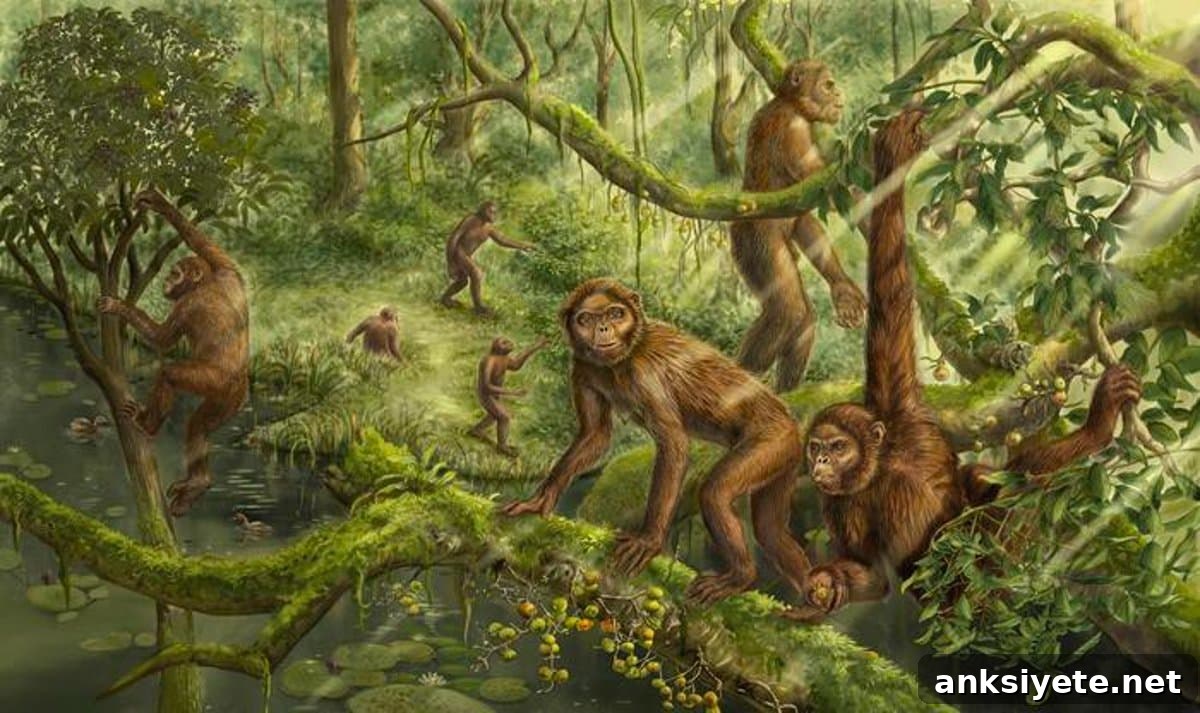
Summary: A recent study using high-resolution three-dimensional CT scans of the 6-million-year-old ape Lufengpithecus uncovers new evidence about how human bipedalism evolved. By reconstructing the bony inner ear—specifically the semicircular canals—researchers identified links between inner ear anatomy and locomotor behavior. Their results support a three-phase model for the emergence of upright walking, tracing a path from arboreal movement to a mixed arboreal/terrestrial repertoire and finally to habitual bipedalism.
This research shows that early apes, including ancestors on the human line, shared locomotor behaviors that set the stage for bipedal walking. The study offers a fresh perspective on the origins of human locomotion by using the inner ear as an anatomical record that complements studies of the postcranial skeleton.
Key Facts:
- The investigation focused on the bony inner ear—the semicircular canals—of Lufengpithecus skulls, reconstructed from three-dimensional CT scans to reveal locomotor patterns.
- Findings support a three-step evolutionary scenario for human bipedalism, beginning with arboreal gibbon-like movement, advancing to a mixed repertoire of climbing, forelimb suspension, arboreal bipedalism and terrestrial quadrupedalism, and culminating in habitual upright walking.
- Analysis of evolutionary rates in the bony labyrinth suggests that climate cooling around 3.2 million years ago may have accelerated locomotor diversification in apes and the human lineage.
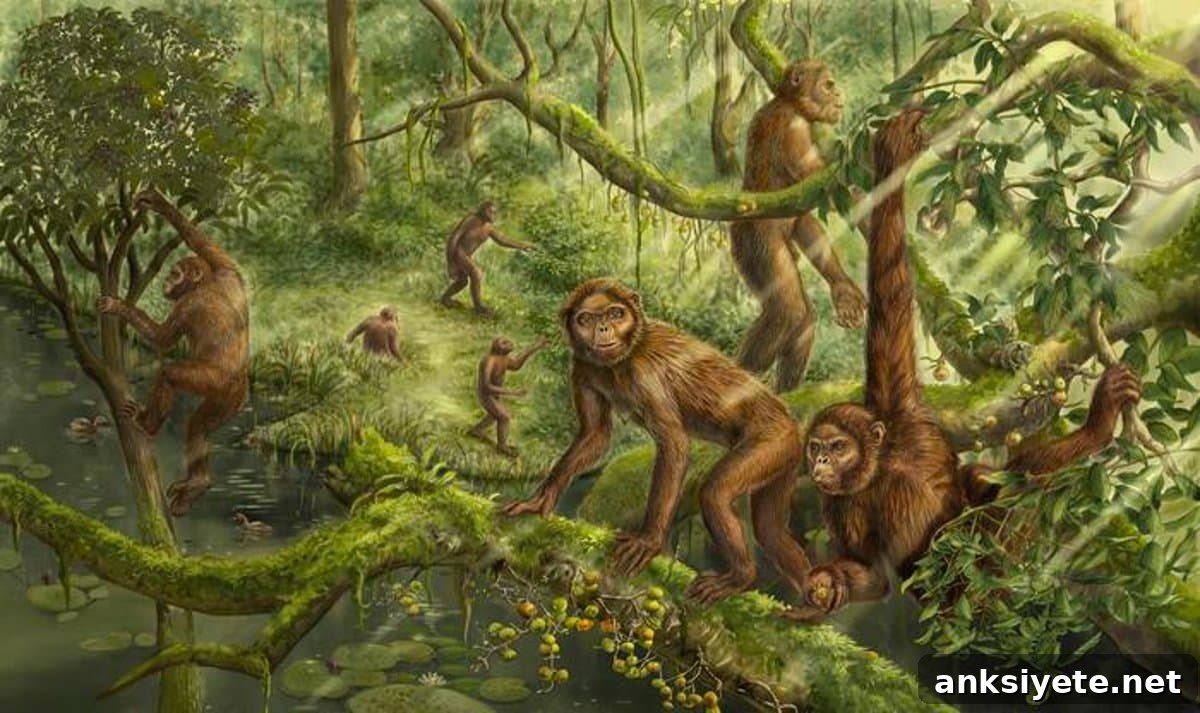
Scientists have long sought a clear evolutionary sequence explaining how humans shifted from quadrupedal ancestors to upright bipedal walkers. Limb bones, pelvis and spine fossils provide important clues, but the incomplete record and wide behavioral diversity among living apes have made it difficult to reconstruct early stages of locomotor change. This new study takes a different approach by examining the inner ear’s bony labyrinth as a window into past movement patterns.
The semicircular canals sit inside the skull between the brain and the external ear and are essential for balance and spatial orientation during movement. Because the size and curvature of these canals correlate with patterns of movement in mammals, including modern apes and humans, they preserve a signal of locomotor behavior that can be read in fossil skulls.
Lufengpithecus skulls, first found in China’s Yunnan Province in the early 1980s, offered a rare opportunity. Although earlier researchers thought the delicate inner ear structures were lost due to compression and distortion of the skulls, the research team applied advanced 3D CT-scanning and virtual reconstruction techniques to reveal and analyze the bony canals. They then compared these inner ear reconstructions with samples from living and fossil apes and humans across Asia, Europe, and Africa.
The authors report that early apes appear to have shared a locomotor repertoire ancestral to human bipedalism. Their comparative analysis suggests a three-stage evolutionary trajectory: (1) early arboreal movement reminiscent of gibbons, (2) a versatile locomotor phase represented by Lufengpithecus combining climbing, forelimb suspension, arboreal bipedalism and terrestrial quadrupedalism, and (3) the later emergence of habitual bipedalism in the human lineage, as seen in australopith fossils.
By measuring the rate of change in the bony labyrinth over time, the team identified an increase in evolutionary tempo around 3.2 million years ago. This timing coincides with global cooling and the build-up of northern-hemisphere ice sheets, suggesting environmental change may have promoted rapid diversification in locomotor strategies among apes and early human relatives.
The study highlights the bony inner ear as a valuable and underused anatomical source for reconstructing locomotor evolution. Unlike limb bones, which can be scarce or fragmentary in the fossil record, the inner ear can preserve key functional signals that reveal how extinct primates moved through their environments. These new data refine our understanding of the evolutionary pathway that produced human bipedalism and illustrate how combining modern imaging with comparative anatomy can unlock insights from long-hidden fossil structures.
About this evolutionary neuroscience research news
Author: James Devitt
Source: NYU
Contact: James Devitt – NYU
Image: Illustration by Xiaocong Guo; image courtesy of Xijun Ni, Institute of Vertebrate Paleontology and Paleoanthropology, Chinese Academy of Sciences.
Original Research: The findings will appear in The Innovation