
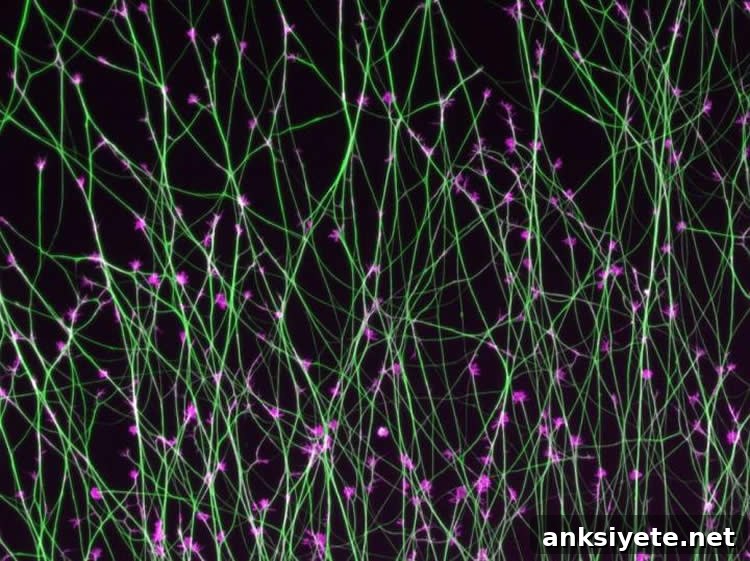
Summary: Researchers reveal how the molecular navigation system steers growing axons during brain development.
Source: KIT.
The human brain contains roughly 100 billion neurons whose connections form an intricate network of nerve fibers. Most of this network is hardwired before birth according to a genetic blueprint, without requiring sensory experience. Scientists at the Karlsruhe Institute of Technology (KIT) have uncovered new details about the molecular navigation system that guides axons as they grow, shedding light on how developing nerve fibers reliably find their targets. The findings are reported in the journal eLife.
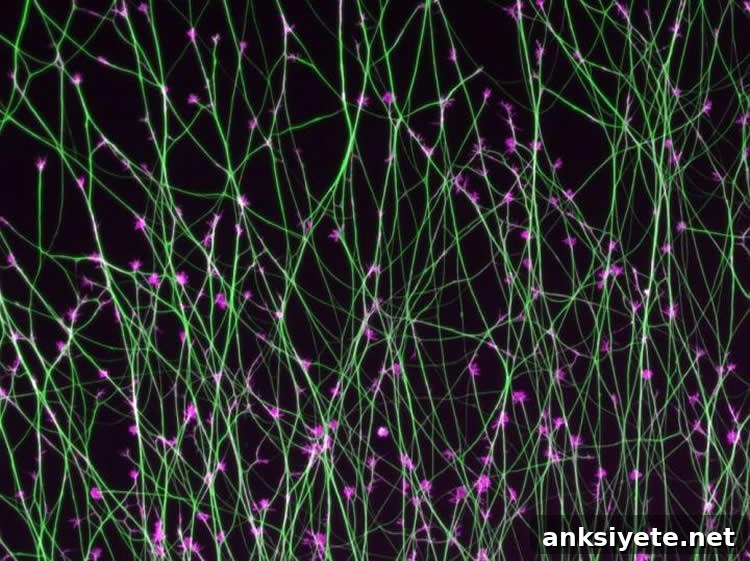
The total length of the brain’s nerve fiber network is enormous—on the order of 500,000 km, far exceeding many familiar distances. To build this vast wiring diagram accurately, growing axons rely on a guidance system that prevents incorrect connections. How do axons navigate across long distances and through complex environments to reach the correct target regions? Franco Weth of the Cell and Neural Biology Division at KIT likens the process to autonomous driving: vehicles exchange signals with each other and with roadside beacons to stay on course. In the nervous system, molecular sensors at the tips of axons—concentrated in a dynamic structure called the growth cone—serve as biological antennas. These sensors detect protein cues positioned along the route, within the target area, and on other fibers that cross their path. When axons arrive at their destination, they form synapses, the specialized contacts that allow neurons to transmit information to one another.
One clear example of this genetically programmed hardwiring is the connection between the retina and the brain. Nearly one million nerve fibers travel through the optic nerve to project visual information onto the brain’s visual centers. The genetically encoded wiring ensures that retinal “pixels” map onto the visual cortex in a precise, point-for-point manner, enabling a newborn to perceive and process visual patterns without having to learn the basic retinal map through experience. While many brain circuits are sculpted by learning and experience, a substantial subset of connections are established by these intrinsic developmental programs.
Surprisingly, KIT researchers found that the sensitivity of axonal receptors to guidance cues declines during the course of their journey. Intuitively, one might expect that maintaining or increasing sensitivity would be necessary to detect the correct target signals. However, the team discovered a more subtle strategy: although absolute sensitivity to all guidance cues is reduced as axons grow, the relative sensitivities—the ratios of responses to different guidance signals—are maintained. In other words, axons read a pattern or combination of guidance molecule concentrations rather than relying on the absolute intensity of any single cue. A target region is identified by a characteristic ratio of multiple signals, and by preserving those ratios the axonal navigation system balances reliability with the biological variability of signal intensities.
This coupled regulation of sensitivities—simultaneous desensitization combined with preserved signal ratios—is uncommon in biological signaling systems. The researchers illustrate the idea with an everyday analogy: you may quickly stop noticing the smell of someone’s perfume in a room (adaptation), yet you still smell the coffee you are drinking because your perception of the coffee remains in proportion to other odors. In the developing brain, however, the system operates differently: adaptation reduces overall sensitivity but keeps proportional relationships intact so that positional information encoded by relative cue levels remains readable.
The team does not yet know definitively why axonal sensitivity is downregulated during growth, but one plausible explanation is energy economy. Transmitting and processing molecular signals consumes metabolic resources, and desensitizing receptors may reduce energy expenditure while still preserving the essential pattern information required for accurate targeting. From an evolutionary standpoint, minimizing the metabolic cost of building highly ordered neural circuits could be advantageous while maintaining the precision necessary for cognitive function.
Beyond basic developmental biology, these findings have implications for understanding neurodevelopmental disorders that arise from early wiring errors. Misguided axonal connections formed before birth are implicated in conditions such as Tourette syndrome, autism spectrum disorders, and schizophrenia. By clarifying how axons decode guidance information and how that decoding is regulated over time, the KIT study contributes to a better mechanistic understanding of how prenatal hardwiring can go awry and points toward potential avenues for future research.
About this neuroscience research article
Source: Monika Landgraf, KIT
Publisher: NeuroscienceNews.com (organized by NeuroscienceNews)
Image source: Image credited to KIT, Weth
Original research: Study reported in eLife
KIT. “Navigation System of Brain Cells Decoded.” NeuroscienceNews. 25 October 2017. Original article reporting KIT research published in eLife.