
UCSF Research Rewrites How the Brain’s Hunger Circuit Controls Eating
New experiments from researchers at the University of California, San Francisco (UCSF) challenge long-standing beliefs about how the brain regulates hunger and feeding behavior.
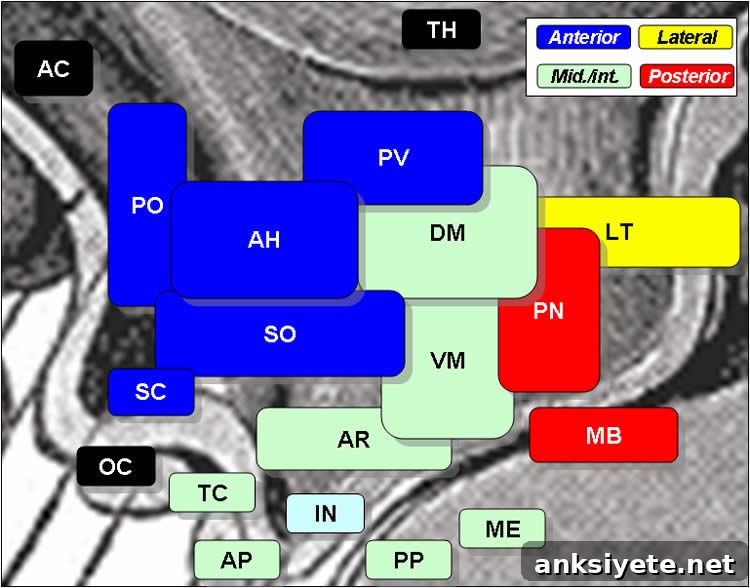
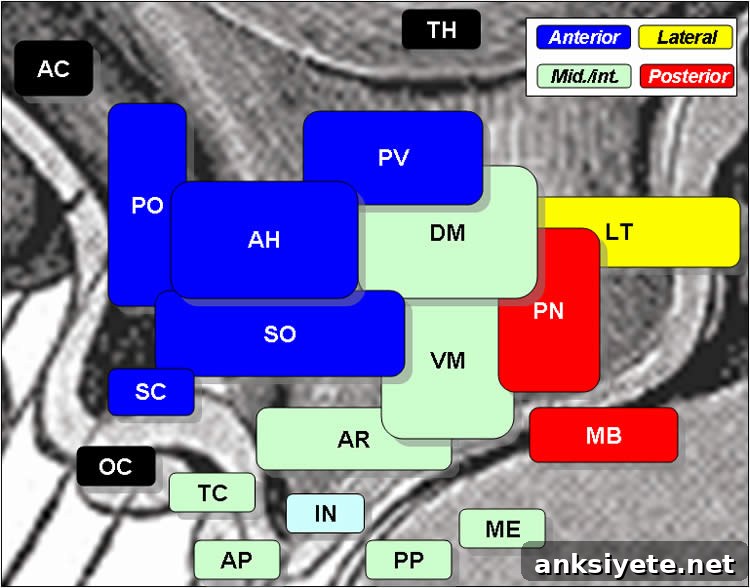
For decades, neuroscientists have studied a compact neural circuit in the hypothalamus that plays a central role in hunger and energy balance. That circuit centers on two tiny populations of neurons in the arcuate nucleus: AgRP neurons and POMC neurons. The prevailing model held that slow changes in hormones and nutrients progressively activate AgRP cells to drive eating, while rising nutrient signals activate POMC cells to suppress appetite.
Using recently developed fiber-optic recording techniques that allow real-time monitoring of deep brain activity in behaving animals, researchers in the lab of Zachary A. Knight, PhD, have observed a very different picture. Their experiments reveal that the AgRP–POMC circuit reacts within seconds to sensory cues from food, and that AgRP neurons appear to promote food-seeking behavior rather than directly causing animals to consume a meal.
Graduate student Yiming Chen led the experiments that recorded AgRP and POMC activity in hungry mice when food was presented. Because these neurons lie deep in a small, heterogeneous region of the brain, such recordings in freely behaving animals were not possible until the recent availability of miniaturized fiber-optic tools. Chen and colleagues found that mere exposure to food — seeing or smelling it — produced an almost immediate shift in the circuit: AgRP activity plunged while POMC activity rose, often before the mouse took a single bite.
“No one would have predicted this,” said Zachary Knight. “It’s one of the most surprising results in the field in a long time. These findings fundamentally change our view of what this region of the brain is doing.”
The response is highly dynamic and context-dependent. If the presented food was removed, AgRP activity rebounded and POMC activity subsided. The strength and speed of the shift depended on both palatability and accessibility: preferred, energy-dense items like peanut butter or chocolate triggered faster and larger changes than standard laboratory chow. When mice could only detect food by smell and not by sight, the circuit’s response was weaker and slower, indicating that multiple sensory cues contribute to this rapid reset.
These observations suggest a dual time-scale organization of the hunger circuit. Slow, hunger-driven hormonal and metabolic signals still ramp up AgRP neurons over longer periods, encoding the body’s homeostatic need for calories. Superimposed on that, however, are fast, anticipatory sensory signals: the sight and smell of available food rapidly suppress AgRP activity and activate POMC neurons, effectively signaling the imminent availability of calories before digestion begins.
Functionally, the data indicate that AgRP neurons primarily motivate animals to seek and locate food. Once food is discovered and its nutritional value can be anticipated, the circuit suppresses further search behavior. “Evolution has made these neurons a key control point in the hunger circuit, but it’s primarily to control the discovery of food,” Knight explained. “It’s controlling the motivation to go out and find food, not the intake of food itself.”
These findings carry important implications for obesity research and drug development. Many pharmaceutical efforts have targeted AgRP-related pathways based on the assumption that blocking AgRP activity would reduce food intake directly. The UCSF team suggests a revised perspective: manipulating AgRP signaling may alter the motivation to seek out food—decisions such as whether to go grocery shopping or reach for a snack—rather than the reflex that determines bite-by-bite consumption. In other words, interventions aimed at AgRP may change the drive to obtain rewarding foods more than they change immediate eating once food is present.
The work also highlights how sensory cues and the rewarding properties of food interact with homeostatic signals. Highly palatable, energy-dense foods produce stronger anticipatory signals in the arcuate circuit, which may explain why such foods are particularly effective at satisfying hunger and dampening the drive to continue searching.
About the study
The experiments were led by Yiming Chen and performed in the laboratory of Zachary A. Knight at UCSF. Other contributors included research specialist Yen-Chu Lin and graduate student Tzu-Wei Kuo. The study was published online February 19, 2015 in Cell (article: “Sensory Detection of Food Rapidly Modulates Arcuate Feeding Circuits”; DOI: 10.1016/j.cell.2015.01.033).
Funding for the research came from a variety of sources, including the New York Stem Cell Foundation, the Rita Allen Foundation, the McKnight Foundation, the Alfred P. Sloan Foundation, the Brain & Behavior Research Foundation (NARSAD Young Investigator Grant), the Esther A. and Joseph Klingenstein Foundation, the Program for Breakthrough Biomedical Research, the UCSF Diabetes Center Obesity Pilot Program, and the National Institutes of Health.
Contact: Pete Farley, UCSF press office.
Source: UCSF press release and the published research in Cell. Image source: public domain.