
Summary:
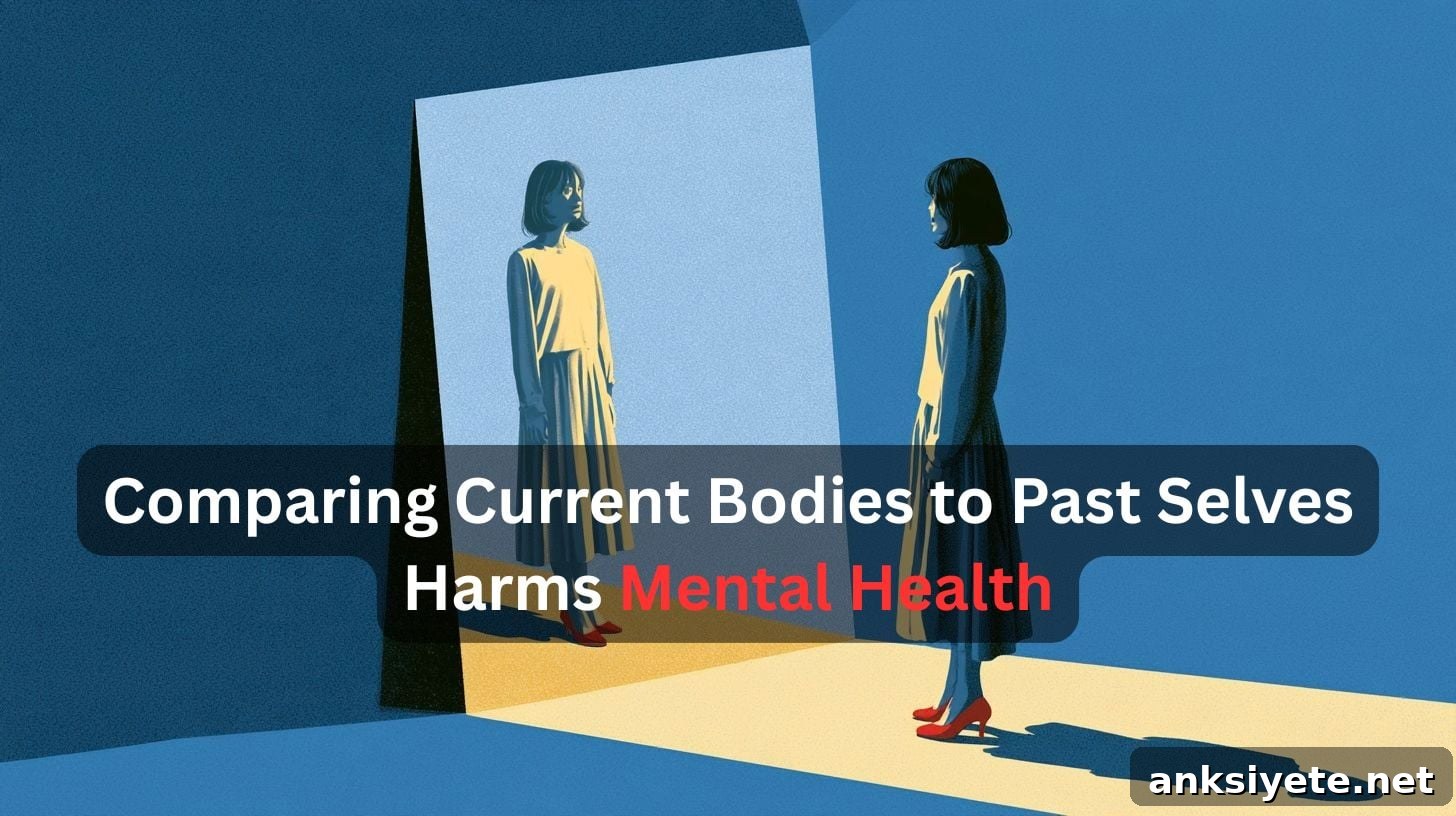
A new psychometric study from The Ohio State University finds that comparing our present appearance to earlier versions of ourselves harms mental health as much as comparing ourselves to other people. Published in the journal Body Image, the research introduces and validates the Self-Oriented Comparison Scale for Appearance (SOCS-A). The study shows that “upward self-comparison”—judging one’s current body against an idealized younger, fitter past—strongly predicts body shame, persistent rumination, and disordered eating, with women reporting higher levels of this harmful pattern.
Key Facts:
- The missing perspective in body image research: Decades of research have focused on social comparison—evaluating oneself against peers, media figures, or cultural ideals. This study highlights self-oriented comparison—measuring today’s body against a remembered or pictured past self—as an independent and equally influential source of body dissatisfaction.
- Upward versus downward temporal comparison: Upward self-comparison (seeing a past self as more attractive or fit) is strongly linked to negative outcomes like body shame and disordered eating. Downward self-comparison (recalling a past time when one felt less healthy or attractive) is associated with greater body appreciation, pride, and flexibility in body image.
- Gender differences: The 11-item SOCS-A showed reliable structure across genders, but women reported significantly higher rates of upward self-comparison. Cultural pressures that equate female worth with youth and specific beauty standards likely drive this disparity.
Source: The Ohio State University
For more than fifty years, body image and eating-disorder research has emphasized social comparison theory—how people evaluate themselves against others and media ideals. Yet clinicians have long observed a different, internal form of comparison: many people compare their current appearance to an internalized, often idealized, past self captured in photos, videos, or memories. This inward-looking comparison can be a powerful force shaping self-evaluation and behavior.
Researchers at The Ohio State University developed the Self-Oriented Comparison Scale for Appearance (SOCS-A) to measure this previously overlooked phenomenon. Their work demonstrates that looking back at former versions of oneself can uniquely and substantially affect psychological well-being, especially during life transitions, aging, and shifts in health or body composition.
“There’s extensive literature on social comparison, but almost nothing on self-oriented comparison,” said Tracy Tylka, Ph.D., lead author and professor of clinical psychology. “Self-oriented comparison matters. It is uniquely associated with body image and eating behavior. Clinicians should assess not only how clients compare themselves with others, but also how they compare themselves with past versions of themselves.”
Addressing a longstanding blind spot
Co-author Nichole Wood-Barcalow, Ph.D., a clinical psychologist in private practice, noticed the pattern in therapy: people undergoing puberty, postpartum changes, menopause, weight fluctuations, chronic illness, or normal aging often fixated on earlier photos with distress. Despite its frequent clinical presentation, no validated multi-item scale existed to measure trait-level temporal appearance comparisons—until now.
Tylka, a psychometrician who previously developed standard measures for intuitive eating and body appreciation, observed that research has historically centered on younger cohorts and largely ignored age-related concerns and ageism. The SOCS-A fills that gap by providing a reliable tool to assess self-oriented appearance comparisons across diverse adult populations.
Validating the SOCS-A: upward distress, downward pride
The SOCS-A is an 11-item instrument evaluated in two large U.S. community samples. Statistical analyses supported a two-factor model capturing upward and downward self-oriented comparison. These subscales showed good reliability and validity across gender groups.
Upward self-comparison describes the tendency to view one’s past appearance as more attractive, youthful, or fit than the present self. This pattern was consistently associated with negative body image outcomes, such as rumination, body shame, and disordered eating. In contrast, downward self-comparison—recognizing that a past self was less healthy or attractive—was often linked to positive outcomes like body appreciation, pride, and flexibility in how individuals relate to their bodies.
“We expected downward comparison to mirror downward social comparison, which can be maladaptive,” Dr. Tylka said. “Instead, downward self-comparison often reflects personal progress or recovery, and people report feelings of accomplishment rather than shame.”
Gender patterns and clinical implications
While the SOCS-A performed well across gender groups, women reported higher levels of upward self-comparison. The authors link this to cultural messages that tie female worth to youth and narrow beauty ideals, which make normal bodily changes feel like losses.
Clinically, the SOCS-A can help identify patients whose struggles are driven by temporal self-comparisons. It may be useful for tracking outcomes in therapies that promote acceptance, self-compassion, and cognitive restructuring. The scale also offers a way to study psychological responses to metabolic treatments and weight-loss medications, an area researchers are beginning to explore.
“Beyond age, the SOCS-A could inform work on how medical treatments affect body image and eating behavior,” Dr. Tylka noted, pointing to ongoing investigations into the intersection of self-oriented comparison and emerging metabolic therapies.
Funding: This study was supported by an Ohio State Joan Huber Fellowship Grant.
Editorial Notes:
- This article was edited by a Neuroscience News editor.
- The full journal paper was reviewed as part of the reporting process.
- Additional context was added by editorial staff.
About this psychology research:
- Media contact: Elizabeth Weinstein
- Source: Ohio State University
- Image credit: Image credited to Neuroscience News
- Original research: Body Image (Sept 22, 2026). “Self-Oriented Comparison Scale for Appearance (SOCS-A): Development and psychometric evaluation.” Authors: Tracy L. Tylka and Nichole L. Wood-Barcalow.
- DOI: 10.1016/j.bodyim.2026.102159
Abstract
Self-Oriented Comparison Scale for Appearance (SOCS-A): Development and psychometric evaluation
Appearance-related social comparison—comparing one’s body to others—is a known risk factor for negative body image and disordered eating. People also compare their current body to a former appearance (self-oriented appearance comparison), and this temporal comparison may act as a risk, maintenance, or protective factor for negative body image and disordered eating.
No validated multi-item measure existed to capture upward and downward self-oriented comparisons across varied appearance changes. The SOCS-A was developed and tested with U.S. community adults in two online studies (Study 1: N = 973; Study 2: N = 885). Both studies supported a two-factor structure (upward and downward). The scale demonstrated gender invariance, composite reliability, and test-retest reliability, along with convergent, discriminant, and incremental validity.
Upward self-oriented comparison was associated with maladaptive outcomes—positive associations with upward social comparison, disordered eating, and negative body image, and negative associations with positive body image, intuitive eating, and well-being. Downward self-oriented comparison was neutral or related to positive outcomes. Both upward and downward self-oriented comparisons explained unique variance in body shame; upward comparison uniquely predicted disordered eating beyond social comparison and brooding.
Overall, the 11-item SOCS-A shows strong psychometric properties in U.S. community samples. Continued validation and longitudinal research are needed across other countries, cultures, and diverse social identity and life-experience groups.