
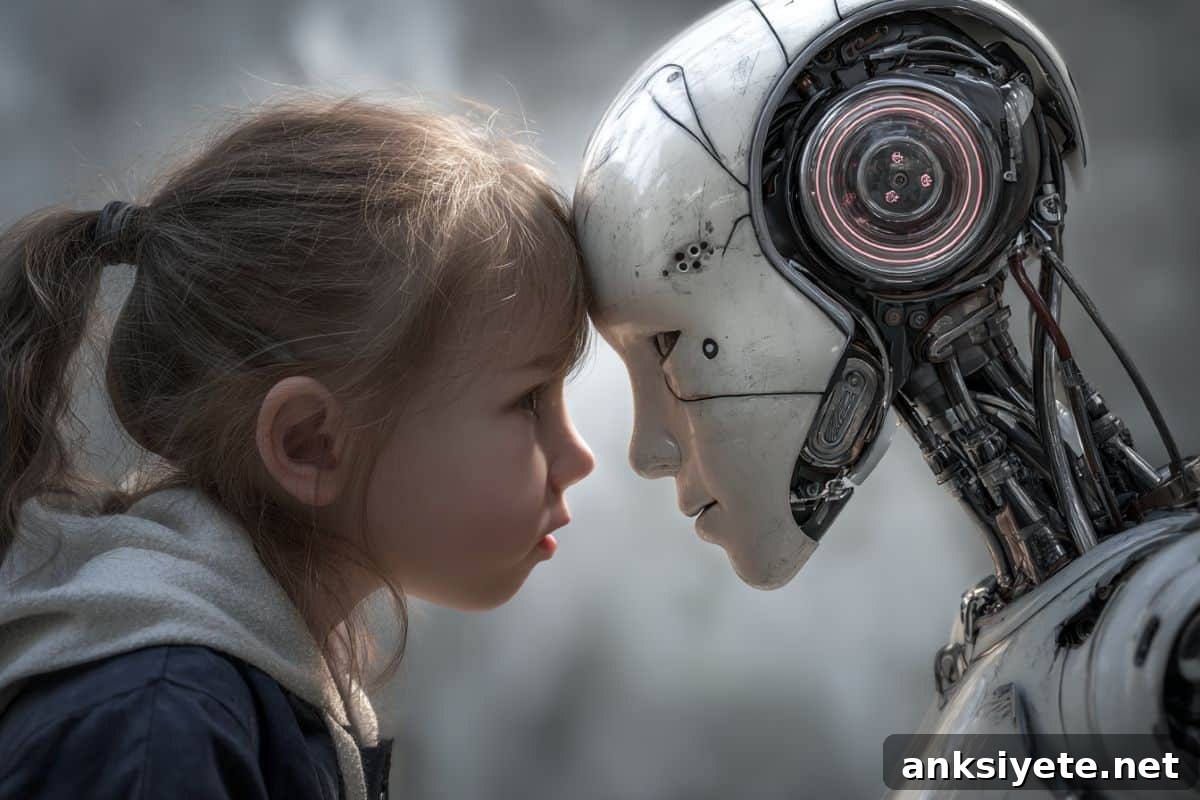
Summary: An international study combining developmental psychology and artificial intelligence found that children as young as three can infer intentions and preferences from a human gaze, but they do not interpret the same signal when it comes from a humanoid robot. The research shows that simply copying a human cue such as eye direction is insufficient to create a genuine communicative bond with young children, and it highlights design requirements for embodied AI and child–robot interaction.
The study redefines how engineers and clinicians should think about social robots for early childhood: gaze must be embedded in richer, reciprocal, and context-sensitive interactions to be perceived as meaningful by preschoolers.
Key Facts
- Developmental Eye Test: Coordinated by Professor Antonella Marchetti, researchers evaluated 58 Italian children aged 3 to 5 to compare how human and humanoid robot gazes shape children’s impressions. Children watched videos of a person or a robot looking at one of two objects, and were asked which object the agent preferred and which they personally preferred.
- Intent vs. Mechanical Movement: Children reliably inferred preference from a human gaze, reading intentionality into eye direction. The same eye movement from a humanoid robot did not lead children to attribute a genuine preference or desire to the machine.
- Child Preference Remains Independent: Although gaze helped children identify what another agent seemed to like, neither human nor robot gaze reliably changed the children’s own personal choices or preferences.
- Mimicry Is Not Enough: Professor Marchetti emphasizes that reproducing single human signals—like eye movement—does not automatically make a robot communicative for young children. Effective child-centered robots must combine verbal interaction, gestures, shared context, reciprocity, and physical presence.
- Embodied AI Matters: The findings argue that attributing mental states to technology requires more than speech or text; it requires integration into physical and socially rich systems (embodied AI), with humanoid social robots representing a primary area for development.
- Clinical Implications and ROBIN Project: The results have direct relevance for interventions with children on the autism spectrum, where gaze and shared attention are critical. Building on these insights, the Don Carlo Gnocchi Foundation and Università Cattolica will launch the ROBIN project (ROBot-based Neuropsychomotor INtervention) to use humanoid robots in targeted rehabilitation and imitation training starting June 2026.
Source: Universita Cattolica del Sacro Cuore
The Study
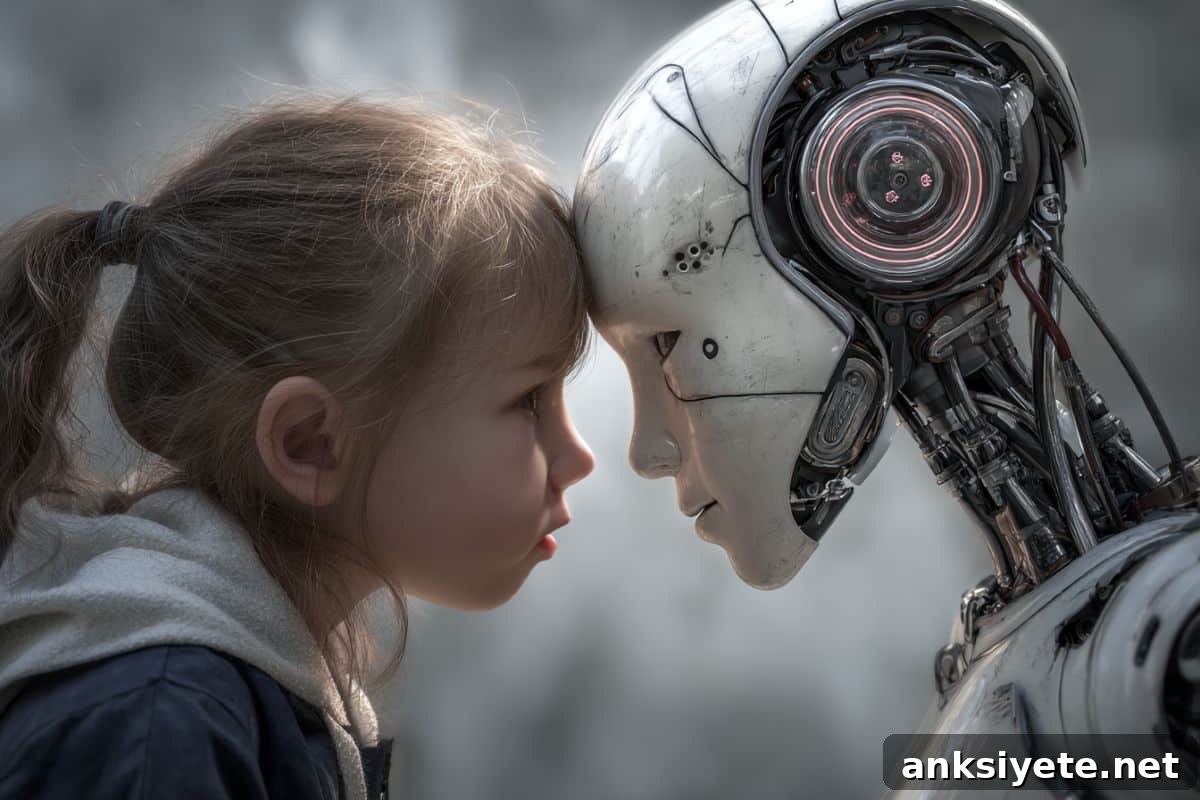
Researchers showed short videos in which either a human adult or a humanoid robot directed their gaze at one of two objects. After viewing the clips, children were asked (1) which object the agent preferred and (2) which object they preferred themselves. The study also measured children’s ability to attribute mental states (theory of mind tasks) to determine whether those abilities predicted sensitivity to gaze cues.
Results revealed a clear split: children consistently used human gaze to attribute preferences but did not attribute the same mental states to the robot’s gaze. Attributing mental states to the human predicted correct preference attribution, but this pattern did not hold for the robot. Importantly, gaze cues—regardless of source—did not significantly alter children’s own preferences.
The findings suggest that young children treat human gaze as a marker of intentionality, whereas they perceive an isolated robotic gaze as a mechanical movement lacking psychological meaning. Consequently, designers and clinicians should not assume that replicating a single human cue will produce authentic social understanding in children.
Practical and Clinical Significance
For developers of educational and therapeutic robots, the study underscores the importance of multimodal, reciprocal interactions. Robots intended to support learning or social development should combine eye contact with verbal behavior, contingent responses, gestures, and situational context to be perceived as communicative by preschoolers.
Clinically, this matters for autism interventions: shared attention and gaze processing are often areas of difficulty for autistic children. The upcoming ROBIN project aims to leverage humanoid robots within structured neuropsychomotor programs to support imitation, joint attention, and socio-communicative skills while incorporating design features informed by these findings.
Key Questions Answered
A: Young children naturally expect a mind behind human eyes; they interpret gaze as a sign of intention. A robotic glance, standing alone, looks mechanical and fails to convey the mental states children attribute to people.
A: Not at all. Robots can be valuable tools, but developers must move beyond isolated mimicry. Effective social robots for children should provide multisensory, reciprocal, and context-aware interactions that support attributions of intention and belief.
A: ROBIN will use humanoid robots in clinical protocols to support imitation and shared attention in young children with autism. By integrating gaze with speech, gestures, and contingent responsiveness, the project aims to design interventions that feel natural and are developmentally appropriate.
Editorial Notes
- This article was edited by a Neuroscience News editor.
- The journal article was reviewed in full by the editorial team.
- Additional context was added by staff to clarify implications for design and clinical practice.
About this research
Author: Nicola Cerbino
Source: Universita Cattolica del Sacro Cuore
Contact: Nicola Cerbino – Universita Cattolica del Sacro Cuore
Image credit: Neuroscience News
Original Research: “Preschoolers attribute preferences in response to human but not robot gaze” by Federico Manzi, Mitsuhiko Ishikawa, Cinzia Di Dio, Shoji Itakura, Takayuki Kanda, Hiroshi Ishiguro, Davide Massaro, and Antonella Marchetti. International Journal of Child-Computer Interaction. DOI:10.1016/j.ijcci.2026.100822
Abstract (condensed)
As robots increasingly enter environments shared with children, it is essential to know which social signals children recognize as communicative. This study of 58 preschoolers shows that children attribute preferences to people based on gaze, but not to humanoid robots showing the same eye movements. Mental state attributions predicted performance for human but not robot agents. The results indicate that gaze alone may be an insufficient cue in child–robot interaction, and they support integrating gaze into richer, embodied interactions when designing robots for early childhood and clinical applications.