
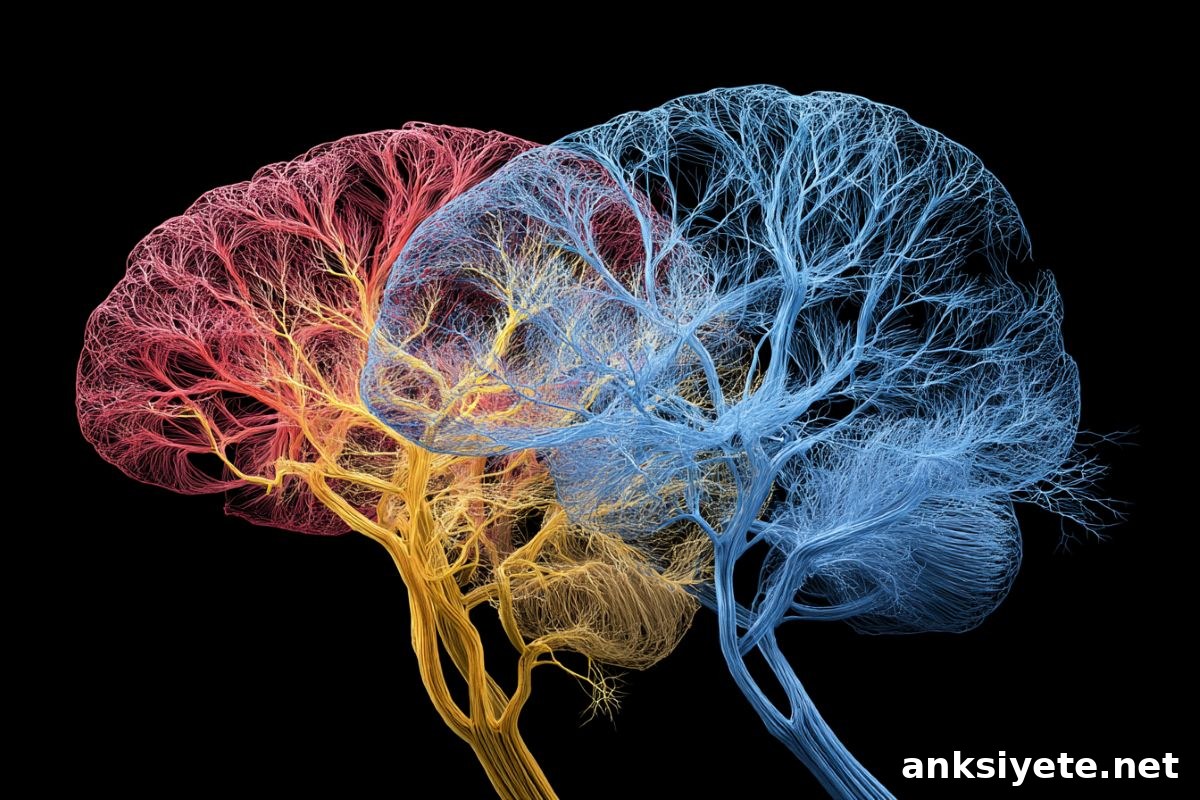
Summary: New international research demonstrates that autism can be divided into at least two biologically distinct subtypes defined by brain connectivity patterns. By directly linking human functional magnetic resonance imaging (fMRI) data with molecular and genetic profiles from animal models, the study identifies reproducible brain-based signatures that point toward different underlying biological mechanisms and open a path for more precise, personalized clinical approaches.
Researchers analyzed more than 1,900 human brain scans and compared them with connectivity patterns from 20 genetically and biochemically characterized mouse models. This cross-species approach isolated a hypoconnectivity subtype associated with synaptic and cellular signaling alterations and a hyperconnectivity subtype tied to immune-related pathways.
Key Facts
- Explaining clinical variability: Autism spectrum disorder has long shown major behavioral and clinical variability, which has hindered uniform treatment strategies. This study provides biological evidence that some of that variability reflects fundamentally different underlying mechanisms, supporting a precision medicine approach to autism care.
- Cross-species mapping: The team used genetic and biochemical characterization from mouse models as a biological reference to interpret human fMRI connectivity. This “Rosetta Stone” approach allowed investigators to match connectivity signatures in humans to specific molecular pathways identified in animals.
- Hypoconnectivity subtype: One reproducible subtype shows broadly reduced communication between brain regions. Gene expression analyses indicated that these hypoconnected areas are enriched for genes involved in synaptic function and cellular connectivity.
- Hyperconnectivity subtype: The second reproducible subtype displays increased or excessive communication among brain regions. This profile correlates with transcriptional and immune-related biological systems and is associated with modestly higher scores on standardized measures of autism severity.
- Large-scale validation: The findings were validated by comparing connectivity patterns from 20 mouse models with brain scans of 940 individuals with autism and 1,036 neurotypical controls drawn from a major multicenter imaging database. Together the two subtypes accounted for roughly 25% of the individuals studied and were reproducible across many independent research sites.
- Beyond behavior: Conventional behavioral assessments do not reveal the cellular or molecular drivers behind autism. These brain-based biomarkers provide clinicians and researchers with a framework to move beyond symptom observation and toward targeted interventions that address the specific biological environment of a patient.
Source: Child Mind Institute
Study overview
An international team led by the Istituto Italiano di Tecnologia (IIT) in Rovereto and the Child Mind Institute in New York, with collaborators including the University of Trento, applied a cross-species functional-connectivity strategy to identify distinct autism subtypes. The study reports two dominant connectivity-based subtypes—hypoconnectivity and hyperconnectivity—each linked to different biological pathways and cellular processes. The goal is to inform the development of precision diagnostics and personalized care for people on the autism spectrum.
The research paper was published in Nature Neuroscience. Coordination was provided by Alessandro Gozzi, PhD (Center for Neuroscience and Cognitive Systems, IIT) and Adriana Di Martino, MD (Autism Center, Child Mind Institute). Their approach represents a systematic effort to decode human fMRI patterns by tracing those patterns back to molecular and genetic signatures observed in animal models. By doing so, the team established biological reference patterns in mice that were then sought and validated in human neuroimaging data.
Analyses combined functional connectivity results from 20 mouse models with multicenter human fMRI data from 940 individuals with idiopathic autism and 1,036 neurotypical participants. The two identified subtypes—hypoconnectivity linked to synaptic mechanisms and hyperconnectivity linked to immune-related biology—were consistently detected in independent datasets and displayed distinct functional network architectures and modest differences in standardized clinical assessments.
“For decades we’ve seen great variability in autism’s clinical presentation without direct evidence that different presentations correspond to distinct biology,” said Dr. Alessandro Gozzi. “By isolating genetic and immune signatures in mice and translating those signatures into human imaging, we show that divergent connectivity patterns reflect different mechanistic pathways in autism.”
Dr. Adriana Di Martino added that the animal models functioned as a biological Rosetta Stone, revealing which pathways produce which connectivity patterns and enabling the identification of the same signatures in human brains.
Key Questions Answered:
A: Autism is not a single condition but a diverse collection of biological realities that often present similar outward behaviors. Relying solely on behavioral assessments obscures the molecular and cellular differences between individuals. This study shows that different patterns of brain connectivity reflect distinct underlying biology, which explains why a one-size-fits-all treatment is unlikely to be effective and supports a move toward personalized therapies.
A: Mouse models provide controlled genetic and molecular data that reveal how specific alterations affect brain tissue and connectivity. By characterizing 20 different models, researchers established which molecular pathways produce particular connectivity signatures. Those signatures then served as a reference to identify equivalent mechanistic patterns in human fMRI data.
A: The hypoconnectivity subtype displays reduced interactions between brain regions and aligns with disruptions in synaptic genes and signaling. The hyperconnectivity subtype shows elevated or excessive communication across networks and is associated with immune- and transcription-related pathways; individuals in this group tended to have slightly higher scores on standardized measures of autism severity.
Editorial Notes:
- This article was edited by a Neuroscience News editor.
- The journal paper was reviewed in full by the editorial staff.
- Additional context and clarifications were added by the editorial team.
About this autism research news
Author: Media Office
Source: Child Mind Institute
Contact: Media Office – Child Mind Institute
Image: Image credited to Neuroscience News
Original Research: Closed access.
Title: Autism subtypes identified using cross-species functional connectivity analyses (Nature Neuroscience).
Authors: Marco Pagani, Valerio Zerbi, Silvia Gini, Filomena Grazia Alvino, Abhishek Banerjee, Andrea Barberis, M. Albert Basson, Yuri Bozzi, Alberto Galbusera, Jacob Ellegood, Michela Fagiolini, Jason P. Lerch, Michela Matteoli, Caterina Montani, Davide Pozzi, Giovanni Provenzano, Maria Luisa Scattoni, Nicole Wenderoth, Ting Xu, Michael V. Lombardo, Michael P. Milham, Adriana Di Martino & Alessandro Gozzi.
DOI: 10.1038/s41593-026-02287-z
Abstract
Autism subtypes identified using cross-species functional connectivity analyses
Phenotypic heterogeneity in autism is often thought to reflect underlying biological diversity, but definitive evidence has been limited. Using cross-species functional neuroimaging, this study demonstrates that brain dysconnectivity in autism can be parsed into biologically distinct subtypes. Functional connectivity alterations across 20 genetic mouse models cluster into hypoconnectivity-dominant and hyperconnectivity-dominant groups. Each cluster links to different pathways: hypoconnectivity to synaptic dysfunction and hyperconnectivity to transcriptional and immune-related alterations. Analogous subtypes were identified and replicated in a multicenter human fMRI dataset of 940 individuals with idiopathic autism and 1,036 neurotypical controls. These human subtypes are reproducible, show distinct network architectures and behavioral profiles, and recapitulate the synaptic and immune-related pathways observed in rodents. This cross-species framework supports targeted subtyping of the autism spectrum and advances the development of biology-informed diagnostic and therapeutic strategies.