
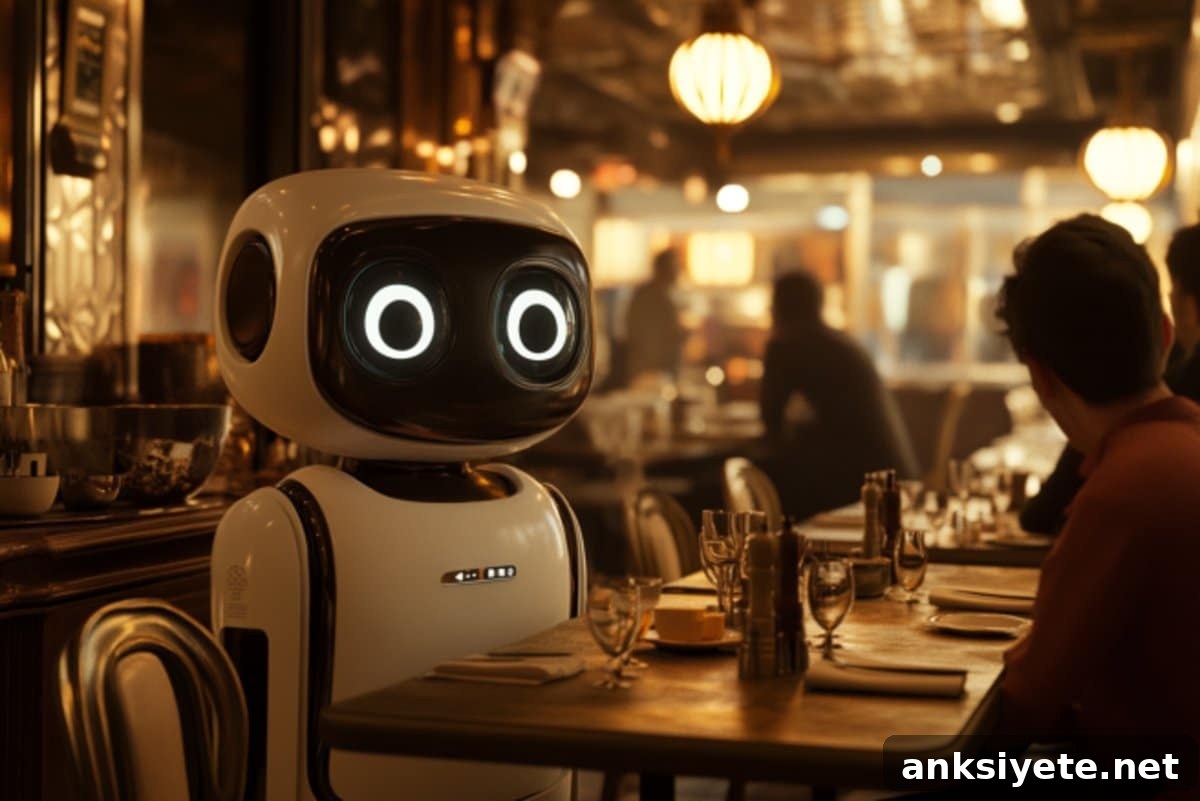
Summary: New research from Penn State shows that the gendered traits of service robots can influence customer decisions in the hospitality industry. Robots designed with male-associated characteristics were more persuasive with women who felt low personal power, while customers who perceived themselves as more powerful were less influenced by robot gender.
At the same time, adding “cute” design elements—such as large eyes, round faces, and raised cheeks—dampened these gender effects, producing more balanced reactions across customer genders. These results offer practical guidance for businesses that want to use robot design strategically to shape persuasion, upselling, or to avoid reinforcing gender stereotypes.
Key Facts:
- Robot gender and persuasion: Robots with male-associated traits were more persuasive to women who reported a low sense of personal power.
- Cuteness reduces gender bias: Features like big eyes and rounded faces neutralized gendered effects, leading to similar responses from male and female customers.
- Practical business uses: Hospitality operators can tailor robot appearance to encourage upsells, shape recommendations, or minimize gender stereotyping in service interactions.
Source: Penn State
Service robots’ gendered traits can be used to influence customer behavior in hospitality settings, according to researchers at the Penn State School of Hospitality Management.
The research team found that when a service robot displays characteristics commonly associated with males, it may have greater persuasive power over women who feel less empowered. Conversely, customers who perceive themselves as having higher personal power are less likely to be swayed by a robot’s gendered characteristics.
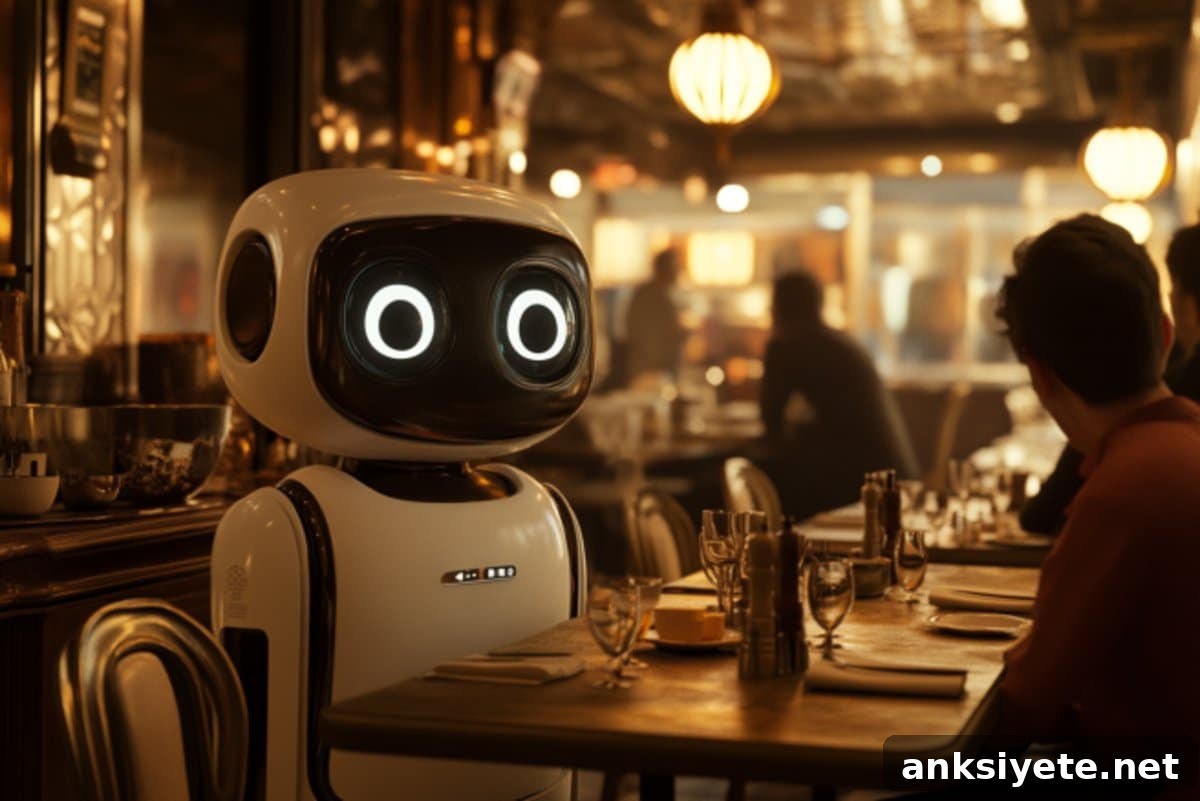
Lead authors Lavi Peng (doctoral candidate), Anna Mattila (Marriott Professor of Lodging Management), and Amit Sharma (Edward Friedman and Stuart Mann Professor of Hospitality Management) report that “cute” visual cues—like oversized eyes and rounded facial shapes—helped eliminate differences in persuasion based on the robot’s portrayed gender. When these childlike or endearing features were present, male and female customers responded similarly to both male- and female-styled robots.
Their findings, published in the Journal of Hospitality and Tourism Management, build on research about robot anthropomorphism and extend understanding of how gender signals interact with customer traits to shape persuasive service encounters.
“Robots can be programmed or designed with humanlike traits—names, voices, colors, and body shapes—that convey gender,” Mattila explained. “A consumer’s perceived sense of power—how much they feel able to influence others or control outcomes—also affects whether they accept a robot’s recommendation.”
The researchers ran two studies to test how robot gender affects customers’ acceptance of menu recommendations. In Study 1, 239 participants recruited via Amazon Mechanical Turk first reported their sense of personal power, then imagined visiting a new restaurant where a service robot recommended a breakfast burrito. Robots differed only in color cues—gray for male and pink for female—to signal gender. Participants then rated the robot’s persuasiveness.
Results showed that women with a low sense of power were more likely to accept recommendations from robots with male-associated traits. For men with low power, the gender effect was weaker. Overall, participants with higher perceived power relied less on societal or gender expectations and more on their own judgment when making decisions.
From a practical standpoint, restaurants and hotels could use these insights to guide robot selection and design. For example, a restaurant aiming to introduce and promote new menu items might deploy robots with male-associated characteristics when the target audience includes women who generally experience lower consumer power. Similarly, hotels could choose robot appearances strategically when prompting guests to upgrade rooms or accept upsells.
The second study focused on how businesses might reduce gender-based influence through design. The team recruited 156 U.S. university students—a group that prior research identifies as often occupying lower-power positions relative to faculty. In this experiment, the researchers placed gendered facial features on an iPad display attached to a Bear Robotics Servi unit—an otherwise nonhuman-looking service robot—and tested designs that emphasized “cute” features like round faces and large eyes. Participants then evaluated a recommendation for avocado toast.
In that setting, both male and female participants responded similarly to male- and female-styled robots when the designs emphasized cuteness. The evidence suggests that endearing visual design can serve as a boundary condition for gender effects in persuasive human-robot interactions.
Funding: This work was supported by the Marriott Foundation.
About this robotics and psychology research news
Author: Christine Yu
Source: Penn State
Contact: Christine Yu – Penn State
Image: The image is credited to Neuroscience News
Original Research: Open access.
“Gendered robots and persuasion: The interplay of the robot’s gender, the consumer’s gender, and their power on menu recommendations” by Lavi Peng et al., Journal of Hospitality and Tourism Management
Abstract
Gendered robots and persuasion: The interplay of the robot’s gender, the consumer’s gender, and their power on menu recommendations
Despite extensive work on robot anthropomorphism, relatively few studies have examined how a robot’s gender affects persuasive tasks such as offering recommendations. This research explores how the robot’s portrayed gender, the consumer’s gender, and the consumer’s perceived sense of power jointly shape acceptance of menu suggestions.
Study 1 found that female consumers who perceive themselves as low in power were more likely to accept recommendations from robots with male-associated traits. This gender effect did not appear among male consumers with low power, nor among consumers of either gender who perceived themselves as powerful.
Study 2 tested whether cuteness serves as a boundary condition. When robots displayed cute facial features—large eyes, rounded faces, and raised cheeks—male and female consumers showed similar acceptance of recommendations, regardless of the robot’s male- or female-associated styling.
Theoretically, the findings advance understanding of gender dynamics in human-robot interaction within persuasive service contexts. Practically, they provide actionable guidance for hospitality operators on tailoring robot design to customer profiles and on using cuteness to reduce gender bias in automated service encounters.