
Summary: A new SISSA study examines how the visual system influences our food choices.
Source: SISSA.
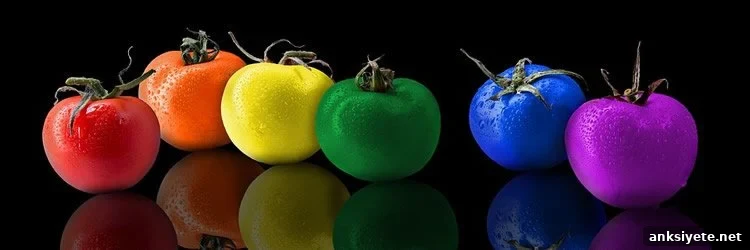
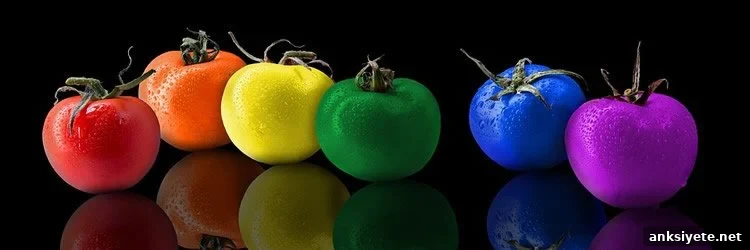
Red often signals “go for it” while green can signal “maybe skip it.” Like a reversed traffic light in the brain, color helps guide our decisions about what to eat. A recent study from the International School for Advanced Studies (SISSA) in Trieste, published in Scientific Reports, finds that vision is the primary sense people use when evaluating foods and that color serves as a simple “calorie code.”
“Some theories propose that our visual system evolved to pick out nutrient-dense fruits and vegetables from foliage,” says Raffaella Rumiati, SISSA neuroscientist and coordinator of the study. Human vision is trichromatic: the retina contains three types of cone photoreceptors tuned to different bands of visible light. This enables us to distinguish a wide range of colors, and we are particularly adept at separating red from green. That sensitivity reflects our heavy reliance on sight—unlike animals that depend mainly on smell, such as dogs.
According to the study, color plays a central role in guiding food-related choices. “In many natural foods, color reliably predicts calorie content,” explains Francesco Foroni, SISSA researcher and first author. “Unprocessed foods that appear redder are more likely to be calorie-rich, while greener foods tend to be lower in calories.” Giulio Pergola, a co-author from the University of Bari, adds: “Participants consistently judged red-tinged foods to be higher in calories; the reverse was true for green-tinged foods. Processed or cooked foods, however, weaken that color–calorie link.”
Previous research shows people generally prefer cooked foods over raw ones—and the preference appears in other species too—because cooking increases the available energy for a given portion. Rumiati notes that while cooking makes color a less dependable cue for calories, the brain nevertheless continues to apply the red-versus-green heuristic even to processed foods. That persistence suggests the color-based mechanism may be an ancient evolutionary adaptation that predates cooking.
Importantly, the study found that the red-over-green preference appears only with food stimuli. When participants evaluated non-food objects, color did not bias perceived value in the same way. This specificity implies a food-related visual channel in the human brain that links color cues to expected energy content.
Implications for public health, marketing, and treatment
Beyond deepening our understanding of human perception, these findings have practical implications for public health messaging, food marketing, and therapies for disordered eating. Rumiati highlights that efforts to promote lower-calorie diets often focus on policy measures—such as restricting certain high-calorie products or adding warning labels to packaging—but visual cues like color could be an additional tool. If color influences perceived caloric value, designers and policymakers might use color strategically to nudge healthier choices, although ethical and practical challenges would need careful consideration.
Because the color heuristic is a fast and automatic visual process, it could shape split-second decisions in real-world contexts such as grocery shopping, restaurant menus, or packaged food design. Any intervention aiming to harness this effect would need to respect existing nutritional science and avoid misleading consumers.
About the research
The study, titled “Food color is in the eye of the beholder: the role of human trichromatic vision in food evaluation,” was conducted by Francesco Foroni, Giulio Pergola, and Raffaella Ida Rumiati and published in Scientific Reports on November 14, 2016 (doi:10.1038/srep37034). Using a large and varied set of food images, the researchers showed that arousal and perceived calorie content covaried with color: red-brightness correlated positively with arousal, while green-brightness correlated negatively with both arousal and perceived caloric content. The pattern held for many natural foods, where color tends to predict energy content, and to a lesser extent for transformed or cooked foods where color is less diagnostic. Notably, this color–calorie association did not appear for nonfood items, supporting the idea that visual evaluation of food engages mechanisms similar to those observed in non-human primates.
This work emphasizes that visual inspection is central to human food evaluation and suggests that our trichromatic vision plays a measurable role in guiding dietary decisions.
Original source: SISSA. Original research: Francesco Foroni, Giulio Pergola, and Raffaella Ida Rumiati, Scientific Reports, 2016. DOI: 10.1038/srep37034.