
EEG Signals Accurately Predict Autism as Early as 3 Months
Summary: EEG recordings analyzed with a new computational approach can identify infants who will later be diagnosed with autism spectrum disorder (ASD) with very high accuracy.
Why this matters: Early, reliable detection of autism remains a major clinical challenge. A new study reports that routine, low-cost electroencephalography (EEG) recordings—when processed with advanced algorithms—can distinguish infants who will develop ASD from those who will not, in some cases as early as three months of age. These findings point to a scalable biomarker that could be used during well-baby visits to flag infants for closer monitoring or early intervention.
Research background and study design
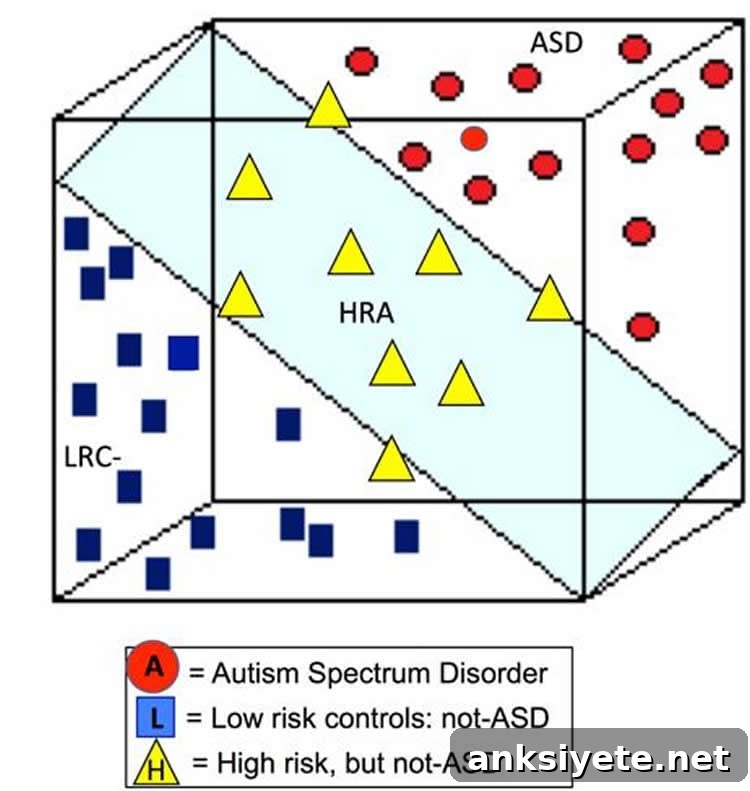
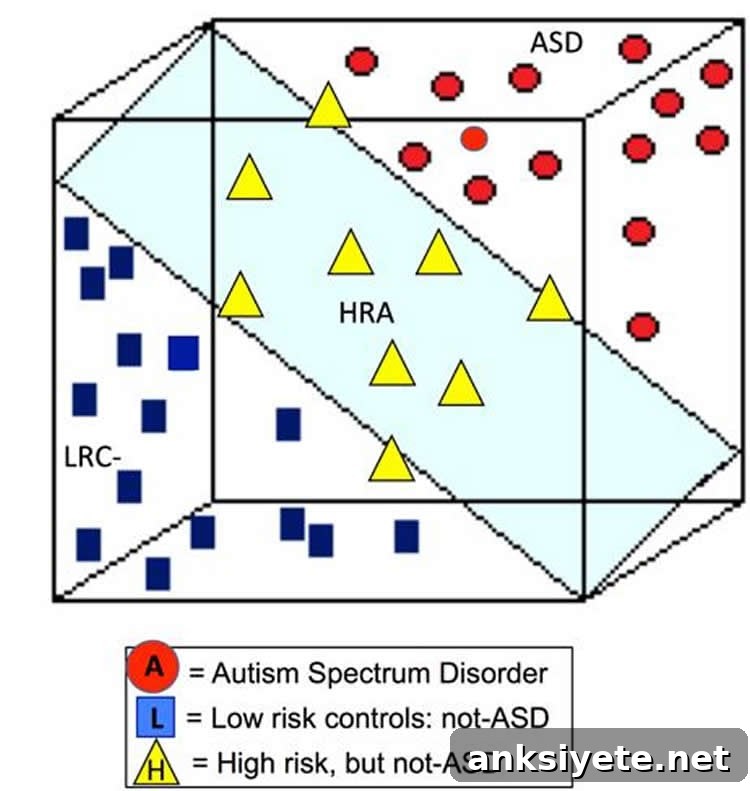
The research analyzed longitudinal EEG data collected in the Infant Screening Project, a collaboration focused on mapping early development and identifying infants at increased risk for ASD and related language or communication difficulties. The dataset included 99 infants at elevated risk for ASD (each had an older sibling with an autism diagnosis) and 89 low-risk control infants.
EEG recordings were obtained at multiple ages—3, 6, 9, 12, 18, 24 and 36 months—using a 128-sensor net placed on each baby while the infant sat on a caregiver’s lap. The recordings captured standard EEG frequency bands (delta, theta, alpha, beta, gamma and high gamma) and were paired with established behavioral assessments, including the Autism Diagnostic Observation Schedule (ADOS), to determine diagnostic outcomes and symptom severity.
How the EEGs were analyzed
William Bosl, PhD, and colleagues applied data-driven, machine-learning methods to nonlinear and complexity measures derived from the EEG signals. These features capture subtle aspects of brain activity and connectivity that are not obvious to the naked eye, even when an EEG looks “normal.” By combining multiple frequency bands and complexity metrics, the algorithms searched for patterns that reliably differentiated infants who later met clinical criteria for ASD from those who did not.
Key findings
The analytic approach produced remarkably high predictive performance. Specificity, sensitivity and positive predictive value exceeded 95 percent at some ages. According to the authors, predictive accuracy by nine months of age approached near-perfect levels in their dataset. The models also predicted ADOS Calibrated Severity Scores—an index of autism symptom severity—with strong correlations to the observed clinical scores when using EEG data collected as early as three months.
These results support the idea that ASD often originates during early brain development and that quantifiable differences in neural signal complexity and connectivity can appear long before clear behavioral symptoms emerge. The findings also reinforce the concept that infants with an older sibling with autism may carry a genetic liability that increases risk, although many such infants do not go on to develop ASD.
Implications
Because EEG is inexpensive, non-invasive and widely available, it has strong potential to serve as a practical screening tool during routine pediatric visits. Early identification could enable targeted monitoring and timely intervention, which can improve developmental outcomes. However, additional validation in larger and more diverse populations is required before widespread clinical implementation.
Funding and acknowledgments
Funding for the original study was provided by the National Institute of Mental Health (NIMH), the National Institute on Deafness and Other Communication Disorders, and the Simons Foundation. The study was conducted by investigators affiliated with Boston Children’s Hospital, Boston University, and the University of San Francisco.
Abstract (condensed)
Autism spectrum disorder (ASD) is typically diagnosed through behavioral assessment in the second year of life or later. This study evaluated whether routine EEG recordings could yield measurable biomarkers for early ASD detection. EEGs were collected from high-risk and low-risk infants from 3 to 36 months of age. Nonlinear EEG features were analyzed with statistical learning methods to predict later clinical diagnosis and symptom severity. EEG-based models achieved high accuracy, with specificity, sensitivity and positive predictive value exceeding 95% at some ages. EEG-derived predictions of ADOS severity scores correlated strongly with clinical assessments, suggesting that useful digital biomarkers may be extracted from infant EEG data.
Note: The content above summarizes peer-reviewed research examining EEG analytics for early detection of ASD. It does not replace clinical evaluation and should not be used as a standalone diagnostic tool.