
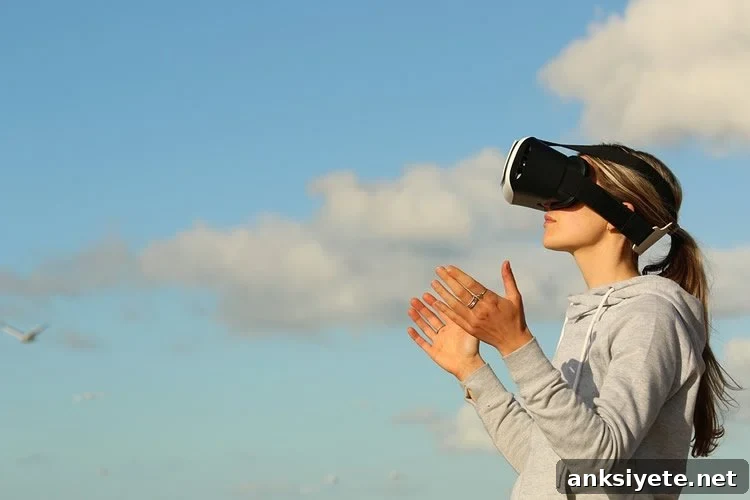
Summary: A new study suggests that virtual reality can effectively encourage empathy, promote helpful behavior, and improve attitudes toward marginalized groups.
Source: PLOS.
Virtual reality (VR) may be an effective tool for fostering empathy, prosocial behavior, and more positive attitudes toward marginalized populations, according to research published October 17, 2018 in the open-access journal PLOS ONE by Fernanda Herrera and colleagues from Stanford University, USA.
Empathy—the capacity to understand and share the feelings of others—has long been linked to altruistic and supportive behavior. Traditionally, researchers induce empathy through perspective-taking exercises that ask participants to imagine another person’s experience. This study tested whether immersive technologies, specifically virtual reality, can enhance traditional perspective-taking and produce stronger or longer-lasting effects.
The research comprised two large experiments with over 500 participants in total. In the second experiment, participants were assigned to one of four conditions: a control group that received fact-based information about homelessness, a group that read a narrative designed to encourage perspective-taking, a group that experienced the same narrative interactively on a desktop computer (2D), and a group that experienced the narrative using an immersive VR headset. The first experiment directly compared a traditional perspective-taking task with a VR-based perspective-taking task and tracked outcomes over time.
Across the experiments, any perspective-taking task—whether traditional reading, desktop interactive experience, or VR—led participants to report higher levels of empathy and a greater sense of connection to people experiencing homelessness than did the information-only control group. These self-reported increases in empathy were consistent across perspective-taking formats.
Despite similar self-report measures, behavioural outcomes differed by format. Participants who experienced homelessness from the perspective of a homeless person in VR were significantly more likely to take a concrete supportive action—signing a petition in favor of services and affordable housing—than participants who completed the traditional perspective-taking task or the less immersive desktop experience. Interestingly, the fact-based information group signed the petition at rates comparable to the VR group in some comparisons, indicating that clear informational interventions can also prompt prosocial actions under certain conditions.
Follow-up surveys revealed that VR produced more durable changes in attitudes. Participants who completed the VR perspective-taking experience showed more positive attitudes toward homelessness that persisted for up to eight weeks, compared with participants who completed the narrative-reading task. Thus, while immediate self-report empathy levels were similar across perspective-taking methods, VR appeared to produce stronger and longer-lasting shifts in expressed attitudes and some behaviours.
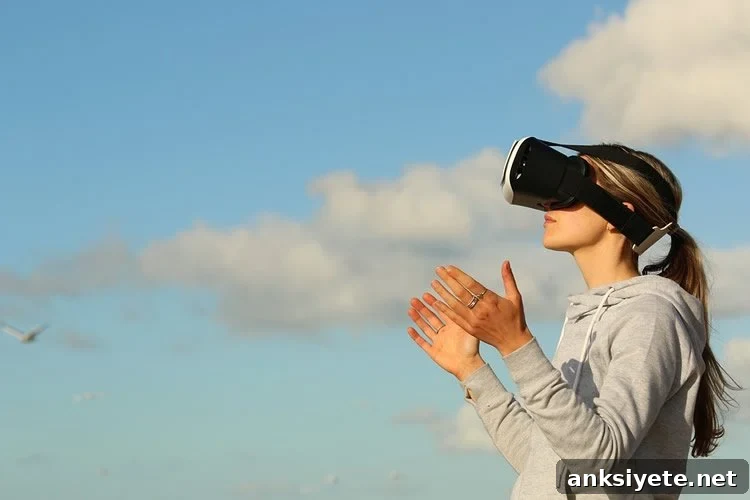
The study authors note several important caveats. Some participants had never used VR before and may have been distracted by the novelty or mechanics of the headset, which could affect both self-report and behavioural responses. The experiments did not measure participants’ pre-existing attitudes toward homelessness, so some individuals may have held established views that influenced their reactions. Despite these limitations, the findings indicate that virtual reality can be a promising method for encouraging empathy and prosocial behavior toward marginalized groups.
Fernanda Herrera summarizes the primary conclusion: “Taking the perspective of others in virtual reality, in this case the perspective of a homeless person, produces more empathy and prosocial behaviors immediately after the VR experience and better attitudes toward the homeless over the course of two months when compared to a traditional perspective-taking task.”
Funding: This research was funded by a grant from the Robert Wood Johnson Foundation; Grant ID# 72394. The funders had no role in study design, data collection and analysis, decision to publish, or preparation of the manuscript.
Source: Fernanda Herrera – PLOS
Publisher: Organized by NeuroscienceNews.com.
Image Source: NeuroscienceNews.com image is in the public domain.
Original Research: Open access research “Building long-term empathy: A large-scale comparison of traditional and virtual reality perspective-taking” by Fernanda Herrera, Jeremy Bailenson, Erika Weisz, Elise Ogle, and Jamil Zaki in PLOS ONE. Published October 17, 2018.
doi: 10.1371/journal.pone.0204494
PLOS. “Virtual Reality May Encourage Empathetic Behavior.” NeuroscienceNews. 17 October 2018. (Original source: PLOS ONE.)
Abstract
Building long-term empathy: A large-scale comparison of traditional and virtual reality perspective-taking
Virtual reality has been called an “ultimate empathy machine” because it allows people to experience situations from another individual’s point of view. However, empirical evidence comparing VR to traditional perspective-taking methods is limited. The authors conducted two experiments to test short- and long-term effects of VR perspective-taking compared with traditional tasks and to examine how technological immersion influences mediated perspective-taking. Study 1 compared a traditional perspective-taking exercise with a VR perspective-taking experience and tracked outcomes over eight weeks. Study 2 compared traditional reading, desktop interactive experience, and VR with a control condition that provided fact-driven information. Results showed that participants in any perspective-taking condition reported greater empathy and connection to people experiencing homelessness than participants who only received informational content. While self-reported empathy did not differ significantly across perspective-taking formats, VR participants demonstrated stronger behavioural responses—such as signing a petition in support of services and affordable housing—and more positive attitudes that lasted up to eight weeks. These findings highlight the potential of VR to produce durable attitude change and motivate prosocial actions, while also underscoring the role of immersion and the need to consider novelty effects and pre-existing attitudes in future research.