
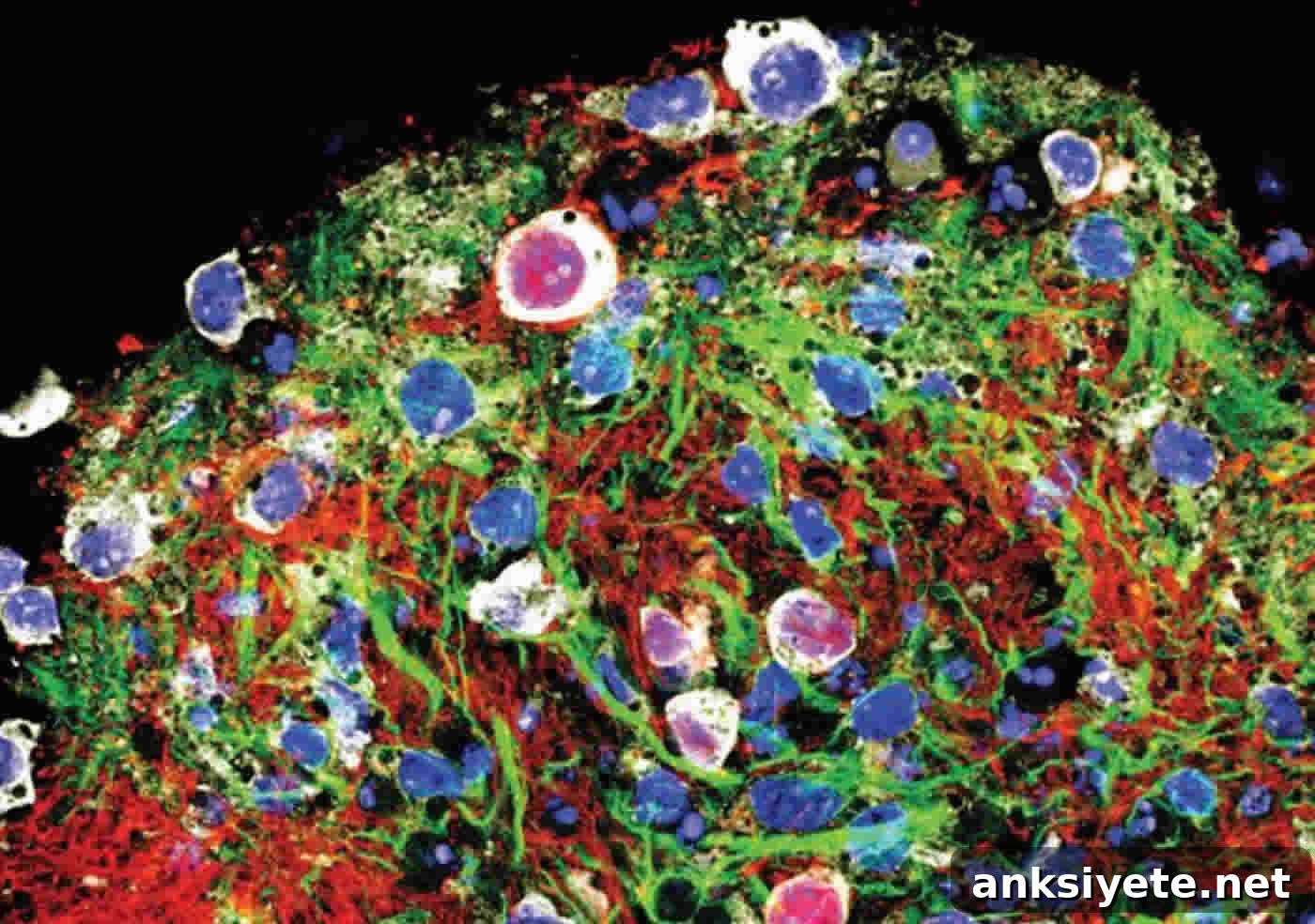
Summary: Researchers at the Salk Institute have grown miniature spinal-cord networks in a dish—called circuitoids—that spontaneously produce coordinated rhythmic activity similar to the neural patterns that drive repetitive movements.
Source: Salk Institute.
Rhythm is not just for dancers. From breathing to walking to chewing, many everyday actions depend on rhythmic neural activity. Despite its importance, the circuit-level organization that generates these rhythms remains incompletely understood. Better models of rhythm-generating networks could inform treatments for movement and neurodevelopmental disorders such as Parkinson’s disease, ALS, and autism.
To study how rhythmic firing arises and is regulated, scientists at the Salk Institute used mouse embryonic stem cells to build compact, self-contained spinal cord networks in vitro, which they call circuitoids. These circuitoids are micro-scale assemblies of spinal neurons organized into functional networks that allow researchers to observe and manipulate rhythm-generating circuits directly. The findings were published online February 14, 2017, in eLife.
The Pfaff laboratory grew circuitoids that contained roughly 50,000 cells each, forming visible clumps with varied proportions of neuronal subtypes. Using genetic tags and molecular markers, the team labeled four neuronal subtypes essential for motor control: three interneuron classes (V1, V2a, V3) and motor neurons. The researchers then monitored activity in real time with advanced microscopy to track how different combinations and ratios of excitatory and inhibitory neurons shaped network dynamics.
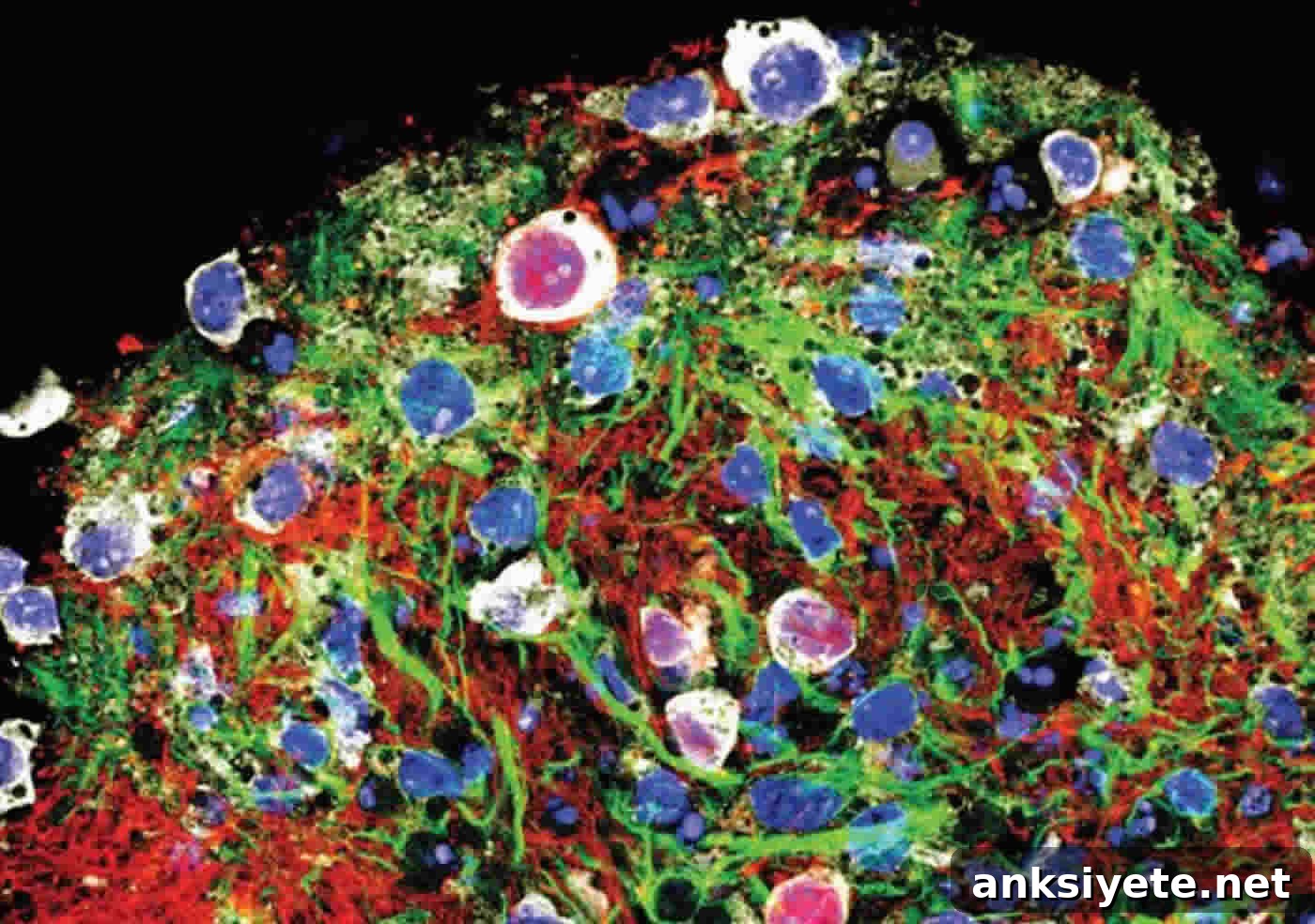
Key observations emerged when the team examined circuitoids made from different neuronal populations. Circuitoids composed primarily of excitatory neurons—either V2a interneurons, V3 interneurons, or excitatory motor neurons—showed spontaneous, rhythmic bursting without any external stimulation. In contrast, circuitoids made solely of inhibitory neurons displayed little to no rhythmic activity on their own.
Adding inhibitory V1 neurons changed the rhythms in subtype-specific ways. When V1 inhibitory neurons were added to networks of V3 excitatory interneurons, the overall burst frequency increased, meaning the circuit oscillated faster. When inhibitory neurons were added to motor-neuron-dominated circuitoids, the motor network broke into smaller independent subnetworks, or segmented modules, each showing its own patterned activity. These results indicate that the balance and ratio of excitatory (E) to inhibitory (I) neurons within a network—often expressed as the E-to-I ratio—can tune both the speed and the spatial organization of rhythmic outputs.
“Large-scale neural circuits remain deeply complex, but simplified, well-controlled systems like circuitoids let us isolate principles of how rhythm-generating networks operate,” says senior author Samuel Pfaff, a Salk Institute professor and Howard Hughes Medical Institute investigator. “By varying cell-type composition in these miniature networks, we can begin to understand how the brain creates flexible motor patterns and how disruptions in those balances may contribute to disease.”
Because circuitoids form functioning, interconnected networks that produce patterned firing, they offer a closer approximation of natural circuitry than many conventional cell culture models. This makes them a promising platform both for basic science—dissecting how spinal circuits generate and control rhythmic movements—and for translational research, such as testing strategies to restore proper neural rhythms by altering cellular composition or network properties in disease models.
Authors included Matthew J. Sternfeld, Christopher A. Hinckley, Niall J. Moore, Matthew T. Pankratz, Kathryn L. Hilde, Shawn P. Driscoll, Marito Hayashi, Neal D. Amin, Dario Bonanomi, Wesley D. Gifford, and Martyn Goulding of Salk; and Kamal Sharma of the University of Illinois, Chicago. The senior author is Samuel L. Pfaff.
Funding: The research received support from multiple sources, including the National Cancer Institute (NIH), Rose Hills Foundation, H. A. and Mary K. Chapman Charitable Trust, UC San Diego Neurosciences Graduate Program, U.S. National Research Service Award (NIH NINDS), National Science Foundation, the Japanese Ministry of Education Long-Term Student Support Program, Timken-Sturgis Foundation, California Institute for Regenerative Medicine, Howard Hughes Medical Institute, Christopher and Dana Reeve Foundation, Marshall Heritage Foundation, and Sol Goldman Charitable Trust.
Original research: “Speed and segmentation control mechanisms characterized in rhythmically-active circuits created from spinal neurons produced from genetically-tagged embryonic stem cells,” published in eLife, February 14, 2017. DOI: 10.7554/eLife.21540.
Flexible spinal networks that control distinct motor actions can switch among activity patterns to produce different behaviors. Both excitatory (E) and inhibitory (I) neurons are required for normal motor function, but how changing the E-to-I ratio shapes circuit output is not well-defined. Using stem-cell-derived spinal neurons, the researchers assembled synthetic microcircuits—circuitoids—composed of defined spinal neuron subtypes. Circuitoids made of purified excitatory interneurons generated oscillatory bursts resembling in vivo central pattern generator activity. Inhibitory V1 neurons provided layered regulation: they increased burst frequency in excitatory V3 networks and segmented motor neuron activity into subnetworks. These findings suggest that the speed and pattern of spinal motor circuits can be regulated quantitatively by gating the intra-network balance of excitatory and inhibitory cells.