
Summary: A new study finds that facial expressions can interfere with our ability to distinguish unfamiliar faces.
Source: University of Bristol.
Faces are dynamic. Even within a single conversation, expressions shift and head angle changes; over longer periods, features like hair, facial hair, and weight can alter appearance.
People we know remain recognizable despite these variations. But when it comes to unfamiliar faces, our ability to match and identify the same person across different images is surprisingly poor.
Researchers from the University of Bristol investigated how changeable facial expressions affect our perception and learning of facial identity. Their findings, published in the journal i-Perception, show that expressive faces make it harder to learn and later recognise unfamiliar individuals.
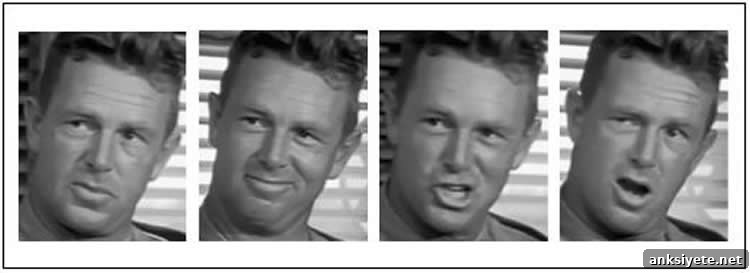
In the study, participants performed an identification task in which they learned to recognise the identities of two actors using large sets of naturalistic “ambient” face images sourced from movies. For training, one group of participants studied images in which the actors displayed neutral expressions, while another group trained on images judged experimentally to be highly expressive.
During training, participants who learned from expressive images responded more slowly and made more errors compared with those trained on neutral images. At test, participants were shown new images of the same actors that varied in expressiveness. Those who had trained with neutral faces were particularly affected by highly expressive test images: their responses were slower and less accurate for high-expressiveness images than for low-expressiveness images.
The results indicate that expressions are not processed entirely separately from identity. Instead, expression appears to interact with how identity is encoded: changeable aspects of the face, like expressions, influence recognition performance. This pattern supports a model of face perception in which facial identity and mutable facial features are represented within a shared framework rather than through fully independent channels.
Lead researcher Annabelle Redfern, from the School of Experimental Psychology at the University of Bristol, explained that using several hundred movie-derived images allowed the team to approximate the variety of faces encountered in everyday life. The experimental measures—reaction time and accuracy—revealed clear differences in how expressive and neutral faces are processed when learning unfamiliar identities.
Redfern summarized the implications: rather than storing only a static facial template for someone we meet, our mental representation may include typical expressions alongside facial features. As a result, unexpected or strong expressions can impede identification when we encounter unfamiliar people.
Source: Annabelle Redfern, School of Experimental Psychology, University of Bristol.
Image source: Public-domain film still used for illustration only.
Original research: The study, titled “Expression Dependence in the Perception of Facial Identity” by Annabelle S. Redfern and Christopher P. Benton, was published in i-Perception (online June 1, 2017). The work examines how expressive variability in naturalistic face images affects learning and recognition of unfamiliar identities.
Redfern, A. S., & Benton, C. P. (2017). Expression Dependence in the Perception of Facial Identity. i-Perception.
Abstract
Expression Dependence in the Perception of Facial Identity
Recognising familiar faces regardless of expression is a key feature of human social perception. This study tested whether changes in facial expression compromise identity constancy and thereby inform whether identity and expression are processed independently or interactively. Participants learned two actors’ identities from naturalistic images taken from films. Training images were either neutral or expressive, with expressiveness quantified experimentally. Responses during expressive training were slower and less accurate than during neutral training. In subsequent tests using novel images that varied in expressiveness, participants trained on neutral images showed slower and less accurate recognition for highly expressive test images than for less expressive ones. These findings demonstrate that facial expression can impede both the processing and the learning of facial identity. The pattern is consistent with a model in which changeable facial aspects and identity are coded within a common framework, suggesting that typical expressions form part of the mental representation of a person’s face.