
Under Nicolae Ceausescu’s dictatorship, thousands of Romanian children were placed in overcrowded orphanages where conditions were bleak and human contact was minimal. Even after the 1989 revolution, the effects of prolonged institutionalization persisted. Only in recent years, as research and public concern about early childhood environments have grown, have policies and practices begun to change.
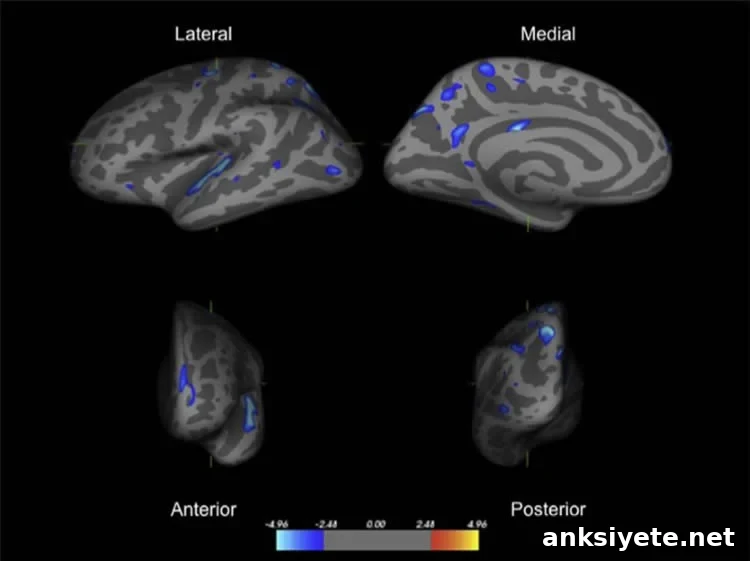
Researchers at the University of Washington have found that severe early neglect experienced in these institutions is associated with measurable changes in brain structure. A paper published in Biological Psychiatry reports that children who spent their early years in Romanian orphanages show reduced cortical thickness in brain regions involved in attention, impulse control and related cognitive functions.
“These differences point to a mechanism through which early caregiving environments exert long-lasting effects on children’s functioning,” said lead author Katie McLaughlin, an assistant professor of psychology at the University of Washington.
Since 2000, the Bucharest Early Intervention Project has followed and treated children who lived in these institutional settings. McLaughlin joined the study team several years ago to examine how early deprivation affects brain development.
This study is among the first to document how social deprivation early in life relates specifically to thinning of the cortex, the folded layer of gray matter that forms the brain’s outer surface. Using MRI scans, the researchers compared brain anatomy in children who had spent time in institutions with children raised in family homes in nearby communities.
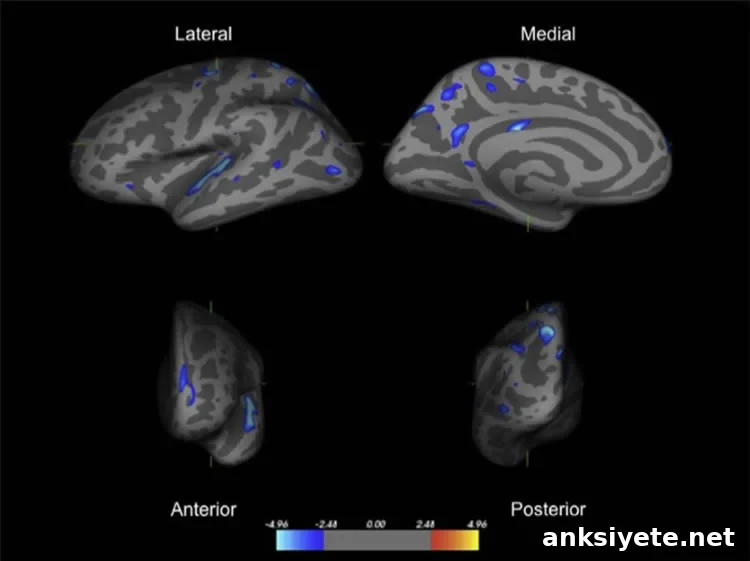
“We observed a widespread pattern of differences in brain regions that support attention, working memory and social cognition,” McLaughlin said. These neural differences align with the behavioral profiles commonly seen in children who experienced early institutional care.
Previous research has found that children raised in institutions have higher rates of attention-deficit/hyperactivity disorder (ADHD) than their peers. The present study helps explain a biological pathway that could contribute to that increased risk: thinning of cortical tissue in networks that underlie attentional control and impulse regulation.
The researchers analyzed MRI data from 58 children who had spent at least some time in institutions and 22 children from non-institutionalized family settings, all aged between 8 and 10. This was the first MRI assessment in the longitudinal study, creating detailed three-dimensional maps of cortical structure.
Earlier findings from the project documented overall reductions in gray matter among children raised in orphanages; the new analyses localize those reductions to specific cortical regions. The most pronounced differences appeared in areas supporting working memory and sustained attention.
Notably, the brain scans accounted for more than 75 percent of the difference in ADHD symptoms between previously institutionalized children and those raised in family care. Thinning of cortex was evident even among children who left institutional care as early as eight months of age, and the degree of thinning correlated with the severity of inattention and impulsivity symptoms.
There were no significant differences in subcortical volumes, and boys and girls showed similar patterns of cortical change in this sample.
When the study began, some children remained in institutions while others were placed into foster families that were carefully selected and trained by the research team as part of an intervention designed to mitigate the effects of early deprivation. Among the children who experienced institutional care, comparisons between those who remained longer in institutions and those placed into high-quality foster care before age three revealed only modest differences in cortical structure.
“That finding is both surprising and, in some ways, disappointing,” McLaughlin said, noting that most behavioral measures improved substantially for children moved into foster care, yet cortical thickness in the regions linked to attention and impulse control showed less recovery.
The study cannot determine which specific aspects of the institutional environment caused the observed neural changes. Children in the orphanages typically had basic physical needs met but experienced limited social interaction, reduced language exposure, minimal physical contact and inconsistent caregiver attachment. Future research aims to identify which forms of stimulation and which developmental windows are most critical for healthy brain maturation.
ADHD is a multifactorial condition with many causes, and it is treatable in many cases. This study focused specifically on the association between severe early-life deprivation and neurodevelopmental outcomes, and its findings have broader relevance for contexts where institutional care is common.
“Monitoring and improving care during the earliest years should be a public health priority, especially for abandoned and orphaned children,” McLaughlin said.
The research team plans a follow-up study in Bucharest to assess the same participants in adolescence. These young people, now around 16 years old, will undergo physical and mental health evaluations and may take part in additional tests, including repeat brain imaging.
The Bucharest Early Intervention Project is led by Charles Nelson at Harvard Medical School, Nathan Fox at the University of Maryland, and Charles Zeanah at Tulane University; these investigators are co-authors on the paper. Other co-authors include Margaret Sheridan and Warren Winter at Harvard Medical School and Katie A. McLaughlin at the University of Washington.
The research received funding from the John D. and Catherine T. MacArthur Foundation and the National Institutes of Health.
Contact: Hannah Hickey – University of Washington
Source: University of Washington press release
Image source: K. McLaughlin / UW (adapted from the study press materials)
Original research: “Widespread Reductions in Cortical Thickness Following Severe Early-Life Deprivation: A Neurodevelopmental Pathway to Attention-Deficit/Hyperactivity Disorder” by Katie A. McLaughlin, Margaret A. Sheridan, Warren Winter, Nathan A. Fox, Charles H. Zeanah, and Charles A. Nelson, published in Biological Psychiatry. doi:10.1016/j.biopsych.2013.08.016