
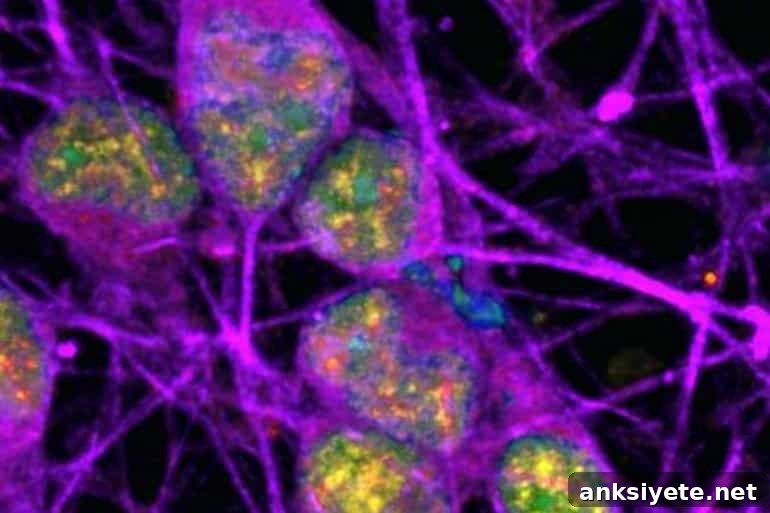
Summary: Scientists at the National Institutes of Health have pinpointed regions in neuronal DNA that consistently accumulate single-strand breaks (SSBs). These SSB hotspots are largely unique to neurons and prompt a rethink of how DNA damage arises and how failures in repair may contribute to neurodegenerative disorders.
Source: NIH
Researchers at the National Institutes of Health report that mature neurons harbor concentrated sites of DNA single-strand breaks (SSBs) at specific regulatory DNA elements. The discovery suggests that, in neurons, these breaks are not merely accidental damage but are tied to normal gene regulation and the dynamic removal of DNA methylation, with important implications for diseases linked to defective DNA repair.
Neurons are highly metabolically active and consume large quantities of oxygen, which exposes them to reactive oxygen species and other free radicals that can harm cellular DNA. While such oxidative damage is often assumed to occur randomly across the genome, this study reveals a striking pattern: SSBs in neurons are frequently concentrated within enhancer regions — stretches of DNA that control when and how nearby genes are turned on.
Mature, post-mitotic neurons do not require all genes to be active at once. One mechanism for restricting gene activity involves DNA methylation, a chemical tag that can silence a gene when present. The NIH team found that many SSBs coincide with sites where methyl groups are being removed (DNA demethylation), a step that typically primes a gene for activation. The data indicate that the process of removing methyl groups can itself generate single-strand breaks, which are then rapidly repaired by neuronal DNA repair systems.
This interpretation challenges a long-standing view that DNA damage in cells is strictly harmful and should be avoided at all costs. In neurons, the formation and repair of SSBs appear to be woven into normal gene regulation: transient breaks arise during demethylation and are promptly resolved as part of switching genes on and off. Consequently, the harmful outcomes previously attributed to DNA damage may instead stem from failures in the repair machinery rather than from the presence of breaks per se.
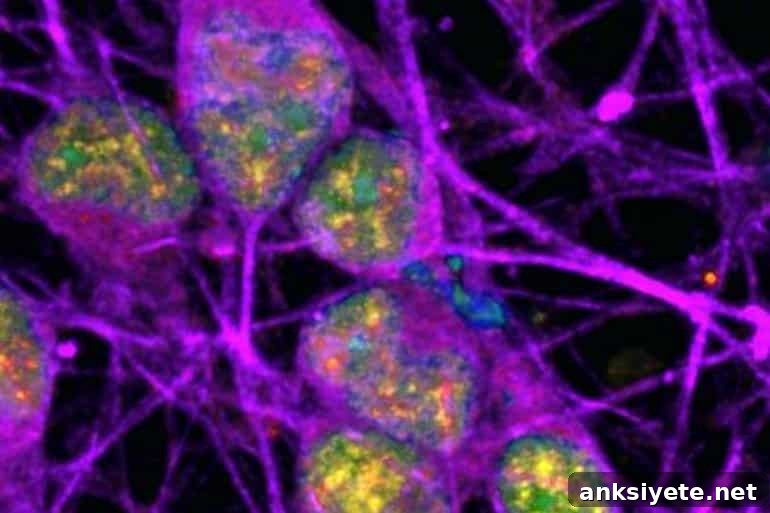
The work is the result of collaboration between two NIH laboratories: Michael E. Ward, M.D., Ph.D., at the National Institute of Neurological Disorders and Stroke (NINDS) and Andre Nussenzweig, Ph.D., at the National Cancer Institute (NCI). Dr. Nussenzweig contributed a sensitive genome-wide mapping method that detects DNA lesions, while Dr. Ward’s group provided expertise in producing large populations of neurons from induced pluripotent stem cells (iPSCs) derived from a single human donor, enabling the technique to be applied effectively to neuronal genomes. Additional input on single-strand break repair pathways came from Keith Caldecott, Ph.D., at the University of Sussex.
Using genome-wide mapping, the teams found SSBs concentrated at neuronal enhancers, often near CpG dinucleotides and sites undergoing DNA demethylation. The repair of these breaks relies on PARP1 and XRCC1-dependent pathways. The authors report that defects in XRCC1-mediated short-patch repair lead to increased DNA repair synthesis at enhancers, whereas impairments in long-patch repair reduce synthesis, indicating that both short-patch and long-patch mechanisms sustain the high level of repair activity at these regulatory sites.
These findings provide the first clear evidence for site- and cell type-specific accumulation and repair of SSBs, revealing that localized and ongoing DNA breakage is a feature of neuronal biology. They also offer a plausible explanation for why inherited or acquired defects in SSB repair produce neurological and neurodegenerative symptoms: when the tightly regulated repair process fails, neuronal function and long-term viability can be compromised.
Going forward, the collaborating labs are investigating the detailed molecular steps that reverse neuronal SSBs and exploring how disruptions in those pathways connect to neuronal dysfunction and degeneration. By focusing on the interplay between DNA demethylation, enhancer activity, and repair, this line of research aims to clarify mechanisms that could underlie developmental and degenerative brain disorders and point toward potential therapeutic strategies that stabilize repair processes in vulnerable neurons.
About this genetics research news
Source: NIH
Contact: Carl P. Wonders – NIH
Image: The image is credited to Ward lab, NINDS
Original Research: Closed access. “Neuronal enhancers are hotspots for DNA single-strand break repair” by Wei Wu, Sarah E. Hill, William J. Nathan, Jacob Paiano, Elsa Callen, Dongpeng Wang, Kenta Shinoda, Niek van Wietmarschen, Jennifer M. Colón-Mercado, Dali Zong, Raffaella De Pace, Han-Yu Shih, Steve Coon, Maia Parsadanian, Raphael Pavani, Hana Hanzlikova, Solji Park, Seol Kyoung Jung, Peter J. McHugh, Andres Canela, Chongyi Chen, Rafael Casellas, Keith W. Caldecott, Michael E. Ward & André Nussenzweig. Nature
Abstract
Neuronal enhancers are hotspots for DNA single-strand break repair
Defects in DNA repair frequently lead to neurodevelopmental and neurodegenerative diseases, underscoring the particular importance of DNA repair in long-lived post-mitotic neurons. The cellular genome is subjected to a constant barrage of endogenous DNA damage, but surprisingly little is known about the identity of the lesion(s) that accumulate in neurons and whether they accrue throughout the genome or at specific loci.
Here we show that post-mitotic neurons accumulate unexpectedly high levels of DNA single-strand breaks (SSBs) at specific sites within the genome. Genome-wide mapping reveals that SSBs are located within enhancers at or near CpG dinucleotides and sites of DNA demethylation. These SSBs are repaired by PARP1 and XRCC1-dependent mechanisms.
Notably, deficiencies in XRCC1-dependent short-patch repair increase DNA repair synthesis at neuronal enhancers, whereas defects in long-patch repair reduce synthesis. The high levels of SSB repair in neuronal enhancers are therefore likely to be sustained by both short-patch and long-patch processes.
These data provide the first evidence of site- and cell type-specific SSB repair, revealing unexpected levels of localized and continuous DNA breakage in neurons. In addition, they suggest an explanation for the neurodegenerative phenotypes that occur in patients with defective SSB repair.