
Summary: Researchers have developed a new, non-invasive technique that could lead to an accessible therapy for patients with disorders of consciousness.
Source: UCLA
New Noninvasive Ultrasound Technique Could Offer Low-Cost Therapy for Severe Brain Injury
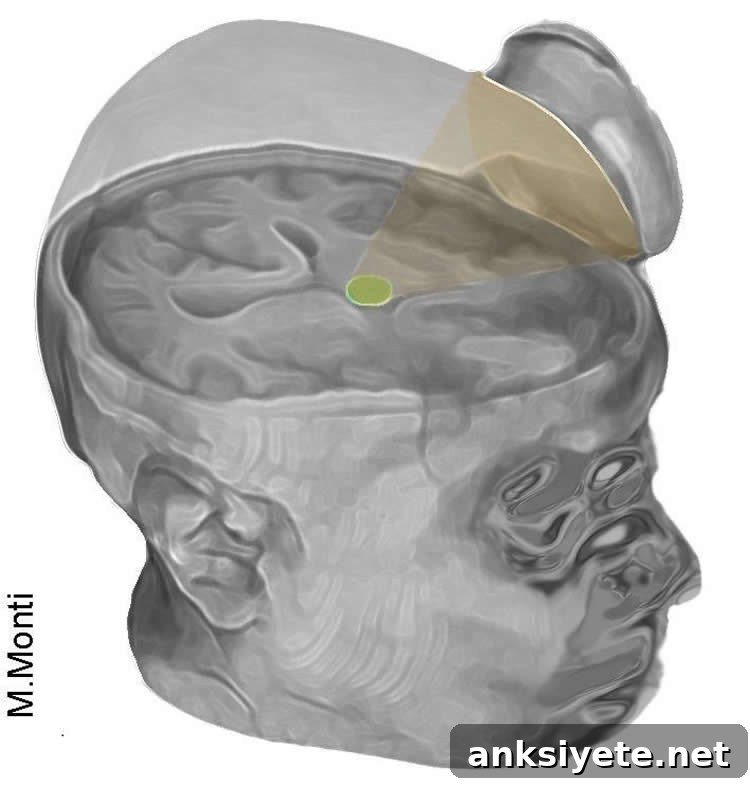
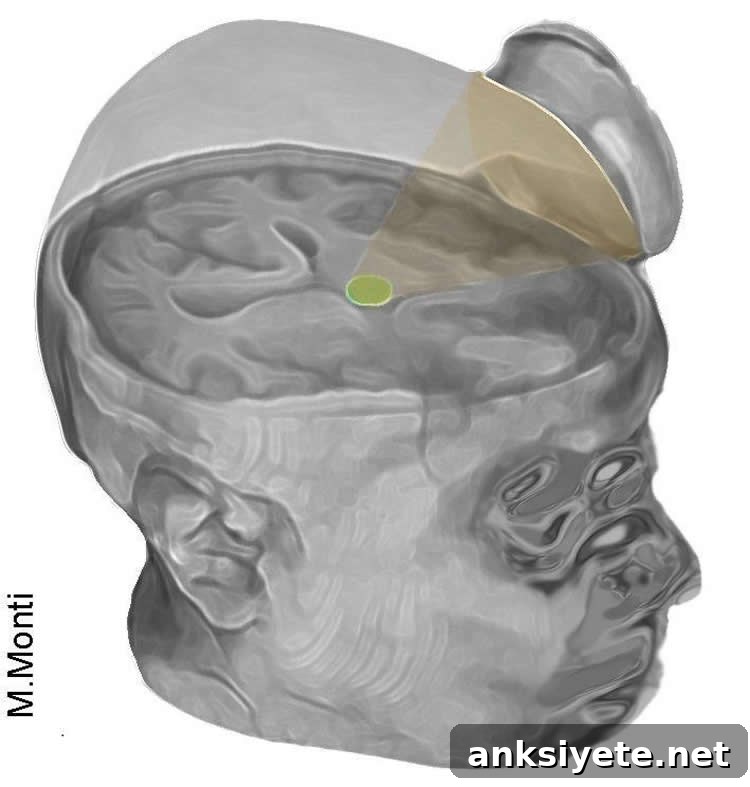
Researchers at UCLA report a promising, noninvasive method that uses focused ultrasound to stimulate the thalamus and potentially restore consciousness in patients recovering from severe brain injury. The technique, called low-intensity focused ultrasound pulsation, targets the thalamus — a key deep-brain structure that coordinates information processing — with short bursts of acoustic energy to excite neuronal activity without surgery.
In a first-in-human case, a 25-year-old man emerging from a coma showed dramatic improvement after a single treatment. Before stimulation, he displayed only minimal signs of awareness and could perform only limited, instructed movements. After undergoing ten 30-second stimulation sessions over a 10-minute period, the patient showed measurable improvement within 24 hours. Three days later he had regained full consciousness and language comprehension, and was able to reliably communicate with head nods and even offer a fist-bump to a member of the medical team.
“It’s almost as if we were jump-starting the neurons back into function,” said Martin Monti, the study’s lead author and a UCLA associate professor of psychology and neurosurgery. Monti noted that until now similar activation of the thalamus required deep brain stimulation, an invasive surgical procedure that implants electrodes directly into the thalamus. The ultrasound approach aims at the same target but is noninvasive and much lower risk.
The ultrasound device used in the study is compact — roughly the size of a coffee cup saucer — and produces a focused, spherical region of acoustic energy that can be directed at specific brain areas. For safety, the device delivers energy at a level below that of a standard Doppler ultrasound. The device and initial method were developed by Alexander Bystritsky, a UCLA professor of psychiatry and biobehavioral sciences and co-author of the study.
Monti cautioned that while the initial response is encouraging, the findings come from a single patient and require careful replication. “It is possible that we were just very lucky and happened to have stimulated the patient just as he was spontaneously recovering,” he said. Larger, controlled studies are needed to establish the reliability and scope of the effect.
The thalamus is a logical target for intervention because it often functions poorly in patients with disorders of consciousness after severe brain injury. Many drugs used to assist recovery act on the thalamus indirectly, but direct stimulation of thalamic circuits may more effectively restore the coordinated activity needed for wakefulness, awareness, and language comprehension.
Planned Research and Potential Clinical Application
Under the direction of Paul Vespa, a UCLA professor of neurology and neurosurgery, the research team plans to begin testing the procedure in several more patients at the Ronald Reagan UCLA Medical Center. Those studies will be carried out in collaboration with the UCLA Brain Injury Research Center and supported by philanthropic foundations. If further trials confirm benefit, the technology could be adapted into a portable, low-cost device — potentially incorporated into a helmet — to help “wake up” patients in vegetative or minimally conscious states. Currently, effective treatments for these conditions are limited.
The study’s authors emphasize that broader clinical use will depend on confirming the effect in additional patients, understanding the mechanism of action, optimizing stimulation parameters, and ensuring long-term safety. Nevertheless, the potential to noninvasively and selectively stimulate deep-brain structures represents an exciting advance in neurocritical care and rehabilitation.
Co-authors on the report include Paul Vespa, who holds UCLA’s Gary L. Brinderson Family Chair in Neurocritical Care and serves as director of neurocritical care at the Ronald Reagan UCLA Medical Center; Caroline Schnakers, a UCLA neurosurgery researcher; and Alexander Korb, a researcher at the Semel Institute. The ultrasound method was pioneered by Alexander Bystritsky, who is also a founder of the company that provided the device used in the study.
Image credit: Martin Monti/UCLA
Abstract (Summary)
Modern intensive care has increased survival after severe brain injury, but many patients do not fully recover and remain in disorders of consciousness such as the vegetative state or the minimally conscious state. These conditions can be long-lasting, severely limit autonomy, strain families emotionally and financially, and pose serious challenges for caregivers and health systems. The reported first-in-man application of noninvasive ultrasonic thalamic stimulation demonstrates a potential new approach to target deep-brain networks implicated in arousal and awareness. Further controlled research is required to evaluate therapeutic value, safety, and practicality in broader clinical settings.