
Dura Mater Grafts Associated with Alzheimer-Type Amyloid-β Pathology in Recipients with Iatrogenic Creutzfeldt-Jakob Disease
Until now, Alzheimer’s disease has not been considered transmissible. New pathology findings from the University of Zurich and Vienna Medical University identify Alzheimer-type amyloid-β deposits in brains of patients who received dura mater grafts and later died of iatrogenic Creutzfeldt-Jakob disease.
Alzheimer’s disease (AD) is diagnosed by progressive cognitive decline and characteristic brain changes, including extracellular plaques composed of amyloid-β (Aβ) protein. The prevailing view in neurology and public health is that AD is not a contagious or transmissible disorder. Still, experimental studies in animals have repeatedly shown that Aβ plaques recovered from human AD brain tissue can seed additional plaque formation when injected into the brains of laboratory mice, raising concerns that Aβ pathology might be transmitted under certain conditions.
In a study published in Swiss Medical Weekly, Karl Frontzek and colleagues from the University of Zurich and the Medical University of Vienna examined this possibility in a clinical context. The researchers focused on patients who had received grafts of human dura mater — the tough, fibrous membrane that covers the brain and spinal cord — as part of neurosurgical procedures. Historically, cadaveric dura mater grafts were used to repair surgical defects, but a subset of those graft donors were later found to have been infected with prions, the agents responsible for Creutzfeldt-Jakob disease (CJD). Those contaminated grafts transmitted prion disease to recipients, producing cases of iatrogenic Creutzfeldt-Jakob disease (iCJD).
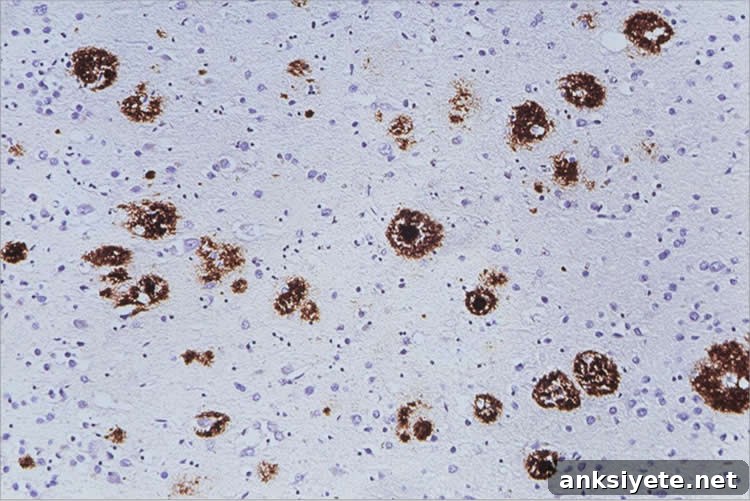
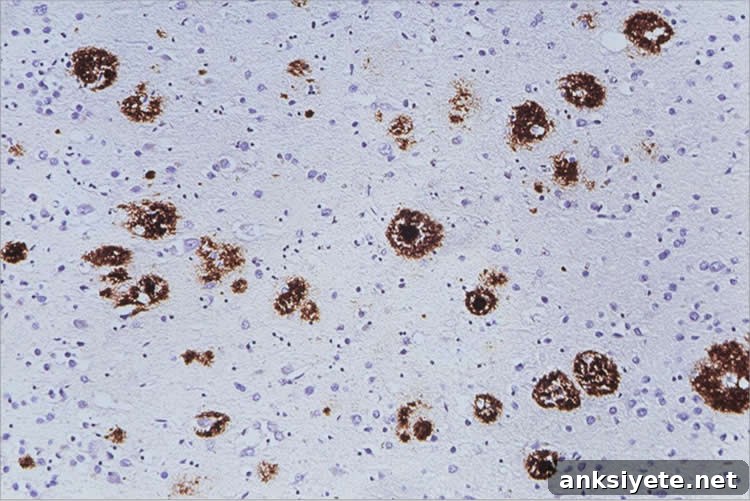
Frontzek et al. examined seven brains from relatively young patients (ages 28–63) who developed iCJD after dural grafting performed 11 to 25 years prior to death. Using immunohistochemistry to detect amyloid-β, the investigators assessed the presence and distribution of Aβ deposits in the meninges and brain parenchyma. For comparison, they analyzed two control series: one of 21 age-matched patients with sporadic CJD (ages 40–63) and a larger series of 81 sporadic CJD cases (ages 55–85), applying the same pathological methods.
The study found that five of the seven iCJD brains displayed significant Aβ pathology. Deposits occurred in meningeal vessels consistent with congophilic amyloid angiopathy (CAA) and as parenchymal Aβ plaques within brain tissue. This frequency was markedly higher than in the age-matched sporadic CJD controls and the broader sporadic CJD series; the difference reached statistical significance (p < 0.001). The appearance of Aβ pathology in these relatively young individuals is highly unusual and stood in contrast to expectations for age-related accumulation of amyloid.
From these observations, the authors concluded that congophilic amyloid angiopathy and brain parenchymal Aβ plaques are frequent findings in cases of iCJD after dural grafting. The unusual occurrence of Aβ pathology in younger brains that received human dura mater grafts suggests a causal relationship between the graft material and subsequent amyloid deposition. One plausible explanation is that Aβ aggregates introduced with the grafts acted as seeds that initiated or accelerated amyloid pathology in host tissue. However, the authors emphasize that further research is required to determine whether seeding from graft-derived Aβ aggregates is the mechanism responsible for the observed changes.
This work adds to an evolving body of evidence indicating that hallmark lesions of Alzheimer-type pathology can, under constrained and specific circumstances, appear to propagate from contaminated human tissues. The findings carry important implications for transplantation medicine, tissue handling, and donor screening, and they underscore the need for vigilance to prevent unintended transmission of pathogenic protein aggregates. At the same time, these results do not redefine Alzheimer’s disease as an infectious disease in the general population; rather, they highlight a rare and iatrogenic context in which Aβ pathology may be introduced into recipients via contaminated biological material.
Source: Karl Frontzek — University of Zurich
Image Source: University Hospital Zurich
Original Research: Full open access research titled “Amyloid-β pathology and cerebral amyloid angiopathy are frequent in iatrogenic Creutzfeldt-Jakob disease after dural grafting” by Karl Frontzek, Mirjam I. Lutz, Adriano Aguzzi, Gabor G. Kovacs, and Herbert Budka in Swiss Medical Weekly. Published online January 26, 2016. doi:10.4414/smw.2016.14287
Abstract (summary)
Study question: Previous reports identified Alzheimer-type Aβ pathology in brains of individuals who developed iatrogenic CJD after human cadaveric growth hormone treatment, suggesting possible human transmission of Aβ. This study asked whether Aβ pathology is similarly frequent in iCJD cases related to dura mater grafting.
Methods: Seven brains from patients who developed iCJD after dural grafting (age range 28–63; grafting performed 11–25 years before death) were analyzed by immunohistochemical methods for Aβ. Two control series of sporadic CJD cases were included: 21 age-matched patients (40–63 years) and 81 additional sporadic CJD cases (55–85 years).
Results: Five of seven iCJD brains showed Aβ deposits in meningeal vessels as congophilic amyloid angiopathy and as brain parenchymal plaques. These findings were significantly more frequent than in the age-matched sporadic CJD controls and the larger sporadic CJD series (p < 0.001).
Conclusions: The data indicate that congophilic amyloid angiopathy and parenchymal Aβ plaques are common in iCJD following dural grafting. The atypical presence of Aβ pathology in young recipients suggests a potential causal link to the grafts, and further studies are necessary to determine whether graft-derived Aβ aggregates seeded host tissue and initiated amyloid deposition.