
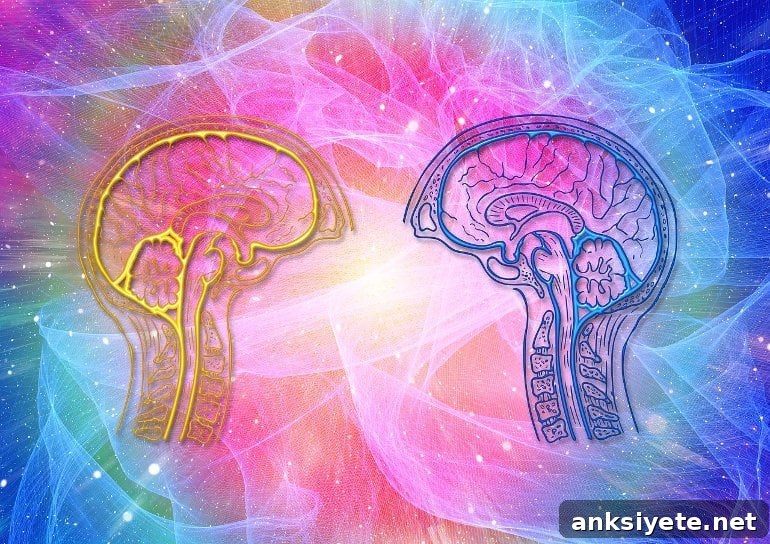
Summary: Brains of people who play online video games together show synchronized activity, even when players are physically apart.
Source: University of Helsinki
As online gaming and remote social interaction have surged—accelerated by the pandemic—understanding how these activities affect social cognition and teamwork has become essential. This study examines whether the brain-to-brain coupling shown in face-to-face interactions also appears during purely online cooperation.
Previous research has demonstrated that people’s brains can exhibit similar, time-locked activity patterns during social interaction. This inter-brain synchronization has been associated with empathy, shared attention, cooperation, and improved team outcomes in face-to-face settings. Until now, however, it remained unclear whether the same neural synchrony occurs when people interact remotely via screens without audio or video contact.
Researchers at the University of Helsinki tested this question by measuring brain activity while pairs of participants cooperatively controlled a racing car in an online game. The two players were physically separated in soundproof rooms and interacted only through the on-screen movement of the car. Each participant had a distinct role—one controlled speed and the other controlled direction—so both inputs were required for successful coordination.
Electroencephalography (EEG) recordings from 42 participants, paired into dyads, revealed that inter-brain synchronization does occur during cooperative online gaming. Elevated neural coupling appeared in several frequency bands, notably alpha and gamma. Importantly, higher synchrony in these bands correlated with better cooperative performance: increased alpha synchrony was linked with stronger average performance across pairs, while momentary increases in gamma synchrony tracked with improved instantaneous performance during the game.
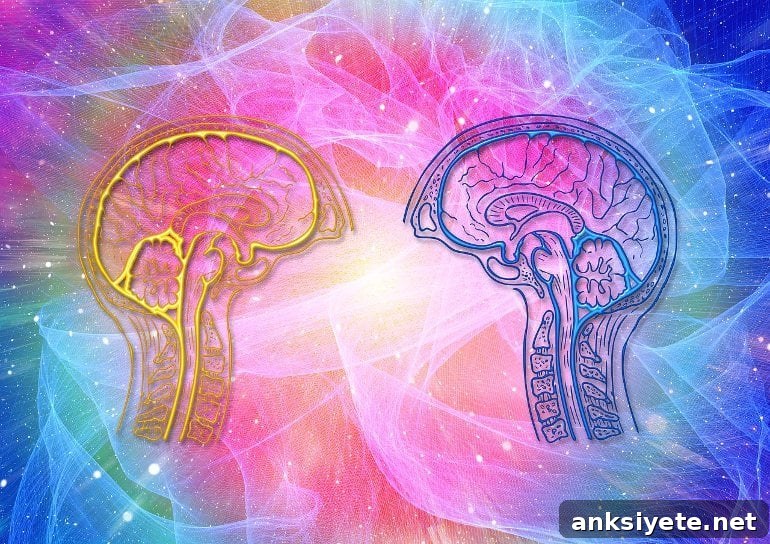
“We were able to show that inter-brain phase synchronization can arise even when participants are not physically together,” says Doctoral Researcher Valtteri Wikström. “This finding opens new possibilities to study how fundamental social brain mechanisms operate during purely online interactions.”
Towards better online interaction
Human social cognition evolved primarily for face-to-face communication, which has raised concerns about the social effects of rising screen time. Parents, educators, and policymakers often worry about how reduced in-person contact might affect empathy, cooperation, and well-being. The present findings suggest that certain digital interactions can still engage core neural mechanisms linked to social connection.
“If interactive digital environments can be designed to activate the same neural processes that support empathy and cooperation in real life, they could strengthen online social bonds, improve well-being, and enhance productivity,” says Project Manager Katri Saarikivi. Identifying which interface features promote physiological synchrony and effective teamwork may guide the development of online tools that foster genuine connectedness.
Wikström adds that physiological measures of synchronization, combined with cooperative performance metrics, offer objective ways to evaluate the social quality of digital interactions. Designing games and collaboration platforms with features that increase synchrony could yield benefits that extend beyond entertainment to education, remote work, and social support.
About this neuroscience research news
Author: Suvi Uotinen
Source: University of Helsinki
Contact: Suvi Uotinen, University of Helsinki
Image: The image is in the public domain
Original Research: Open access. Title: “Inter-brain synchronization occurs without physical co-presence during cooperative online gaming” by Valtteri Wikström et al., published in Neuropsychologia.
Abstract
Inter-brain synchronization occurs without physical co-presence during cooperative online gaming
Inter-brain synchronization during social interaction has been associated with positive outcomes such as closeness, cooperation, prosocial behavior, and improved team performance. Yet the temporal dynamics of this synchronization during collaboration, and whether it depends on physical presence, remain incompletely understood. This study addresses those questions by placing participants in separate rooms and having them perform a collaborative coordination task implemented as a cooperative multiplayer game.
EEG was recorded from 42 participants forming pairs that cooperated in the task. Interaction between partners occurred solely via the shared on-screen behavior of a racing car, controlled through button presses: one participant adjusted speed while the other controlled direction. The study compared neural coupling between actual cooperative pairs and performance-matched, non-interacting “false pairs.”
Results showed elevated inter-brain phase synchronization in alpha, beta, and gamma frequency bands for real pairs compared with false pairs. Higher gamma synchronization correlated with better moment-to-moment performance within dyads, and stronger alpha synchronization was associated with superior average performance across dyads. Synchrony tended to decrease within a session but was higher in the second session than in the first, indicating dynamic changes over time.
These findings extend earlier observations of increased inter-brain synchrony during social interaction by demonstrating that phase synchronization of oscillatory activity can occur during online, real-time joint coordination without any physical co-presence or audiovisual contact. The study introduces a novel experimental paradigm for tracking continuous changes in inter-brain EEG phase synchrony during cooperative tasks, offering a framework to explore how digital interfaces can support social cognition and collaborative success.