
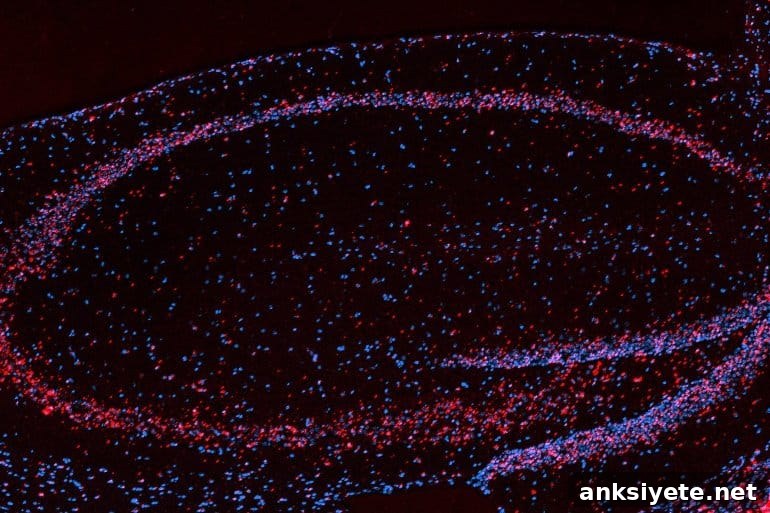
Summary: New research shows that bursts of calcium released from inside hippocampal neurons can enhance learning and stabilize memory encoding.
Source: Columbia University
Researchers at Columbia’s Zuckerman Institute report that calcium floods originating within neurons—not only calcium entering at the cell surface—can strengthen learning. The team observed this effect while studying how mice form memories of new locations.
Published in Science, the study does not imply dietary calcium will improve classroom performance. Instead, it clarifies cellular mechanisms that govern learning and memory, with potential implications for understanding disorders such as Alzheimer’s disease.
“The cells we studied are located in the hippocampus, the first brain region affected in Alzheimer’s disease,” said Franck Polleux, Ph.D., principal investigator at the Zuckerman Institute. “Learning the basic rules that allow these neurons to encode memory will help us understand what fails in disease.”
Learning and memory depend on synapses—the contact points where neurons exchange information. Synapses can be modified by experience, a property known as plasticity, and calcium ions are central to the signaling processes that drive those changes.
Most studies of calcium’s role in plasticity have focused on calcium flowing across the neuron’s membrane through channels at synapses. For decades, scientists have suspected that the endoplasmic reticulum (ER), an internal calcium store, also shapes plasticity by releasing calcium into the cytosol. Until now, however, researchers lacked tools to probe how intracellular calcium release affects mammalian neurons in a behaving animal.
“There weren’t good methods to monitor and manipulate intracellular calcium release in vivo while an animal learned,” said Justin O’Hare, Ph.D., postdoctoral researcher and first author in the labs of Dr. Polleux and Attila Losonczy, MD, Ph.D.
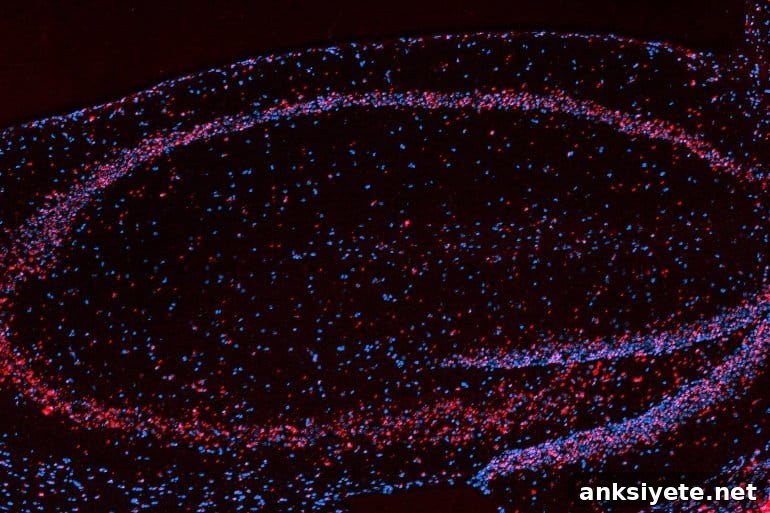
The teams studied the hippocampus—a seahorse-shaped region essential for memory—focusing on CA1 pyramidal neurons known as place cells. Place cells fire when an animal is in a particular location, helping form spatial maps and linking places to experiences or cues.
To test how intracellular calcium release affects place cells, the researchers trained mice to run on treadmills built with three different fabric belts, each decorated with distinct tactile and visual cues such as sequins or pompoms. They used optogenetics to activate genetically targeted place cells, tuning those cells to specific spots along the belts.
Inside the place cells the team examined a gene called Pdzd8. Its protein product normally limits calcium release from the ER. By deleting Pdzd8, the researchers removed that brake and boosted intracellular calcium release. They then measured activity in both the soma (cell bodies) and dendrites (the branches that receive inputs) during spatial navigation.
“The ER stores large amounts of calcium,” Dr. Polleux said. “It can act like an intracellular calcium reservoir that, when released, has powerful effects on cell signaling.”
Combining single-cell electroporation, simultaneous imaging of dendritic and somatic activity during navigation, optogenetic induction of place fields, and acute genetic enhancement of intracellular calcium release was technically challenging, the authors noted. “Any one of these techniques is difficult on its own. Bringing them together required a close collaboration and considerable technical skill,” Dr. Polleux said.
The results showed that increasing calcium release from the ER widened the spatial tuning of place cells—each cell became responsive over a larger section of the belt—and prolonged how long a cell remained tuned to a given location. In other words, intracellular calcium release acted like a “turbocharger” for plasticity, strengthening and stabilizing place-cell representations.
The effect was compartment-specific. Apical dendrites—the branches at the top of pyramidal neurons—typically tune to different places independently, but enhanced intracellular calcium release caused many apical dendrites to become tuned to the same location during learning. Basal dendrites, by contrast, were less affected. These findings support the idea that dendrites can act as semi-independent computational units that cooperate when needed to shape a neuron’s output.
“Dendrites have long been proposed to function as ‘cells within cells’ that can operate independently or together to increase a neuron’s computational power,” said Dr. Losonczy. “Our data demonstrate this in a living brain and provide a molecular mechanism—intracellular calcium release—that regulates dendritic cooperation during behavior.”
“Each potential place cell receives tens of thousands of inputs that carry information about space,” Dr. O’Hare added. “Given that complexity, a single neuron approaches the computational capacity of a small computer.”
Future work will explore how Pdzd8 deletion affects behavior more broadly. Recent human genetic studies have identified mutations in Pdzd8 linked to severe learning and memory deficits, highlighting the gene’s importance for cognitive function, Dr. Polleux noted.
Dr. O’Hare and colleagues are now investigating how these intracellular calcium mechanisms operate in mouse models of Alzheimer’s disease. “We still don’t know how place cells change as the disease progresses,” he said. “Understanding the basic cellular principles that allow place cells to encode memory in the hippocampus could point to new directions for therapies.”
About this memory and learning research news
Author: Press Office
Source: Columbia University
Contact: Press Office – Columbia University
Image: The image is credited to Stephanie Herrlinger/Columbia’s Zuckerman Institute
Original Research: Closed access.
Title: “Compartment-specific tuning of dendritic feature selectivity by intracellular Ca2+ release” by Justin O’Hare et al., Science
Abstract
Compartment-specific tuning of dendritic feature selectivity by intracellular Ca2+ release
Dendritic calcium signaling underpins neural plasticity that enables animals to adapt to their environment. Intracellular calcium release (ICR) from the endoplasmic reticulum has long been proposed to influence these mechanisms, but ICR has not been directly investigated in mammalian neurons in vivo.
Using single-cell electroporation of CA1 pyramidal neurons, simultaneous imaging of dendritic and somatic activity during spatial navigation, optogenetic induction of place fields, and acute genetic enhancement of cytosolic ICR impact, the authors show that ICR supports the formation of dendritic feature selectivity and shapes integrative properties that determine output-level receptive fields. This influence is more pronounced in apical than basal dendrites.
Therefore, ICR works together with circuit-level architecture in vivo to promote compartment-specific, behaviorally relevant plasticity.