
Clearing Senescent Astrocytes Prevents Parkinson’s Neuropathology and Symptoms in a Mouse Model
Summary: Researchers at the Buck Institute identify clearance of senescent astrocytes as a promising therapeutic approach to prevent Parkinson’s neuropathology and symptoms in a mouse model of sporadic disease triggered by pesticide exposure.
Source: Buck Institute
Overview: A study from the Andersen laboratory at the Buck Institute, published in Cell Reports, demonstrates that systemic elimination of senescent astrocytes prevents the development of Parkinson’s-like neuropathology and associated motor and non-motor symptoms in a mouse model of sporadic Parkinson’s disease. Because about 95% of human Parkinson’s cases are classified as sporadic rather than purely genetic, these findings point to a potentially relevant new avenue for treatment of the most common form of the disease.
Senescent Cells, Astrocytes, and Parkinson’s Disease
Senescent cells stop dividing in response to stress and adopt a pro-inflammatory secretory profile that damages surrounding tissue and promotes chronic inflammation. In this study, researchers induced senescence by exposing animals and cultured human cells to paraquat, a pesticide that has been linked to higher Parkinson’s risk in epidemiological studies of agricultural workers. The experiments focused on astrocytes, a family of glial cells in the central nervous system that support neurons, regulate synapses, maintain the blood-brain barrier, and help control blood flow.
Although astrocytes are the most abundant cell type in the brain, they have been relatively under-studied compared with neurons in Parkinson’s research. Julie K. Andersen, PhD, senior author and professor at the Buck Institute, emphasizes that most therapeutic efforts have targeted neuronal toxicity directly, with limited success. This study suggests that inflammatory, senescent astrocytes may drive or contribute to disease progression and that removing them can prevent the onset of Parkinson’s-like features in an animal model.
Key Findings
The research team, led by adjunct faculty Shankar Chinta, PhD, and postdoctoral fellow Georgia Woods, PhD, found several important results:
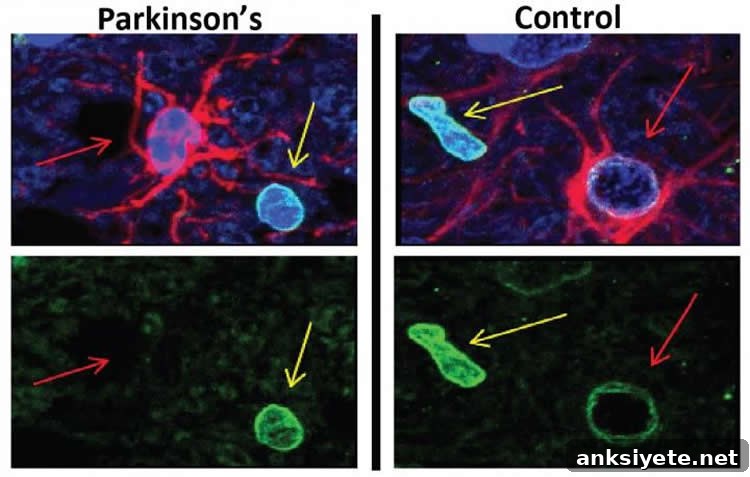
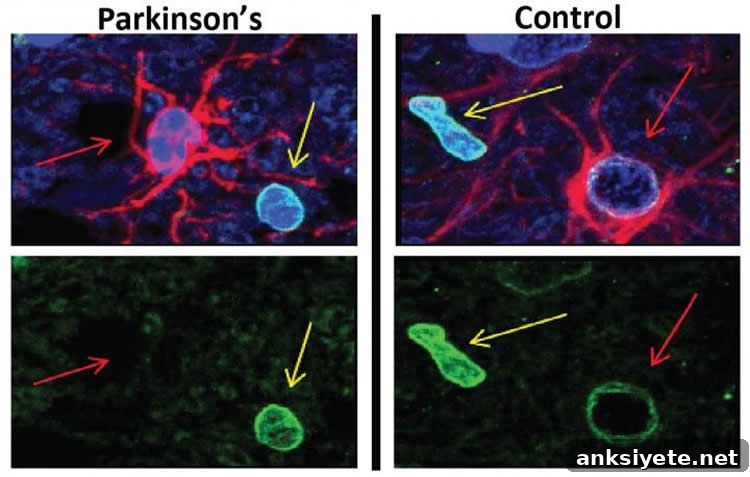
- Postmortem human brain tissue from individuals with Parkinson’s disease showed increased markers of astrocytic senescence compared with control samples.
- Human astrocytes cultured in the lab became senescent after exposure to paraquat, mirroring the effects seen in the animal model and human tissue.
- In a mouse model of sporadic Parkinson’s disease driven by paraquat exposure, systemic clearance of senescent astrocytes prevented the development of neuropathology and the emergence of disease-associated symptoms.
Experimental Details and Implications
The mice used in the experiments were six months old, roughly comparable to a human in their mid-thirties. Andersen’s laboratory plans to extend the work to animals at different ages to determine whether clearing senescent astrocytes can not only prevent but also reverse Parkinson’s-related changes later in life. Senescence-driven chronic inflammation contributes to many age-related conditions, and the team notes that similar astrocytic inflammation may play a role in other neurodegenerative diseases, including Alzheimer’s disease. This model therefore offers a broader framework to study and potentially treat multiple age-associated brain disorders.
Clinical Context and Need
Parkinson’s is a progressive, currently incurable neurodegenerative disorder that affects up to one million people in the United States and an estimated 7 to 10 million worldwide. Symptoms commonly include resting tremor, bradykinesia (slowness of movement), postural instability, and gait difficulties, as well as non-motor features such as cognitive decline and depression. Approximately 5% of cases are driven primarily by genetic mutations; the vast majority are considered sporadic and likely result from a combination of genetic susceptibility and environmental exposures including pesticides and metals.
Finding new therapeutic strategies is urgent. By demonstrating that targeting senescent astrocytes can prevent neuropathology and functional decline in an environmentally triggered, sporadic model of Parkinson’s disease, this research opens a promising direction for future drug development and translational studies.
Research Team and Funding
Other Buck Institute researchers involved in the study include Shankar J. Chinta, Georgia Woods, Marco Demaria, Anand Rane, Ying Zou, Amana McQuade, Subramanian Rajagopalan, Chandani Limbad, David T. Madden, and Judith Campisi.
Funding: The work was supported by grants from the National Institutes of Health (AG009909, T32-AG000266), the Michael J. Fox Foundation, the Ellison Senior Scholar in Aging award, a California Institute for Regenerative Medicine training grant, the American-Italian Cancer Foundation, and the Buck Institute Impact Circle.
Publication: The study appears in Cell Reports. Source material and institutional coverage were provided by the Buck Institute.