
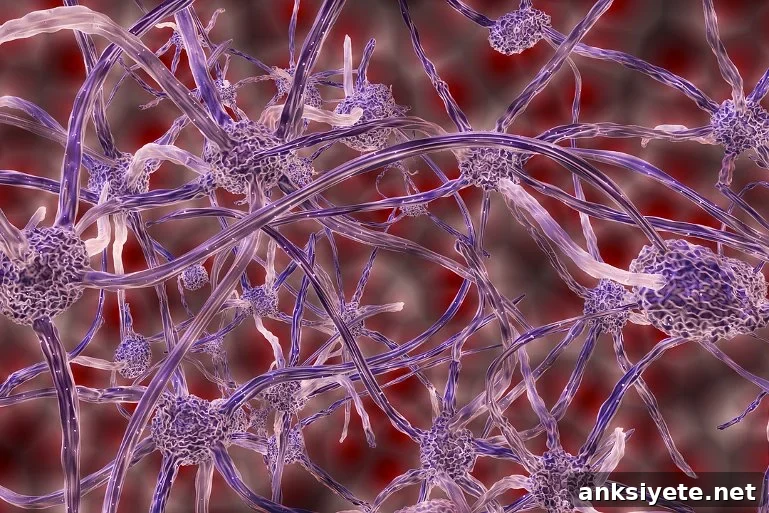
Summary: Researchers found that oxytocin levels rise in the olfactory bulb and peak when newly generated neurons integrate into existing neural networks. These results reveal a key role for oxytocin in adult neurogenesis and brain plasticity.
Source: Baylor College of Medicine
The human capacity to learn new skills, adapt to changing environments and recover from injury depends on the brain’s plasticity—the ability to rewire itself by remodeling existing circuits and incorporating new neurons. Maintaining this adaptability helps neural networks stay healthy, flexible and functional throughout life.
To investigate the molecular signals that support this plasticity, researchers at Baylor College of Medicine and Texas Children’s Hospital used mouse models focused on the olfactory bulb, a brain region known for robust adult neurogenesis. Their work explores how newly born neurons form connections and become integrated into existing circuitry.
Published in the journal Genes & Development, the study identifies oxytocin, a naturally occurring neuropeptide, as a critical driver of synaptic maturation and circuit integration for adult-born neurons.
“We aimed to find molecules that promote the formation of functional synapses in newly generated neurons,” said Dr. Benjamin R. Arenkiel, professor of molecular and human genetics and neuroscience at Baylor and a researcher at the Duncan Neurological Research Institute at Texas Children’s. “The olfactory bulb offers a powerful model because it continuously incorporates new neurons throughout adulthood, providing an ideal setting to study mechanisms of plasticity.”
The team observed that oxytocin levels increase within the olfactory bulb and reach a peak precisely when adult-born neurons are being incorporated into neural networks. Using viral labeling, confocal microscopy and cell type–specific RNA sequencing, they mapped oxytocin receptor expression and traced the downstream signaling events triggered by oxytocin.
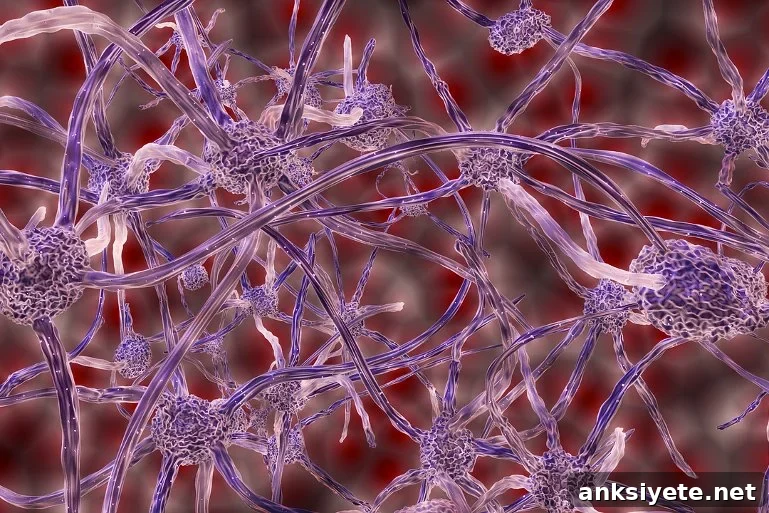
Their results show that oxytocin receptor signaling activates a molecular cascade that promotes the morphological and functional maturation of synapses on adult-born neurons. When the oxytocin receptor was genetically removed, those new neurons developed immature synapses and showed impaired function, indicating that oxytocin signaling is necessary for normal synaptic growth and integration.
“Synapse maturation depends on regulated changes in cell shape and the expression of key structural and synaptic proteins,” Arenkiel explained. “We found that oxytocin influences both the physical development of these cells and the production of mature synaptic components such as AMPA-type glutamate receptors.”
Lead author Brandon T. Pekarek, a graduate student and research assistant in the Arenkiel lab, emphasized the broader implications: “These findings indicate oxytocin directly supports the development and synaptic integration of new neurons in the adult brain, which contributes to circuit flexibility and adaptability.”
Because the underlying mechanisms are conserved across mammals, these findings may have implications for human brain health. The study suggests that endogenous oxytocin could be harnessed to support neural circuit maintenance, encourage the growth of underdeveloped connections, or facilitate repair after injury.
“Oxytocin is already present in the brain,” Arenkiel noted. “Understanding how to modulate its signaling—when to activate or suppress it—could provide new strategies to maintain healthy connectivity or to promote recovery by strengthening or regenerating synaptic connections.” He added that further studies are needed to explore therapeutic applications and safety.
About this neuroplasticity and neurogenesis research news
Author: Press Office
Source: Baylor College of Medicine
Contact: Press Office – Baylor College of Medicine
Image: The image is in the public domain
Original Research: Closed access. “Oxytocin signaling is necessary for synaptic maturation of adult-born neurons” by Brandon T. Pekarek et al., Genes & Development.
Abstract
Oxytocin signaling is necessary for synaptic maturation of adult-born neurons
Forming new synaptic connections is essential for neural circuit plasticity and adaptive sensory responses. While circuit plasticity has been linked to behavioral and developmental outcomes, the cellular and molecular drivers of synaptic maturation remain incompletely understood.
Adult-born neurons in the olfactory bulb provide a tractable model for studying neuron development, migration and circuit integration. Previous work has shown that presynaptic activity and diverse signaling peptides influence successful integration of these neurons.
This study reveals a novel, oxytocin-dependent mechanism that promotes synaptic maturation and circuit integration of adult-born neurons. The researchers document spatial and temporal enrichment of oxytocin receptor expression in these neurons, with receptor levels peaking during activity-dependent integration.
Using viral labeling, confocal microscopy and cell type–specific RNA sequencing, the team demonstrates that oxytocin receptor signaling supports morphological development and the expression of mature synaptic AMPARs and other structural proteins, thereby enabling functional synapse formation.