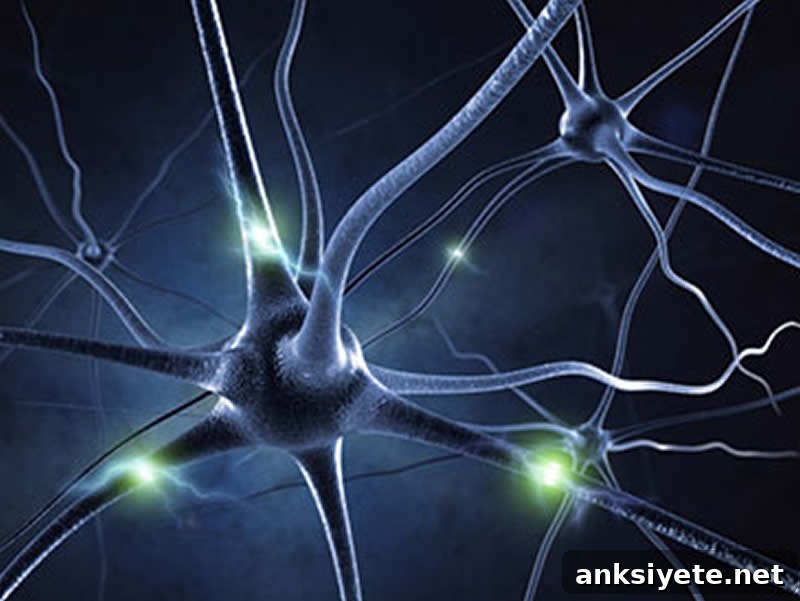
Some neurons in the human brain respond with striking specificity to particular words, objects or faces — a phenomenon often referred to as “grandmother cells.” For instance, researchers have identified individual neurons that activate selectively when a person sees images of a specific celebrity, such as Jennifer Aniston, while remaining largely unresponsive to other people, objects or scenes.
Why do some neurons develop such narrow, highly selective responses? A new computational study led by Professor Jeff Bowers and colleagues at the University of Bristol offers a functional explanation: highly selective neural representations are especially well suited to co-activating multiple items — words, objects or faces — simultaneously in short-term memory without producing ambiguous mixtures.
The team trained an artificial neural network to store and recall words in short-term memory. Modeled loosely on biological neural systems, the network comprised many interconnected units that became active in response to input patterns. Learning occurred through changes in the strength of connections between those units, allowing the network to form internal representations of the words it needed to remember.
After training, the researchers examined how individual units responded when different words were presented. When the network was trained only to store a single word at a time in short-term memory, it typically developed distributed codes: each unit responded to many different words and information was represented across broad patterns of activity. These distributed representations are powerful for coding many items with relatively few units, and they can uniquely identify a single item by the specific pattern across units.
However, the situation changed when the network was trained to hold multiple words simultaneously. Under those conditions the network often learned highly selective representations — units that responded reliably to one specific word and not to others. In other words, single units came to act like “grandmother” detectors for particular words. This shift from distributed to selective coding was not arbitrary: it addressed a central problem that arises when multiple patterns are combined.
The researchers highlight the problem known as the “superposition catastrophe.” When distributed patterns for several items are simply added together, the resulting mixture can be ambiguous. Overlapping activation from multiple distributed codes can make it difficult to recover which individual items were present. In contrast, selective coding avoids that ambiguity: if one unit represents RACHEL, another represents MONICA and a third represents JOEY, then co-activating those three units clearly signals the presence of those three items without blending them into an indistinct composite.
According to Professor Bowers, this computational account provides a plausible reason why single neurons in cortex can show such narrow tuning. “Our results suggest the cortex may learn highly selective codes precisely to support the simultaneous maintenance of multiple items in short-term memory,” he explained. In other words, selectivity can be a practical solution for accurate, interference-free short-term retention of multiple representations.
The study, which combines ideas from neuroscience and computational modeling, was published in Psychological Review. It builds a bridge between observed neuronal selectivity in biological brains and the functional demands of memory systems that must represent multiple items concurrently.
Notes about this neuroscience research
Contact: Jeff Bowers – University of Bristol
Source: University of Bristol press release
Image Source: The image is adapted from the University of Bristol press release.
Original Research: Abstract for “Neural Networks Learn Highly Selective Representations in Order to Overcome the Superposition Catastrophe” by Jeffrey S. Bowers, Ivan I. Vankov, Markus F. Damian, and Colin J. Davis in Psychological Review. Published online February 24 2014 doi:10.1037/a0035943
#neuroscience