
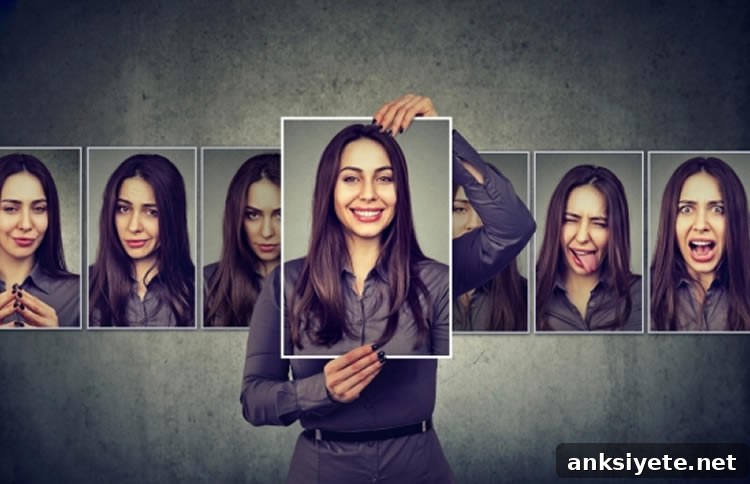
Summary: A new study challenges the common belief that facial expressions simply reveal inner feelings. Researchers argue that facial expressions primarily communicate intentions and serve as tools for social influence.
Source: UC Santa Barbara
We use our faces to influence others. Whether it’s a pleading smile to coax a friend into sharing dessert or a stern glare to halt a child’s tantrum, people routinely shape their facial displays to affect others. New research from UC Santa Barbara argues that this is not incidental: facial expressions are primarily intentional signals designed to change how others behave.
Alan J. Fridlund, associate professor in the Department of Psychology and Brain Sciences at UC Santa Barbara, and co-author Carlos Crivelli present this position in their paper “Facial Displays Are Tools for Social Influence.” Their analysis reframes facial expressions as strategic social tools rather than simple readouts of internal emotional states.
“The traditional view treats facial expressions as windows into our moods — signs about what’s happening inside us,” Fridlund explains. “But facial displays are often about directing social interaction: getting comfort, defusing conflict, or asserting dominance. For instance, the face we interpret as crying is frequently used to solicit help, reassurance, or physical comfort, not merely to reflect sadness.”
The article, published in Trends in Cognitive Sciences, builds on Fridlund’s decades of work examining how facial expressions function in social contexts. He emphasizes continuity between human facial behavior and animal signaling: like many nonhuman animals, people use facial movements strategically to influence others’ behavior during social negotiation.
Biologists have recently shifted their view of animal signaling away from rigid, emotion-linked displays toward more flexible communicative behaviors. Fridlund and Crivelli apply a similar behavioral-ecology perspective to humans, arguing that facial displays are contingent and adaptable tools that regulate social interactions in diverse settings.
The paper also draws on Crivelli’s field research with the Trobriand Islanders of Papua New Guinea, who remain relatively less influenced by Western conventions. In that cultural context, a face previously labeled as a universal signal of fear functions instead as a threat display intended to intimidate others. Such cross-cultural findings highlight how expressions can serve social ends that differ from presumed emotional labels.
Fridlund notes that early researchers in the 1960s often approached facial expressions with preconceived notions, expecting a one-to-one mapping between specific expressions and discrete emotions. Experiments and interpretations filtered through that Western lens tended to confirm those expectations. More recent studies, however, have found weak and inconsistent links between facial displays and internal emotional states.
Consider common labels like “angry” or “disgust.” An “angry” expression may function to intimidate, deter, or signal readiness to retaliate, regardless of whether the person feels anger. A “disgust” expression might indicate physical revulsion or simply disapproval of a suggestion or taste. A smile can signal politeness, promote cooperation, or communicate agreement even when the smiler feels unhappy. In short, facial expressions reliably influence social outcomes without necessarily mirroring distinct inner emotions.
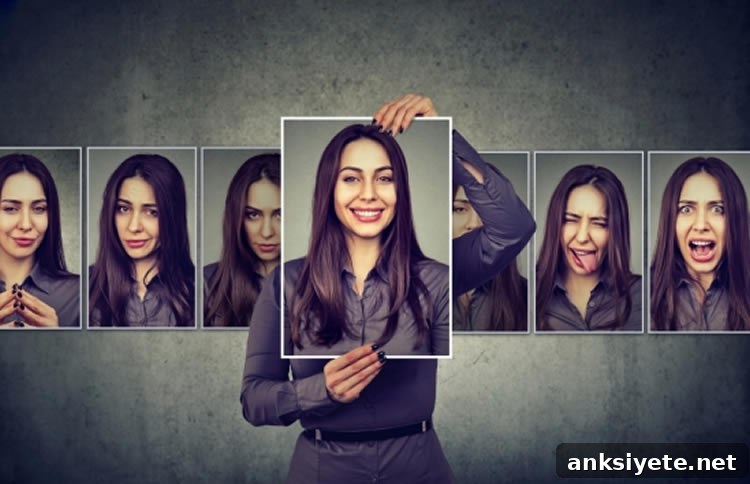
Fridlund’s contributions include the concept of audience effects: people change their expressions based on whether they believe others are watching. Experiments show that people smile more while watching humorous material when others are present, or even when they believe someone else is concurrently watching the same content remotely. Imagined audiences also increase the frequency and intensity of facial displays: people make more pronounced expressions when they picture interacting with others than when they imagine being alone.
Everyday examples reinforce these findings: people grimace at a malfunctioning soda machine or curse at a computer, and they make similar faces even when imagining that scenario. These displays help negotiate outcomes — from obtaining change to signaling frustration — and they often aim to alter the behavior of those who could provide relief or comply.
Carlos Crivelli is a lecturer at De Montfort University in Leicester, England, and he continues to collaborate with Alan Fridlund at UC Santa Barbara on studies of facial expression and social interaction. The paper “Facial Displays Are Tools for Social Influence” was published in Trends in Cognitive Sciences and argues for a behavioral ecology view of facial behavior.
Abstract
Facial Displays Are Tools for Social Influence
Like nonhuman animal signals, human facial displays are central to regulating social interactions, whether those interactions are public or private, real or imagined, and whether the intended recipients are people, animals, virtual agents, or inanimate objects attributed with agency.
Facial displays are not fixed, semantic readouts of internal states such as discrete emotions. Instead, they are flexible, context-sensitive tools used to influence the behavior of others. The behavioral ecology view (BECV) treats facial behavior as an externalist, functional phenomenon: signaling contingent social action rather than simply expressing inner feelings.
This summary synthesizes research findings and theoretical arguments about facial expressions as social tools. It preserves the core conclusions that facial displays are strategic, context-dependent, and often directed at changing other people’s behavior rather than merely revealing private emotional states.