
St. Jude researchers identify a new source of DNA damage linked to neurodegeneration, cancer and aging
Researchers at St. Jude Children’s Research Hospital have discovered a previously unrecognized source of DNA damage that appears in the developing brain and may contribute to a range of health problems, including neurodegenerative disease, cancer and age-related decline. The findings, published in the journal Nature Neuroscience, reveal how the enzyme topoisomerase 1 (Top1) can become trapped on DNA, producing lesions that are particularly harmful in neurons and that accumulate when specific DNA repair pathways are impaired.
Topoisomerase 1 (Top1) normally relieves torsional stress in DNA by creating transient single-strand breaks and forming short-lived Top1 cleavage complexes (Top1cc). These temporary breaks allow the double helix to unwind so that cells can divide or transcribe genes. Under certain conditions—such as oxidative stress or exposure to radiation—Top1ccs can become trapped on DNA and fail to resolve, leaving persistent lesions that interfere with normal DNA metabolism.
Scientists at St. Jude were studying two rare inherited childhood neurodegenerative syndromes—ataxia telangiectasia (A-T) and spinocerebellar ataxia with axonal neuropathy 1 (SCAN1)—and found both disorders share accumulation of trapped Top1ccs as a common form of DNA damage. A-T is caused by mutations in the ATM protein, while SCAN1 results from mutations in the Tdp1 protein, and both diseases are characterized by progressive motor dysfunction. A-T is also associated with elevated cancer risk, including leukemia and lymphoma.
Using cultured neurons and genetically engineered mouse models, the team demonstrated that ATM and Tdp1 cooperate to repair single-strand DNA breaks created by trapped Top1. The work expands the understood role of ATM beyond its established function in double-strand break repair: when Top1ccs accumulate, ATM acts not only as a signaling kinase that alerts the cell to damage but also helps mark trapped Top1 for removal. ATM promotes attachment of ubiquitin and SUMO molecules to the Top1cc surface, targeting it for degradation by the cell’s protein quality-control machinery. After that processing step, Tdp1 severs the chemical bond that links Top1 to DNA, completing the repair.
Mouse studies revealed that loss of either Atm or Tdp1 raised baseline Top1cc levels, and these levels increased sharply during early brain development and following exposures known to damage DNA, such as oxidative stress and radiation. Animals lacking both Atm and Tdp1 accumulated far greater numbers of Top1cc lesions and showed widespread programmed cell death (apoptosis) in the developing brain; very few of these double-mutant mice survived to birth. These findings highlight the particular vulnerability of the developing nervous system to this type of DNA damage.
To further link trapped Top1ccs with cell death, researchers treated mice with topotecan, an anti-cancer drug that works by stabilizing Top1ccs in tumor cells and provoking lethal DNA damage. The cellular and developmental consequences of topotecan exposure mirrored those seen in animals lacking Atm and Tdp1, strengthening the conclusion that Top1cc accumulation drives neuronal dysfunction and apoptosis when repair pathways are compromised.
The study’s senior and corresponding authors include Peter McKinnon, Ph.D., of the St. Jude Department of Genetics, together with Sachin Katyal, Ph.D., formerly of St. Jude and now at the University of Manitoba. Other contributors are Susanna Downing, Yang Li, Mikio Shimada, Jingfeng Zhao and Helen Russell (St. Jude); Youngsoo Lee (Ajou University School of Medicine, formerly of St. Jude); Karin Nitiss and John Nitiss (University of Illinois–Chicago, formerly of St. Jude); and John Petrini (Memorial Sloan-Kettering Cancer Center).
Funding for the research came in part from grants awarded by the National Institutes of Health and the National Cancer Institute, plus support from the Geoffrey Beene Foundation, the Goodwin Foundation, the University of Manitoba, CancerCare Manitoba, the Manitoba Health Research Council and ALSAC.
Contact: Carrie Strehlau, St. Jude Children’s Research Hospital
Source: St. Jude Children’s Research Hospital press release
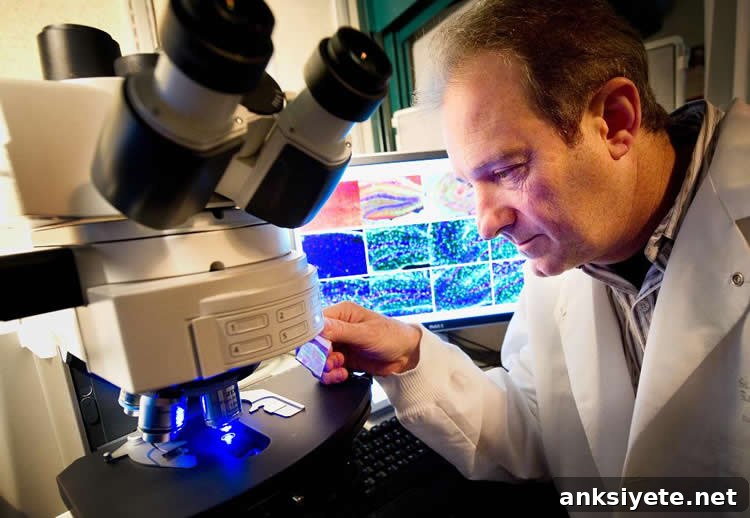
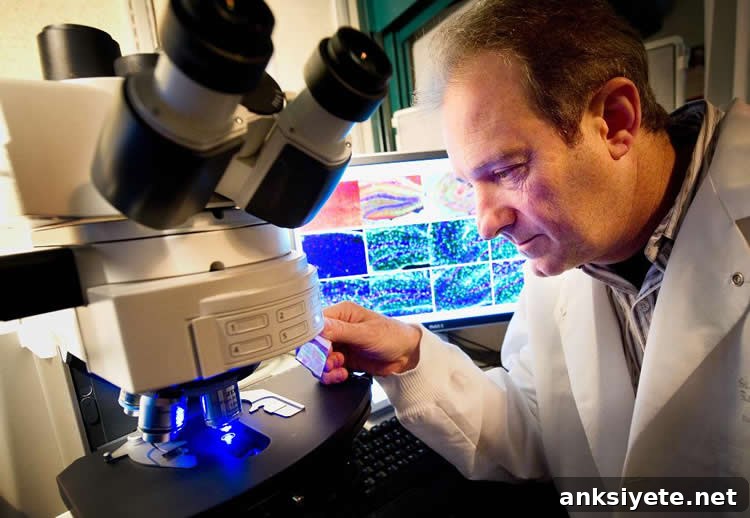
Image Source: Photo credit to Peter Barta, adapted from the St. Jude Children’s Research Hospital press release
Original Research: Abstract titled “Aberrant topoisomerase-1 DNA lesions are pathogenic in neurodegenerative genome instability syndromes” by Sachin Katyal et al., published in Nature Neuroscience.