
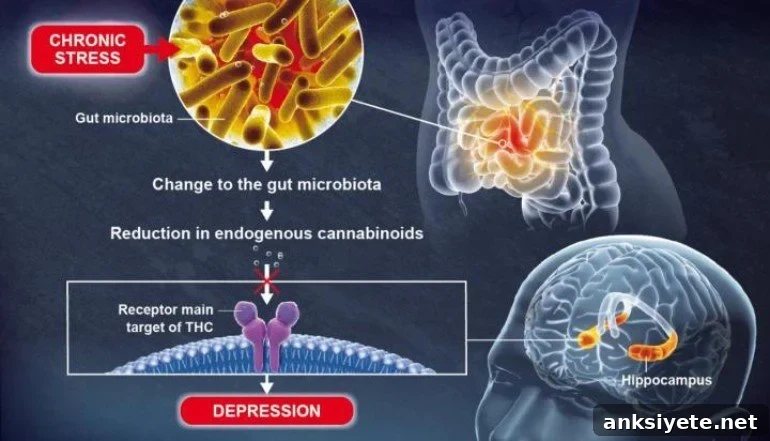
Summary: An imbalance in gut bacteria can reduce key lipid metabolites, producing depression-like symptoms. These results strengthen evidence that the gut microbiome influences brain function and mental health.
Source: Institut Pasteur
Depression affects more than 264 million people worldwide and is a leading cause of disability. Understanding the biological processes behind depression is essential to develop better treatments. Researchers from the Institut Pasteur, Inserm and the CNRS have demonstrated that disturbances in the gut bacterial community can lower specific metabolites and trigger depressive-like behaviors in animal models.
Published in Nature Communications on December 11, 2020, this study highlights how a healthy gut microbiota supports normal brain function and emotional regulation.
The gut microbiota—the dense community of bacteria residing in the intestines—is the body’s largest bacterial reservoir. Increasing evidence indicates that the host and its gut bacteria engage in mutually beneficial interactions. Recent research has also linked mood disorders with disruptions in gut microbial composition, prompting investigation into the mechanisms that connect intestinal microbes with brain health.
A collaborative team from the Institut Pasteur, CNRS and Inserm previously observed a relationship between gut microbiota composition and the effectiveness of fluoxetine, a commonly prescribed antidepressant. Building on that work, the current study sought to clarify how changes in gut bacteria might directly contribute to depressive symptoms.
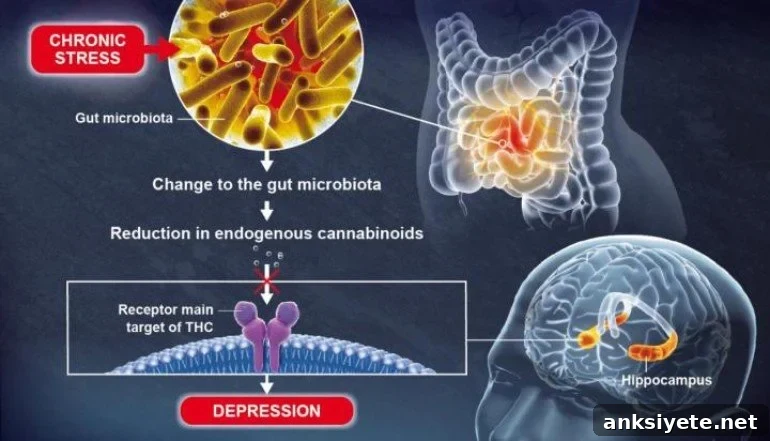
Using a mouse model of chronic stress, the researchers found that stress-induced alterations to the gut microbiota caused a decrease in certain lipid metabolites in both the bloodstream and the brain. These lipid molecules include endogenous cannabinoids—also called endocannabinoids—which are naturally produced by the body and play a central role in cell signaling across multiple physiological systems.
Endocannabinoids bind to the same receptor family targeted by THC, the principal psychoactive compound in cannabis. The study showed that reduced endocannabinoid signaling in the hippocampus—a brain region critical for emotion and memory formation—was associated with depressive-like behaviors in mice.
To establish causality, the researchers transferred fecal microbiota from chronically stressed mice to healthy, unstressed recipient mice. This microbiota transfer reproduced the biochemical and behavioral features seen in stressed donors: recipients developed altered behavior and decreased endocannabinoid-related lipid levels. As Pierre-Marie Lledo, Head of the Perception and Memory Unit at the Institut Pasteur and co-author of the study, noted, simply transplanting the microbiota from affected animals to healthy animals was sufficient to trigger biochemical changes and depressive-like behaviors in the recipients.
The team identified specific bacterial species that were markedly reduced in mice exhibiting mood disorder–like symptoms. When researchers administered one of these depleted bacterial strains orally, it restored normal levels of lipid metabolites and alleviated the depressive-like behaviors. These beneficial bacteria act on the gut–brain axis and represent a class of potential therapeutics sometimes called “psychobiotics.”
Gérard Eberl, Head of the Microenvironment and Immunity Unit (Institut Pasteur/Inserm) and co-senior author, emphasized the broader implication: an imbalanced gut microbiota can cause the loss of lipid molecules essential for brain function, creating conditions that favor the development of depressive-like states. Restoring specific bacterial populations may therefore offer a promising route to rebalance the microbiota and improve outcomes for mood disorders.
About this microbiome and depression research news
Source: Institut Pasteur
Contact: Aurelie Perthuison – Institut Pasteur
Image: Credit: Institut Pasteur / Pascal Marseaud
Original Research: Open access. Title: “Effect of gut microbiota on depressive-like behaviors in mice is mediated by the endocannabinoid system” by Grégoire Chevalier, Eleni Siopi, Laure Guenin-Macé, Maud Pascal, Thomas Laval, Aline Rifflet, Ivo Gomperts Boneca, Caroline Demangel, Benoit Colsch, Alain Pruvost, Emeline Chu-Van, Aurélie Messager, François Leulier, Gabriel Lepousez, Gérard Eberl & Pierre-Marie Lledo. Published in Nature Communications.
Abstract
Effect of gut microbiota on depressive-like behaviors in mice is mediated by the endocannabinoid system
Depression is the leading cause of disability worldwide. Recent observations have revealed an association between mood disorders and alterations of the intestinal microbiota. Using an unpredictable chronic mild stress (UCMS) mouse model of depression, the study shows that UCMS mice display behavioral and cellular alterations that can be transferred to naive recipient mice via fecal microbiota transplantation. Recipient mice developed similar phenotypic changes accompanied by reduced endocannabinoid signaling, linked to lower peripheral levels of fatty acid precursors for endocannabinoid ligands. The negative effects of UCMS-transferred microbiota were mitigated by selectively enhancing central endocannabinoid signaling or by supplementing with a strain of Lactobacilli. These findings outline a mechanistic pathway whereby chronic stress, diet and gut microbiota interact to create a pathological feed-forward loop that contributes to despair-like behavior through disruption of the central endocannabinoid system.