
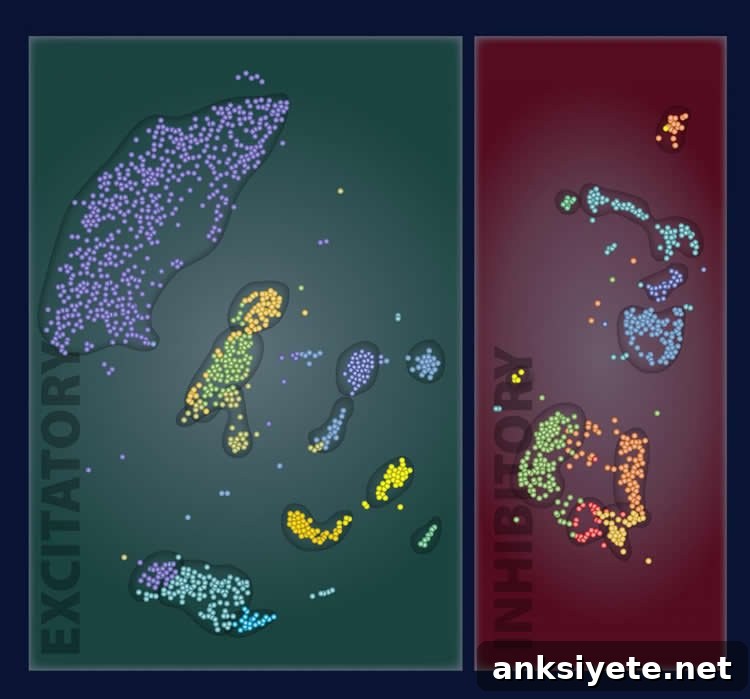
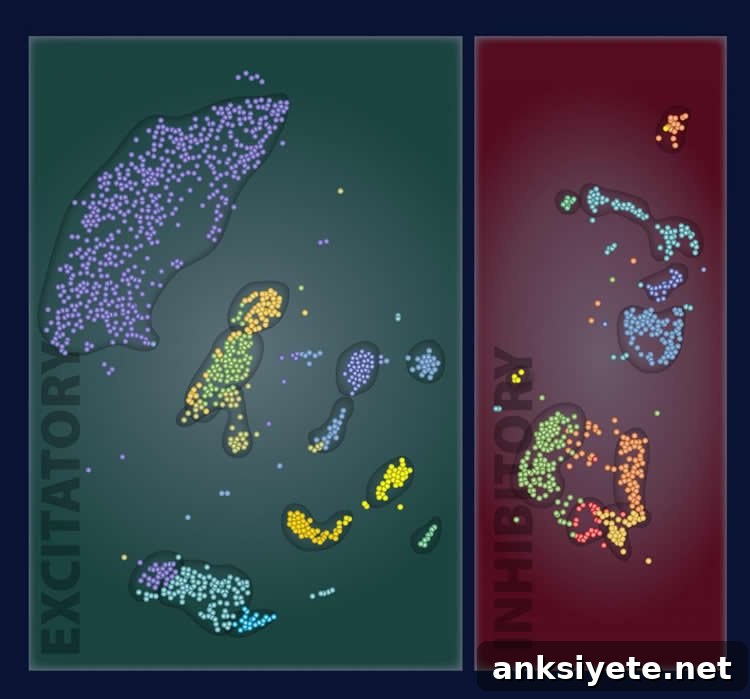
Summary: A newly published Science study maps DNA methylation in individual neurons, revealing fine-grained neuronal subtypes and offering a powerful new tool for brain mapping.
Source: UCSD
Overview
Human brains contain roughly 100 billion neurons, and although it has long been clear that neurons differ in shape and function, accurately cataloging their diversity remains a major challenge. To address this, researchers are increasingly applying molecular and single-cell approaches that can classify cells by stable biochemical signatures. In the study described here, teams from the Salk Institute for Biological Studies and the University of California San Diego used single-cell DNA methylation maps to distinguish neuronal types with unprecedented resolution.
What the researchers did
The study, published in Science, analyzed individual neurons’ methylomes — the pattern of DNA methylation across the genome. DNA methylation is an epigenetic modification in which methyl groups attach to DNA bases and influence gene expression without changing the underlying DNA sequence. Because methylation patterns are generally stable in adulthood, they can serve as reliable markers of cell identity and regulatory state.
The investigators generated methylome data from roughly 6,000 single neuronal nuclei, representing approximately one trillion DNA bases. They applied a single-cell methylome sequencing technique to 3,377 neurons from the frontal cortex of a young adult mouse and 2,784 neurons from the frontal cortex of a 25-year-old human male donor. Unlike most other cell types, neurons show methylation in both CG and non-CG contexts; the team’s approach mapped both types to produce comprehensive single-cell epigenomic profiles.
Key findings
Analysis of methylation patterns revealed distinct neuronal subtypes in both species. Mouse frontal cortex neurons grouped into 16 methylome-based subtypes, while human frontal cortex neurons were more diverse and formed 21 subtypes. Inhibitory neurons — the cells that provide the brain’s “stop” signals — showed more similar methylation patterns across species than excitatory (or “go”) neurons, suggesting stronger evolutionary conservation of inhibitory neuron regulatory programs. The study also identified previously unrecognized human neuron subtypes, including a unique parvalbumin-expressing inhibitory neuron subtype and a layer 6 excitatory neuron subtype defined by methylation signatures and associated regulatory elements.
By linking methylation-defined cell types to gene-regulatory elements — the genetic switches that control gene activity — the team could identify candidate regulatory sequences that differentiate neuron classes. These regulatory elements help explain how neurons in the same region can look similar yet behave differently.
Why this matters
Earlier single-cell studies emphasized RNA expression, which can fluctuate with physiological state. Methylomes, in contrast, are relatively stable, making them attractive markers for defining cell identity across individuals and conditions. As the authors note, single-nucleus methylome profiling creates a data-driven brain atlas that complements transcriptomic and anatomical maps and can reveal subtle, rare, or disease-associated cell populations that were previously invisible.
According to the senior authors — Joseph Ecker (Salk Institute), M. Margarita Behrens (Salk Institute), and Eran Mukamel (UC San Diego) — the work advances both molecular methods and computational analysis needed to classify neurons at scale. As Behrens explained, methylome-based classification makes it possible to understand why neighboring neurons that appear similar anatomically can function differently. Mukamel described the study as a census-like survey of gene regulation across thousands of individual cells. Ecker emphasized the sensitivity of the approach, noting that defects present in only a small fraction of cells could be detected.
Research team and support
First authors on the paper are Chongyuan Luo (Salk research associate) and Christopher Keown (UC San Diego cognitive science graduate student). Senior co-authors include Joseph R. Ecker, M. Margarita Behrens, and Eran A. Mukamel. Other contributors are Jingtian Zhou, Yupeng He, Rosa Castanon, Jacinta Lucero, Joseph Nery, Justin Sandoval, Brian Bui, Terrence Sejnowski (Salk Institute); Junhao Li (UC San Diego); and Laurie Kurihara and Timothy Harkins (Swift Biosciences Inc.).
Funding for the project came from the NIH BRAIN Initiative, the Howard Hughes Medical Institute, and the National Institutes of Health training grants and awards that supported participating investigators.
Next steps and implications
The authors plan to expand these methylome surveys to more individuals and species and to compare methylation profiles between healthy and diseased brains. Because the method detects cell-type-specific regulatory changes, it could reveal disease-associated neuronal subpopulations or subtle developmental alterations that elude bulk analyses. The ability to resolve rare cell types and regulatory elements at single-cell resolution opens new paths for understanding brain development, function, and pathology.
Abstract (condensed)
Single-nucleus methylome sequencing identified 16 mouse and 21 human neuronal subpopulations in the frontal cortex, with cell type–specific distributions of CG and non-CG methylation. Differentially methylated regulatory elements distinguished neuron types and revealed a layer 6 excitatory subtype and a unique human parvalbumin-expressing inhibitory subtype. Regulatory elements showed stronger cross-species conservation in inhibitory neurons. Single-cell methylomes extend the atlas of brain cell types and pinpoint regulatory sequences that underlie conserved and divergent neuronal identities.
Original study: “Single-cell methylomes identify neuronal subtypes and regulatory elements in mammalian cortex” (Science). Authors include Chongyuan Luo, Christopher L. Keown, Laurie Kurihara, Jingtian Zhou, Yupeng He, Junhao Li, Rosa Castanon, Jacinta Lucero, Joseph R. Nery, Justin P. Sandoval, Brian Bui, Terrence J. Sejnowski, Timothy T. Harkins, Eran A. Mukamel, M. Margarita Behrens, and Joseph R. Ecker. Published online August 10, 2017.