
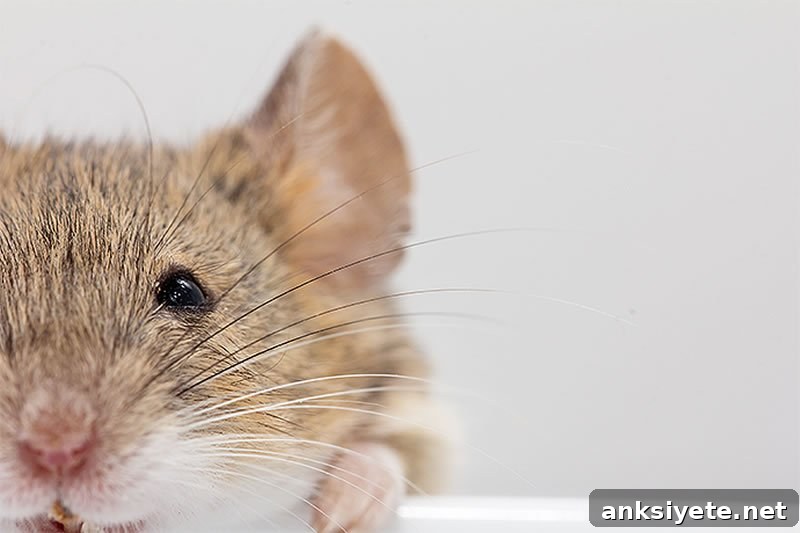
Scientists monitor inhibitory neurons that connect smell with memory and cognition in awake mice
Smells can instantly transport us to specific moments in our lives — a familiar perfume, the scent of a childhood kitchen, or the smell of rain on pavement. These associations develop because repeated experiences create expectations that influence how the brain processes sensory information. While researchers have long studied how odors shape memory, less has been known about the reverse: how memories and expectations change the way the brain gathers and interprets incoming sensory signals.
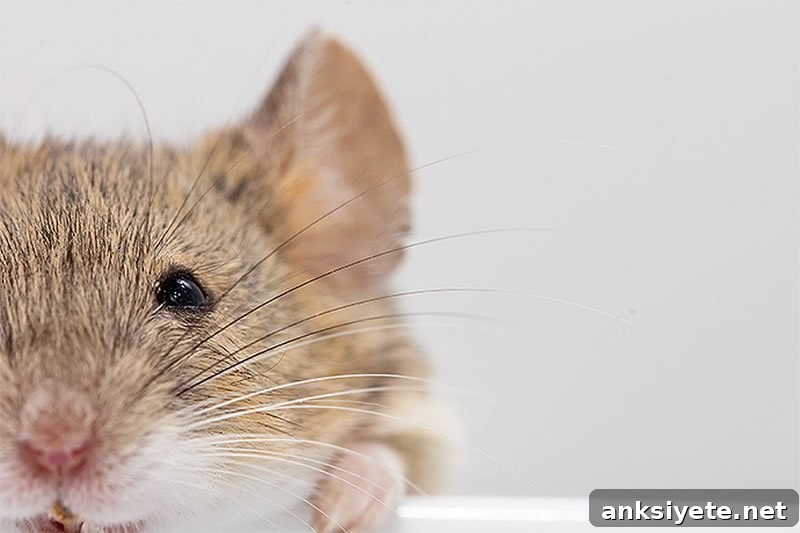
In new research reported in Nature Neuroscience, a team at Cold Spring Harbor Laboratory (CSHL) led by Assistant Professor Stephen Shea has for the first time recorded activity from a population of inhibitory neurons that link the olfactory sensory area to brain regions involved in memory and cognition in awake animals. By measuring these neurons in conscious mice, the researchers revealed a direct pathway through which past experience can modify how smells are perceived.
The inhibitory cells at the center of the study are granule cells, tiny neurons located within the olfactory bulb, the brain’s first cortical relay for odor information. Unlike the larger projection neurons that transmit signals forward, granule cells receive inputs from deeper brain regions involved in memory and higher-order processing, then feed inhibitory signals back into the olfactory bulb. This feedback can sculpt the pattern of activity carried by sensory neurons, effectively allowing internal states — such as past experience and expectation — to bias ongoing sensory processing.
Studying granule cells has been technically challenging. These neurons are small and densely packed, making it difficult to record their activity in living animals. Prior work had largely relied on measurements from anesthetized subjects, but anesthesia suppresses the brain dynamics that mediate experience-dependent modulation of perception. To address this, Shea and his collaborators, including lead authors Brittany Cazakoff (a graduate student at CSHL) and postdoctoral fellow Billy Lau, developed an experimental approach capable of monitoring granule-cell activity in awake, behaving mice. Their method allowed the team to detect how inhibitory signals arriving from memory-related brain regions influence sensory processing in real time.
Functionally, granule cells provide a mechanism for selective filtering. Natural odors are complex mixtures composed of many chemical components. Through experience an animal learns which components of a mixture are most relevant to survival or behavior — for example, the scent associated with a predator, a food source, or a mating partner. Granule cell-mediated inhibition can suppress activity related to less relevant components of an odor, sharpening the representation of the salient elements. In this way, feedback inhibition helps the olfactory system focus on what matters most under a given context.
Recording granule-cell activity in awake mice opens several new research directions. The CSHL team can now examine how the same odor produces different neural responses when it is expected, when it signals reward, or when it has been associated with danger. These experiments will help reveal how learning and memory change sensory coding at the earliest stages of cortical processing. According to Shea, observing this interplay is a step toward understanding “how the brain talks to sensory input as it arrives,” and how the brain’s internal model of the world collides and cooperates with the external stimuli we encounter.
The study also has broader implications for sensory neuroscience and cognitive biology. Feedback circuits similar to those seen in the olfactory bulb exist across multiple sensory systems, and understanding their role may explain how perception becomes biased by context, attention, and prior knowledge. The ability to measure inhibitory feedback in awake animals offers a clearer window into the neural mechanisms that underlie perception, decision-making, and memory-guided behavior.
Notes about this neuroscience research
This work received support from the Klingenstein fellowship and a fellowship from the Natural Sciences and Engineering Research Council of Canada.
Contact: Steven Shea – Cold Spring Harbor Laboratory
Source: Cold Spring Harbor Laboratory press release
Image Source: The image is adapted from the Cold Spring Harbor Laboratory press release.
Original Research: Abstract for “Broadly tuned and respiration-independent inhibition in the olfactory bulb of awake mice” by Brittany Cazakoff, Billy Lau, Kerensa Crump, Heike Demmer, and Stephen Shea in Nature Neuroscience. Published online March 2 2014 doi:10.1038/nn.3669