
Therapeutic Hypothermia Did Not Improve Outcomes in Adults with Severe Bacterial Meningitis and May Have Increased Mortality
Summary: In a randomized clinical trial reported in JAMA, inducing moderate hypothermia in comatose adults with severe bacterial meningitis did not improve three-month functional outcomes and was associated with higher mortality, prompting early termination of the study by the data and safety monitoring board.
Severe bacterial meningitis carries a high risk of death and long-term neurologic complications, particularly when caused by Streptococcus pneumoniae (pneumococcal meningitis). Experimental animal studies had suggested that moderate therapeutic hypothermia—lowering body temperature—might reduce brain injury in meningitis. To test this in humans, investigators led by Bruno Mourvillier, M.D., conducted a randomized clinical trial across 49 intensive care units in France.
The trial enrolled 98 comatose adult patients with severe bacterial meningitis and randomized them to one of two groups: a hypothermia intervention group (49 patients) or standard care (49 patients). Patients assigned to hypothermia received an initial bolus of 4°C cold saline followed by active cooling to a target core temperature between 32°C and 34°C for 48 hours. The control arm received standard intensive care for severe meningitis. The primary outcome was functional status at three months, measured by the Glasgow Outcome Scale, which assesses levels of disability and recovery after serious brain injury.
The study was halted early at the request of the data and safety monitoring board after observing excess deaths in the hypothermia group: 25 of 49 patients (51 percent) died, compared with 15 of 49 patients (31 percent) in the standard care group. Pneumococcal meningitis accounted for 77 percent of cases in the trial population. At three months, an unfavorable outcome on the Glasgow Outcome Scale was observed in 86 percent of patients assigned to hypothermia versus 74 percent in the control group.
After statistical adjustment for baseline factors that could influence outcomes, mortality remained higher in the hypothermia group, but the difference was no longer statistically significant. A subgroup analysis restricted to patients with pneumococcal meningitis yielded similar trends. The authors cautioned that early stopping of clinical trials can exaggerate apparent treatment effects, which limits the ability to draw definitive conclusions about harm from therapeutic hypothermia in bacterial meningitis.
The investigators concluded that their randomized trial does not support the use of moderate therapeutic hypothermia for adults with severe bacterial meningitis and that hypothermia may even be harmful in this setting. They also noted that these findings have important implications for ongoing and future investigations of therapeutic hypothermia in other critical conditions, such as septic shock or acute ischemic stroke, emphasizing the need for rigorous safety monitoring in such trials.
Notes on the Research
Contact: Bruno Mourvillier, M.D. — The JAMA Network Journals
Source: The JAMA Network Journals press release
Original research: “Induced Hypothermia in Severe Bacterial Meningitis: A Randomized Clinical Trial” by Bruno Mourvillier, MD, and colleagues, published online November 27, 2013, in JAMA. DOI: 10.1001/jama.2013.280506.
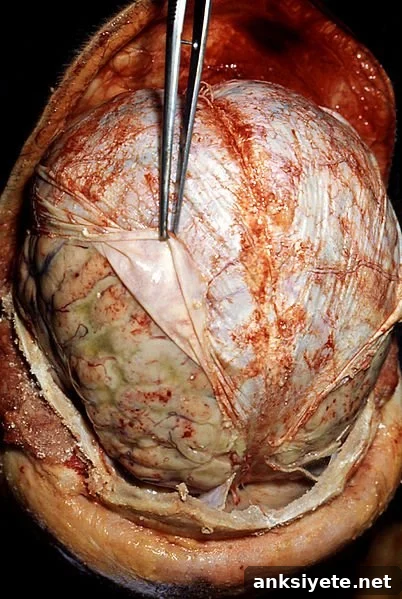
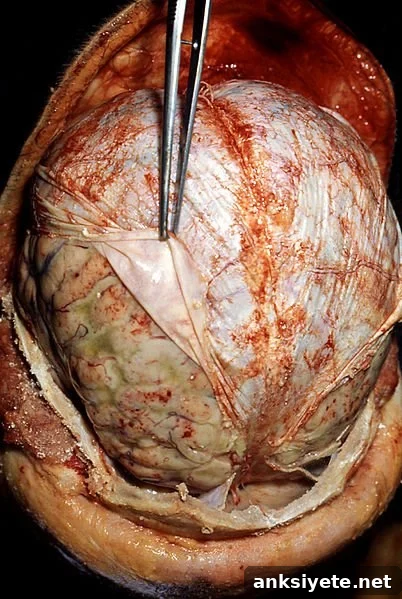
Image credit: CDC/Dr. Edwin P. Ewing, Jr. (public domain). The image is presented here for illustration of the gross pathology of bacterial meningitis.
Relevant keywords for search and discovery: therapeutic hypothermia, severe bacterial meningitis, pneumococcal meningitis, randomized clinical trial, Glasgow Outcome Scale, mortality, neurologic complications, JAMA.