
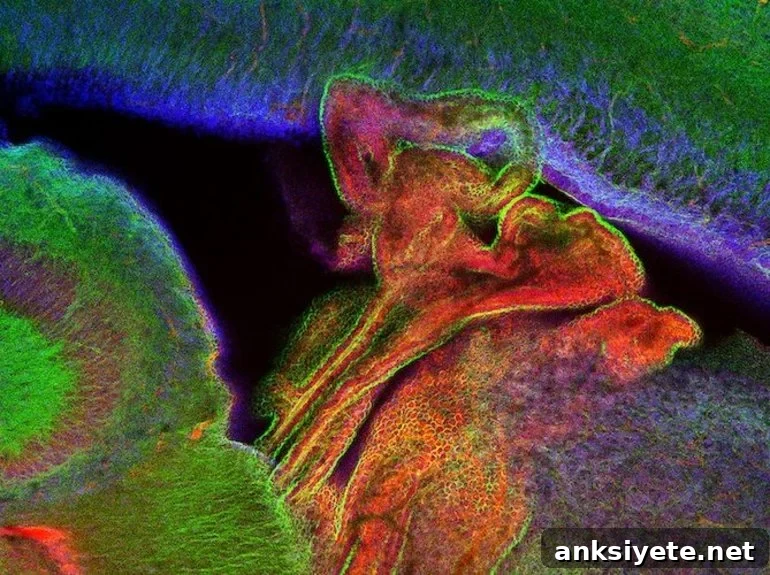
Summary: Immaturity of the gut microbiome and of epithelial barriers in the intestine and choroid plexus contributes significantly to newborn vulnerability to meningitis.
Source: Institut Pasteur
Neonatal meningitis carries a high risk of death and often leads to serious long-term complications. Newborns are especially vulnerable: they develop meningitis at far higher rates than older children and adults. Group B Streptococcus (GBS) is the leading cause of bacterial meningitis in neonates, although it rarely causes disease in adults.
Researchers at the Institut Pasteur, in collaboration with Inserm, Université de Paris and Necker–Enfants Malades Hospital (AP‑HP), investigated why newborns are so susceptible to GBS meningitis. Using a mouse model, they found that two key factors underlie neonatal vulnerability: an immature gut microbiota that fails to resist colonization and developing epithelial barriers in both the gut and the choroid plexus that are more permissive to bacterial passage. These findings were published in Cell Reports on June 29, 2021.
The intestinal microbiota—the community of commensal bacteria that colonizes the gut after birth—plays essential roles in digestion, protection against pathogens, immune system development, and tissue maturation. Newborns are essentially sterile at birth and acquire their microbiota progressively over the first days and weeks of life. When that microbial community is immature, its protective functions are limited.
In the mouse experiments, the authors showed that an underdeveloped microbiota permits extensive GBS colonization of the intestinal lumen. That colonization can lead to bacteremia when bacteria cross the gut-vascular barrier and enter the bloodstream. In neonates with immature microbiota, this barrier function is weakened and the immune response is less capable of containing bacterial spread, increasing the risk of systemic infection and subsequent invasion of the central nervous system.
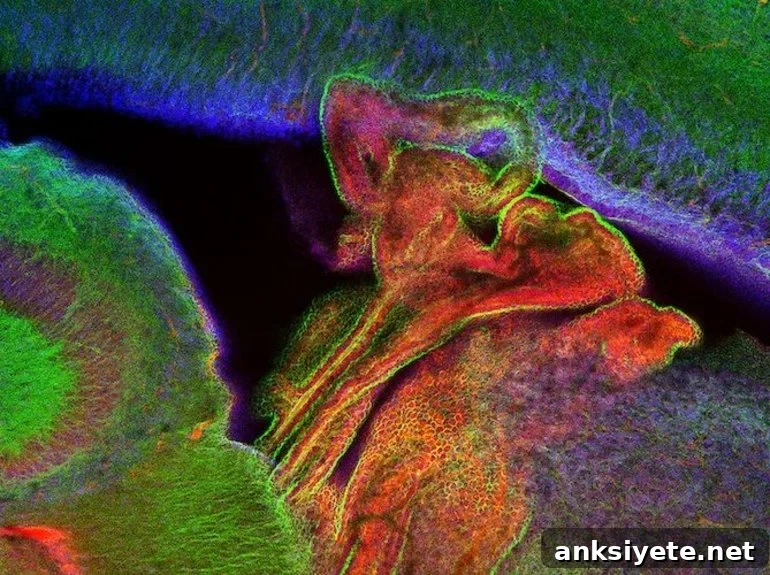
Beyond the role of the microbiota, the team made the unexpected discovery that neonatal epithelial tissues themselves are not fully mature. The epithelial lining of the intestine and the epithelial cells of the choroid plexus—an important interface between the blood and cerebrospinal fluid—exhibit developmental features that make them more permissive to bacterial translocation. This immaturity is independent of the microbiota: even when microbial exposure is controlled, the neonatal epithelia remain more vulnerable than adult tissues.
Mechanistically, the researchers identified heightened activity of the Wnt signaling pathway in neonates. Wnt signaling is a well-established regulator of tissue growth and differentiation during development. In the neonatal gut and choroid plexus, elevated Wnt activity alters epithelial cell polarization and junctional organization, reducing barrier tightness and facilitating bacterial passage. In short, both developmental programs that drive tissue growth and lack of a mature microbial community combine to increase neonatal susceptibility to GBS gut colonization, bacteremia, and neuroinvasion.
Marc Lecuit, head of the Biology of Infection Unit at Institut Pasteur and Inserm and corresponding author of the study, summarizes: “Our data show how two infancy-related factors—the immature gut microbiota and ongoing epithelial growth programs—act at multiple steps of infection, from intestinal colonization to systemic spread and brain invasion, to shape neonatal susceptibility to GBS meningitis.”
These results highlight the crucial protective role of the early-life microbiota and point to potential preventive strategies. While developmental pathways that control tissue growth are intrinsic to neonates, interventions that accelerate or mimic microbiota maturation could strengthen intestinal defenses and reduce the risk of invasive GBS disease in newborns.
About this neurology research news
Source: Institut Pasteur
Contact: Press Office – Institut Pasteur
Image: The image is credited to Biology of Infection Unit, Institut Pasteur
Original Research: Open access. “Neonatal susceptibility to meningitis results from the immaturity of epithelial barriers and gut microbiota” by Laetitia Travier et al., published in Cell Reports / Current Biology.
Abstract
Neonatal susceptibility to meningitis results from the immaturity of epithelial barriers and gut microbiota
Highlights
- • Age and immature microbiota are major contributors to neonatal vulnerability to GBS meningitis.
- • An underdeveloped gut microbiota favors extensive GBS colonization of the neonatal intestinal lumen and promotes bacteremia.
- • Neonatal intestine and choroid plexus epithelia are more permissive to GBS translocation than adult tissues.
- • Elevated Wnt signaling in neonates alters epithelial polarization and cell–cell junctions, reducing barrier function.
Summary
Newborns are far more susceptible to bacterial meningitis than older children and adults, and Group B Streptococcus (GBS) is a leading cause of neonatal meningitis. A frequent route to neonatal brain infection involves intestinal colonization by GBS followed by translocation across the intestinal barrier into the bloodstream.
This study demonstrates that two age-related factors drive neonatal susceptibility: first, an immature intestinal microbiota provides weak colonization resistance and allows bacterial overgrowth and systemic dissemination; second, developmental programs in neonatal epithelia—driven in part by Wnt signaling—reduce epithelial polarization and junctional integrity in the gut and choroid plexus, facilitating bacterial translocation and neuroinvasion. Together, these mechanisms explain why neonates are uniquely at risk of GBS meningitis and suggest that strategies to promote microbiota maturation could help prevent invasive neonatal infections.