
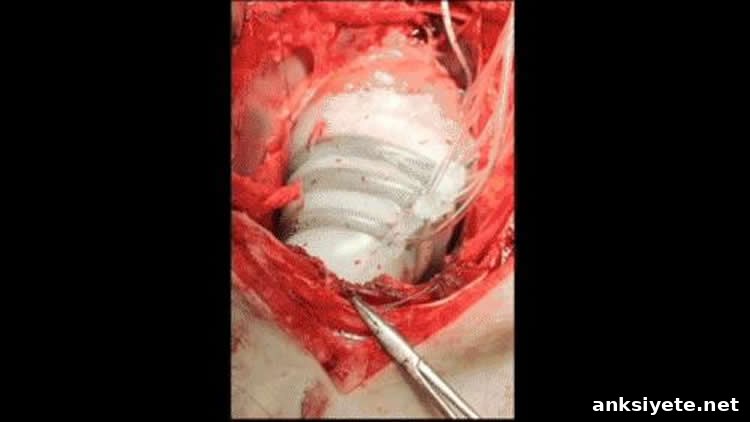
Summary: Researchers have developed a soft robotic sleeve that fits around the heart and helps it beat.
Source: Harvard.
Sleeve attaches directly around the heart.
Researchers at Harvard University and Boston Children’s Hospital have designed a customizable soft robotic sleeve that wraps around the heart and assists its pumping action. The lightweight, flexible device contracts and twists in sync with the native heartbeat, providing mechanical support for hearts weakened by heart failure without contacting the blood stream.
Because the sleeve works externally around the heart rather than drawing blood directly, it avoids many risks associated with conventional ventricular assist devices (VADs) — such as clot formation and the need for long-term anticoagulation therapy. By reducing those complications, the soft robotic sleeve could offer a new approach for patients who need temporary support as a bridge to transplant, or for those who might benefit from cardiac rehabilitation and recovery assistance.
“This research demonstrates that the growing field of soft robotics can be translated to meet clinical needs and potentially reduce the burden of heart disease while improving patients’ quality of life,” said Ellen T. Roche, the paper’s first author and formerly a PhD student at the Harvard John A. Paulson School of Engineering and Applied Sciences (SEAS) and The Wyss Institute for Biologically Inspired Engineering. Roche is currently a postdoctoral fellow at the National University of Ireland.
The study, published in Science Translational Medicine, is the result of collaboration among SEAS, the Wyss Institute and Boston Children’s Hospital. Conor Walsh, senior author and John L. Loeb Associate Professor of Engineering and Applied Sciences at SEAS, emphasized that the work is a proof of concept showing a soft robot can safely interact with soft tissue and improve cardiac function. He added that similar devices could deliver mechanotherapy in other medical settings.
Heart failure affects about 41 million people worldwide. Current mechanical therapies include ventricular assist devices that pump blood from the heart into the aorta or heart transplantation for end-stage disease. Although VAD technology has progressed, blood-contacting pumps still carry substantial risks of clotting and stroke and typically require patients to take blood thinners.
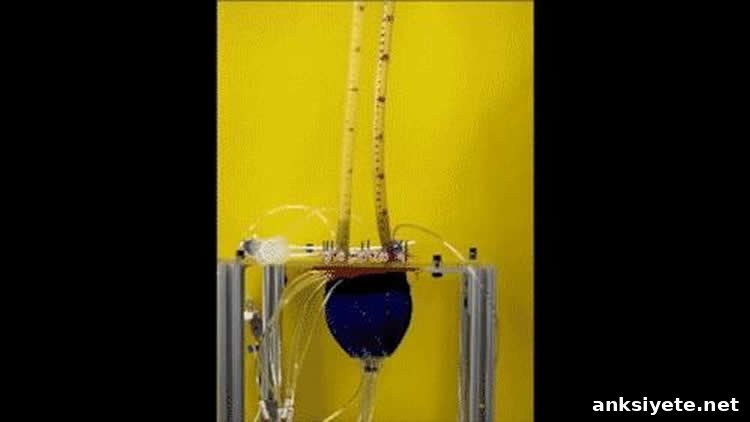
The sleeve itself is a thin silicone jacket fitted with soft pneumatic actuators arranged to mimic the outer muscle layers of the heart. These actuators contract, twist and compress the sleeve in a helical and circumferential orientation similar to the native myocardium, producing coordinated mechanical assistance that complements remaining cardiac function. An external pneumatic pump powers the actuators with air through a tether, allowing clinicians to adjust the device’s action in real time.
One of the key benefits of this design is customizability. Actuators can be tuned to provide more force on one side of the heart if left- or right-sided function is more impaired. The device’s assistive pressure can be increased or reduced over time as the patient’s condition changes, offering a tailored therapy that evolves with recovery or progression.
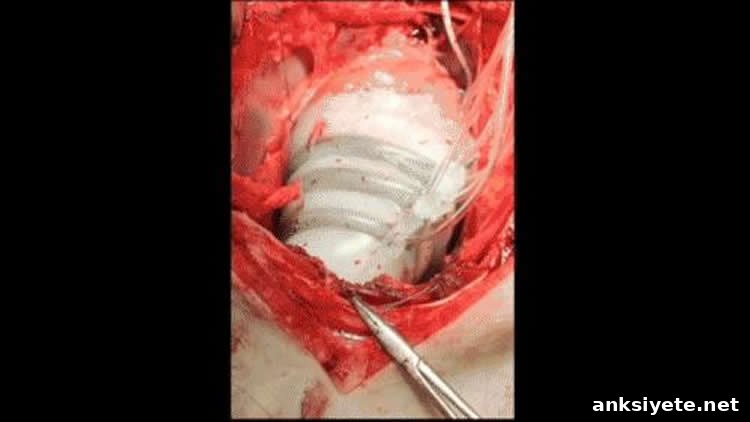
Surgeons and engineers developed a secure but tissue-friendly attachment strategy that combines a compliant gel interface to reduce friction, localized suction, and sutures where needed. The interdisciplinary team from SEAS, the Wyss Institute and Boston Children’s Hospital tested implantation techniques and device performance in preclinical animal models to demonstrate feasibility and safety.
“Historically, the cardiac field moved away from compression-based approaches because existing technology couldn’t replicate the heart’s complex motion,” said Frank Pigula, a cardiothoracic surgeon and co-corresponding author on the study. “With advances in soft robotics, revisiting external compression offers a promising alternative. Many patients with heart failure retain residual function; the sleeve may help restore sufficient performance to improve quality of life.”
While further investigation is required before human implantation, these preclinical results mark an important step toward implantable soft robots that augment organ function without direct contact with blood. The researchers note potential applications beyond heart failure support, including devices that assist or rehabilitate other soft organs with targeted mechanical therapy.
“More people are surviving heart attacks and living with chronic heart failure, so new therapies are urgently needed,” said Roche. “Soft robotic systems are uniquely suited to interact safely with soft tissues, provide adjustable mechanical assistance, and potentially support healing and recovery.”
The research team included Ellen T. Roche, Markus A. Horvath, Isaac Wamala, Ali Alazmani, Sang-Eun Song, William Whyte, Zurab Machaidze, Christopher J. Payne, James Weaver, Gregory Fishbein, Joseph Kuebler, Nikolay V. Vasilyev and David J. Mooney, with contributions from Frank A. Pigula and Conor J. Walsh.
Funding: Supported by the Translational Research Program grant from Boston Children’s Hospital, a Director’s Challenge Cross-Platform grant from the Wyss Institute for Biologically Inspired Engineering, Harvard School of Engineering and Applied Sciences, and the Science Foundation Ireland.
Source: Leah Burrows, Harvard.
Original research: Abstract published in Science Translational Medicine: “Soft robotic sleeve supports heart function” by Ellen T. Roche et al., published online January 18, 2017, doi:10.1126/scitranslmed.aaf3925.
Abstract
Soft robotic sleeve supports heart function
Form-fitting, low-modulus implantable devices that can mimic or assist complex biological motions are of growing interest. The authors present a soft robotic sleeve that is implanted around the heart and actively compresses and twists to function as a cardiac assist device. Because the sleeve does not contact blood, it avoids the need for anticoagulation and reduces complications linked to blood-contacting ventricular assist devices, such as clotting and infection. The design uses actuators oriented in layered helical and circumferential arrangements to replicate the outer muscle layers of the mammalian heart, producing tissue-level stiffness similar to native myocardium. Feasibility was demonstrated in a porcine model of acute heart failure. The soft sleeve can be customized to individual patient needs and may serve as a bridge to transplant or as an assistive therapy for heart failure patients.