
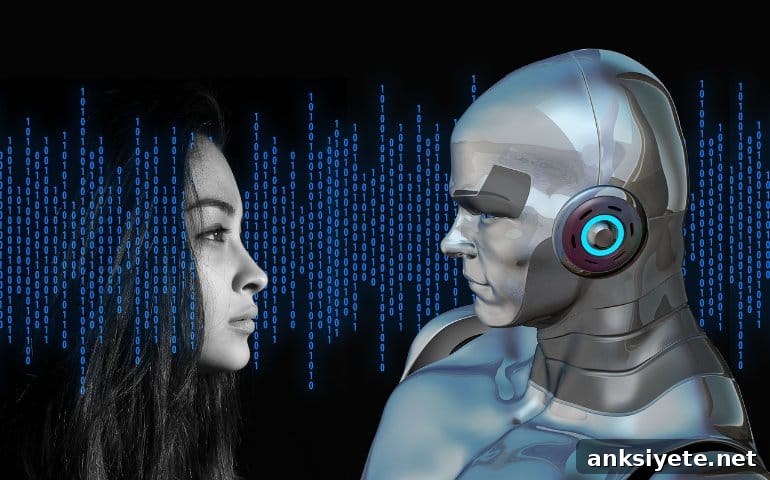
Summary: People judge moral decisions made by humanoid robots as less ethically acceptable than identical decisions made by humans or by robots with a clearly mechanical appearance.
Source: University of Helsinki
Moralities of Intelligent Machines is a research project examining how people perceive moral choices made by artificial intelligence and autonomous machines.
In the latest study from this project, participants read short vignettes in which an agent—a plainly mechanical robot, a mildly humanoid robot called iRobot, a strongly human-like robot called iClooney, or a human—faces a moral dilemma similar to the classic trolley problem and makes a specific choice.
After reading each scenario, participants saw an image representing the agent and then rated the morality of the decision. The study explores whether the agent’s appearance affects how its moral judgment is evaluated.
The research received funding from the Jane and Aatos Erkko Foundation and the Academy of Finland.
The trolley dilemma used as an example asks whether one should intervene to divert a runaway trolley, saving five people at the expense of one person on the other track, or refrain from intervening and allow the larger loss. The scenarios in this study presented comparable trade-offs to evaluate moral judgments across different agent types.
More negative attitudes toward humanoid robots
The study found that decisions made by the humanoid robots iRobot and iClooney were judged as less morally acceptable than the exact same decisions made by a human or by a robot with a traditional, machine-like appearance. Michael Laakasuo, senior researcher at the University of Helsinki and lead investigator on the project, ties these results to the well-known uncanny valley phenomenon identified in prior work.
Laakasuo explains that when artificial agents resemble humans, people may find them unsettling or eerie, which can lead to more negative moral assessments than for clearly mechanical robots. The ambiguous status of a humanoid agent—whether it should be treated as a tool, an animal, or a person—can complicate emotional and moral responses.
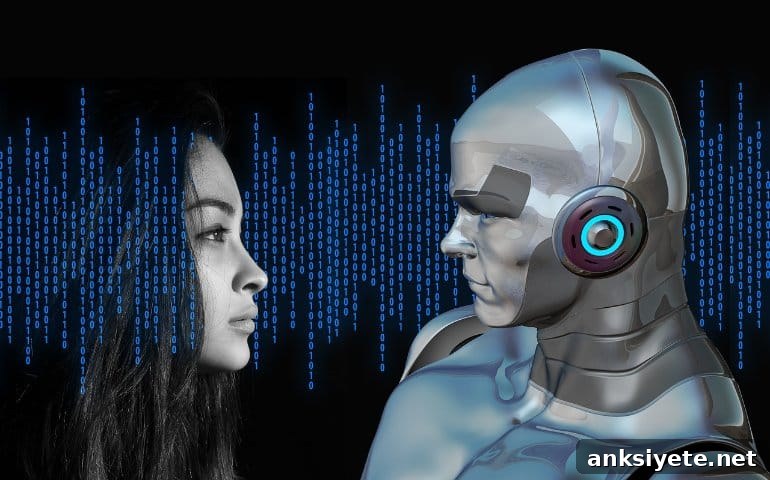
The results suggest that people are not necessarily opposed to the idea of machines making moral decisions: choices made by humans and by clearly non-human robots were rated similarly. Instead, the robot’s human-like appearance appears to be the critical factor shaping moral evaluation.
Understanding how appearance influences moral judgments is important for multiple reasons. As autonomous systems proliferate—especially in high-stakes domains like transportation, healthcare, and public safety—society needs insight into how design choices affect public acceptance and trust.
For instance, manufacturers and designers must consider whether a more human-like exterior will increase comfort and acceptance or, conversely, trigger the uncanny valley and reduce perceived ethical legitimacy. Branding and product design choices could therefore influence how consumers interpret the behavior of intelligent machines.
These perceptions also have policy implications. Public attitudes toward machine decision-making can shape debates about regulation and liability. If self-driving vehicles or other autonomous systems are seen as making morally dubious choices partly because of their appearance, lawmakers and regulators may need to account for those perceptions when drafting safety standards and accountability frameworks.
Further, ethical trade-offs—such as whether a vehicle should be programmed to minimize total casualties at the cost of a single life—may be debated differently depending on whether the decision-maker is human, clearly mechanical, or highly human-like. Awareness of these nuances can help shape more transparent design, clearer consumer information, and informed public discussion about acceptable behavior for autonomous systems.
“What kinds of robots do we want living among us?” Laakasuo asks. “Should machines be designed to look like humans if that appearance changes how people judge their moral actions? Do we prefer machines that follow strict rules or those that weigh outcomes when making life-and-death decisions?” These are practical and ethical questions that connect technology design to social values.
About this robotics research news
Source: University of Helsinki
Contact: Michael Laakasuo – University of Helsinki
Image: The image is in the public domain
Original Research: Open access. “Moral Uncanny Valley: A Robot’s Appearance Moderates How its Decisions are Judged” by Laakasuo et al., published in International Journal of Social Robotics.
Abstract
Moral Uncanny Valley: A Robot’s Appearance Moderates How its Decisions are Judged
Artificial intelligence and robotics are advancing rapidly, and autonomous machines increasingly make decisions that carry moral weight for humans. At the same time, classical research documents the uncanny valley effect: people often react negatively to robots that look eerily human. How, then, does a machine’s appearance shape how people evaluate its moral choices?
This research integrates the uncanny valley into moral psychology. Across two experiments, participants evaluated either deontological (rule-based) or utilitarian (consequence-based) moral decisions attributed to different agents. The study tested whether identical moral choices are judged differently depending on whether the decision-maker appears human, moderately humanoid, or clearly mechanical.
The results provide initial evidence for a moral uncanny valley: moral choices made by robots that closely resemble humans are judged as less morally acceptable than the same choices made by human agents or by non-human-looking robots. The findings have implications for moral psychology, social robotics, and the development of AI safety and governance approaches.