Summary: A University of Sheffield study finds that people who use British Sign Language (BSL) show faster peripheral visual reaction times, with deaf adults demonstrating the greatest advantage.
Source: University of Sheffield
Using British Sign Language is linked to quicker visual reaction times in the peripheral field, according to new research from the University of Sheffield.
Scientists from the University’s Academic Unit of Ophthalmology and Orthoptics report that hearing adults who learn and use a visual-spatial language such as BSL develop improved peripheral visual responses. These enhanced responses can be advantageous in everyday activities like driving, playing sports, or officiating games, where rapid detection of movement at the edges of vision is important.
Dr Charlotte Codina, lead author of the study and a Lecturer in Orthoptics at the University of Sheffield, commented on the results: “We were surprised by the quicker response times seen in BSL interpreters, many of whom only learned sign language later in life. Regular use of this visual language appears to sharpen peripheral visual sensitivity.”
Dr Codina added that becoming a BSL interpreter appears not only professionally engaging but also associated with practical visual benefits: “Interpreters become more alert to changes in their peripheral field. That heightened sensitivity could help when driving, playing sport, or refereeing a football match, for example.”
The research also provides clear evidence that congenitally deaf adults have markedly better peripheral vision and faster reaction times than both hearing BSL users and hearing non-signers. This supports the long-held idea that when one sense is lost, other senses can adapt and become more acute.
“We found that deaf adults have faster reaction times across the entire visual field, reaching as far as 85 degrees near the edge of vision,” Dr Codina said. “Our study demonstrates that deaf people can develop exceptional visual abilities that go well beyond those of hearing adults.”
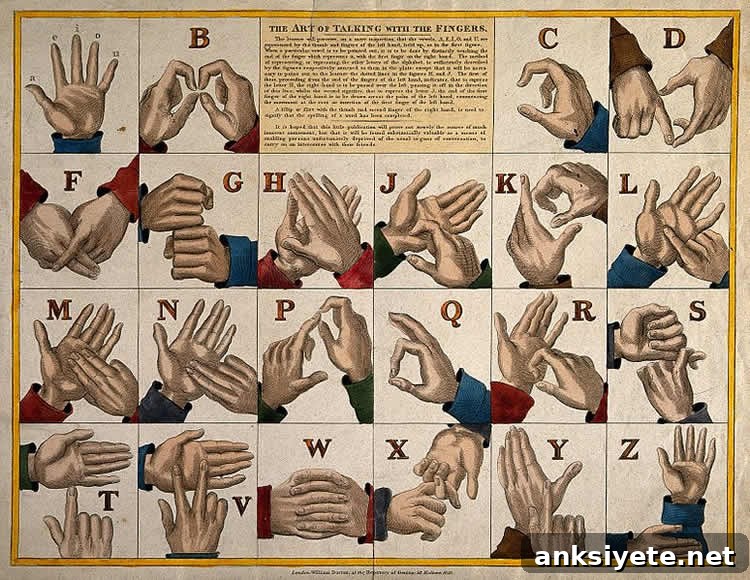
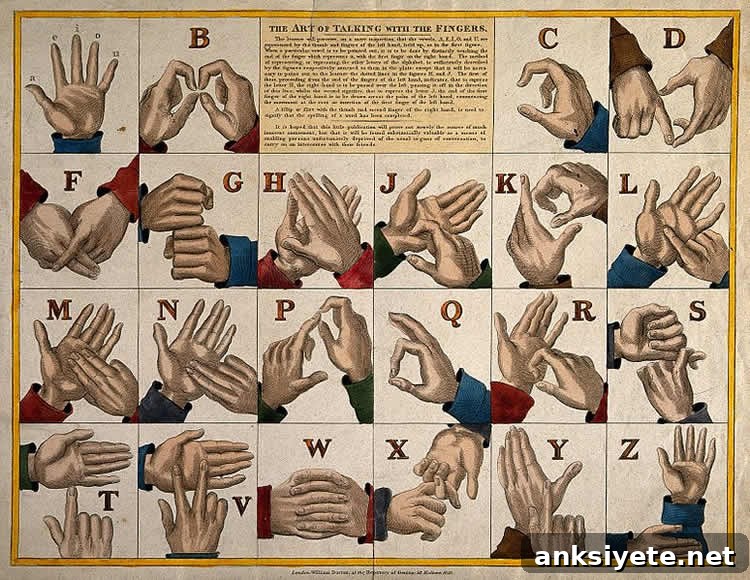
British Sign Language is the most common sign language in the UK, used by an estimated 145,000 people. BSL has its own grammar and syntax and is structurally distinct from spoken English. The visual-spatial nature of BSL places continuous demands on visual attention, particularly across the periphery of the visual field.
Source: Amy Pullan, University of Sheffield
Image source: NeuroscienceNews.com. Image credited to Wellcome Images.
Original research: Full open-access study titled “Peripheral Visual Reaction Time Is Faster in Deaf Adults and British Sign Language Interpreters than in Hearing Adults,” published in Frontiers in Psychology on February 6, 2017 (doi:10.3389/fpsyg.2017.00050).
University of Sheffield. “Sign Language Users Have Better Reaction Times and Peripheral Vision.” NeuroscienceNews. February 6, 2017.
Abstract
Peripheral Visual Reaction Time Is Faster in Deaf Adults and British Sign Language Interpreters than in Hearing Adults
This study examined how auditory deprivation and experience with a visual-spatial language affect far peripheral visual processing. Prior research suggests that when hearing is absent from early life, vision can show selective enhancements, particularly in peripheral sensitivity. To separate the effects of congenital deafness from the effects of using a visuospatial language, the researchers compared three groups of visually normal adults: profoundly congenitally deaf adults (N = 17), hearing fluent BSL users (N = 8), and hearing non-signing adults (N = 18).
Participants completed a peripheral forced-choice task that measured reaction times (RTs) and detection accuracy for brief static visual stimuli presented at eccentricities from 30° to 85° along eight visual-field meridians. Three stimulus luminance levels were used. Results showed that deaf adults had significantly faster reaction times to far peripheral stimuli than both groups of hearing participants. BSL interpreters also responded faster than hearing non-signers, but not as quickly as the deaf group. These RT differences were consistent across meridians and were not restricted to a particular region of the visual field. Accuracy of stimulus detection did not differ between groups.
In summary, early-onset auditory deprivation appears to afford a robust advantage in peripheral visual response speed to briefly presented static stimuli. Fluency in BSL is associated with faster visuo-motor responses in the peripheral field as well, though the effect is smaller than that seen with congenital profound deafness.
Reference: Codina CJ, Pascalis O, Baseler HA, Levine AT, Buckley D. “Peripheral Visual Reaction Time Is Faster in Deaf Adults and British Sign Language Interpreters than in Hearing Adults.” Frontiers in Psychology. Published online February 6, 2017. doi:10.3389/fpsyg.2017.00050