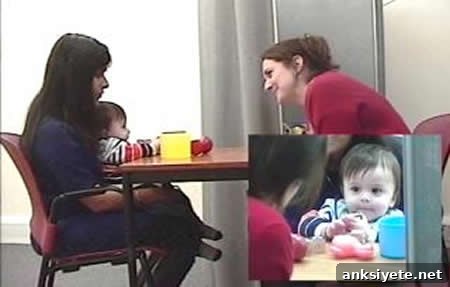
For parents of young children, few milestones are as cherished as a baby’s first spoken word. Yet human communication relies heavily on nonverbal signals, and infants learn to exchange meaning without speech long before they can talk. A new study published in the journal Current Biology offers fresh insight into how infants develop nonverbal communication skills—specifically eye gaze—by studying an unusual group: sighted infants raised by blind parents.
“Infants of blind parents allocated less attention to adults’ eye gaze,” says Atsushi Senju of Birkbeck, University of London. “It suggests that infants are actively learning from communicating with their parents and adjusting how best to interact with them.”
Senju emphasizes that, overall, these infants showed typical social communication development. The observed differences were specific to how the babies attended to adults’ eye gaze rather than reflecting a broader social deficit.
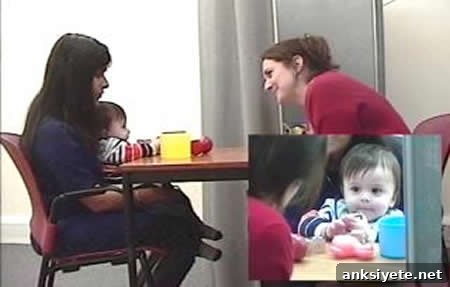
Eye gaze is a fundamental channel for social interaction: infants rapidly detect and respond to where adults are looking, and adults often use eye contact to guide infants’ attention and learning. The research team set out to explore how infants develop sensitivity to eye gaze when their primary caregiver cannot see and therefore cannot use eye contact in the typical way.
The researchers followed 14 sighted infants of blind parents (SIBPs) at two stages: between 6 and 10 months of age and again between 12 and 16 months. Using eye-tracking technology, they measured how infants scanned faces and whether they followed an adult’s gaze. In addition to these laboratory-based measures, the team observed each infant interacting naturally with their blind parent and with an unfamiliar sighted adult. Standardized assessments of cognitive, motor, and language development were administered, along with established measures that screen for early autistic-like behaviors.
When compared with a control group of infants raised by sighted parents, the sighted infants with blind parents spent less time looking at adults’ eyes and were less likely to follow gaze cues. These differences were specific to eye gaze processing: the infants’ overall social communication skills and general development fell within the typical range. In fact, the researchers observed that at around eight months of age some SIBPs showed advanced visual attention and memory abilities relative to expectations.
One possible interpretation offered by the authors is that infants adapt to the communication styles used by their caregivers. Infants of blind parents may learn to rely more on other cues—such as vocalizations, touch, or body movements—because eye contact is less informative in interactions with a blind caregiver. That same adaptive flexibility could explain why these infants sometimes show enhanced visual attention and memory: switching between different communication modes may encourage broader or more efficient attentional strategies early in development.
Senju and colleagues caution that it is not yet clear how long these gaze-related differences persist. As children grow older and spend more time with peers, relatives, teachers, and other sighted adults, their eye gaze processing could converge with that of children raised by sighted parents. The research team is following the children up at age three to examine longer-term outcomes, and they plan to study a related population—hearing infants of deaf parents—to investigate how different patterns of early social experience shape communicative development.
Funding: This work was supported by a UK Medical Research Council Career Development Award, a UK Economic and Social Research Council Research Fellowship, the BASIS funding consortium led by Autistica, and a UK Medical Research Council Programme Grant.
Source: Joseph Caputo – Cell Press
Image credit: The Babylab, Birkbeck, University of London
Original research: Full open access research for “Early social experience affects the development of eye gaze processing” by Atsushi Senju, Angélina Vernetti, Natasa Ganea, Kristelle Hudry, Leslie Tucker, Tony Charman, and Mark H. Johnson in Current Biology. Published online November 19, 2015, doi:10.1016/j.cub.2015.10.019
Abstract
Early social experience affects the development of eye gaze processing
Highlights
• Infants of blind parents allocate less attention to adults’ eyes and to gaze direction.
• Differences in gaze processing among these infants become more pronounced after 12 months of age.
• Overall development of social communication skills in these infants remains within the typical range.
Summary
Eye gaze is a central channel of nonverbal human communication. From birth, infants are sensitive to eye contact, and the ability to process gaze cues supports social learning and interaction between adults and infants. This study directly examined how a selective difference in early gaze experience—being raised primarily by a blind caregiver—affects the development of gaze processing. Fourteen sighted infants of blind parents were assessed longitudinally at 6–10 and 12–16 months. The researchers used eye-tracking to measure face scanning and gaze following, conducted naturalistic observations with both the blind parent and an unfamiliar sighted adult, and administered standardized tests of cognitive, motor, and language development as well as measures of early autistic-like behaviors. Compared with infants of sighted parents, the infants of blind parents showed reduced attention to adult eye movements and gaze direction, with this effect increasing between the earlier and later testing periods. Despite these specific differences in eye gaze processing, the infants demonstrated typical overall social and communicative development. The findings indicate that infants adapt their use of gaze cues according to the visual and communicative experiences provided by their primary caregivers, illustrating experience-dependent plasticity in early social brain development.