
Summary: Using magnetic resonance elastography (MRE), researchers report that people with higher aerobic fitness show a firmer, more elastic hippocampus and better memory performance.
Source: NIH/NIBIB.
Aerobic fitness linked to a firmer, more elastic hippocampus and improved memory
Researchers investigating why aerobically fit people often have better memory used magnetic resonance elastography (MRE) to measure the mechanical properties of the hippocampus. MRE, a noninvasive imaging technique that quantifies tissue stiffness and elasticity, revealed that higher aerobic fitness was associated with a hippocampus that is both firmer and more elastic—properties that correlated with stronger relational memory performance. These findings suggest MRE could serve as an early marker of brain health and a tool to guide interventions for cognitive decline.
“MRE has been widely used to evaluate tissue stiffness in organs such as the liver, where it helps diagnose fibrosis,” said Guoying Liu, Ph.D., Director of the NIBIB Magnetic Resonance Imaging program. “This study demonstrates MRE’s potential to provide quantitative biomarkers of brain health related to physical fitness, which is especially important given the growing prevalence of dementia and Alzheimer’s disease worldwide.”
The study was led by Aron K. Barbey, Associate Professor in the Departments of Psychology and Bioengineering at the University of Illinois at Urbana-Champaign, in collaboration with colleagues at Northeastern University and the University of Delaware. Results were published in the journal NeuroImage in March.
Previous work has shown hippocampal atrophy and reduced volume in older adults with cognitive decline and in some developmental conditions, and those volumetric changes are often linked to memory impairments. However, in healthy young adults the relationship between fitness and memory was not explained by hippocampal volume. To probe microstructural differences beyond gross volume, the researchers applied MRE, which measures viscoelastic tissue properties that reflect cellular and microstructural integrity.
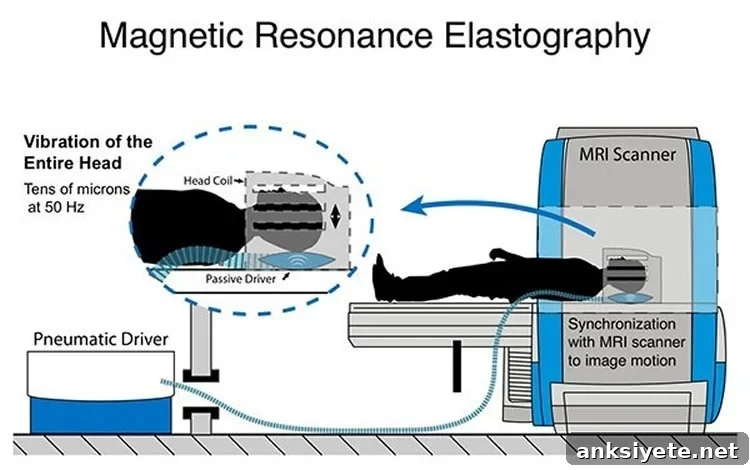
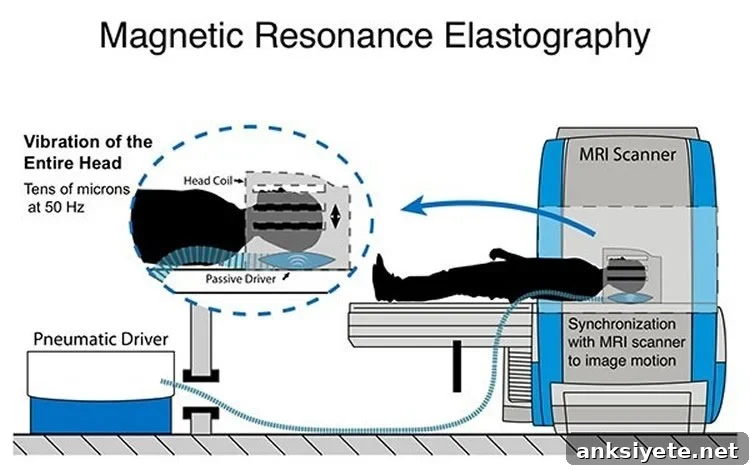
MRE works by generating small, harmless shear waves that travel through brain tissue. Sensors capture how these waves deform and dissipate, producing quantitative maps of viscoelasticity—commonly interpreted as measures of tissue firmness (stiffness) and elasticity (ability to rebound). Conceptually, a healthy hippocampus behaves like a firm cushion that quickly returns to shape after a gentle press, whereas a tissue with poorer microstructural integrity would appear softer and less elastic.
The team examined 51 healthy young adults (25 men and 26 women, ages 18–35). Participants completed a relational memory test and underwent aerobic fitness assessment, including VO2max measurements. MRE scans provided estimates of hippocampal viscoelasticity, which the researchers compared with fitness and memory scores.
Results showed that individuals with higher aerobic fitness had hippocampi with greater viscoelasticity and performed better on relational memory tasks. Importantly, hippocampal volume did not explain memory differences in this sample, indicating that viscoelasticity is a more sensitive marker of microstructural tissue organization and its cognitive consequences in healthy young adults. The authors report that hippocampal viscoelastic properties mediated the relationship between VO2max and memory, suggesting a pathway by which cardiovascular fitness supports hippocampal integrity and memory function.
Barbey commented that MRE proved to be a powerful tool for detecting subtle microstructural differences in the hippocampus that relate to memory in healthy young adults. The researchers plan to extend MRE studies to other brain structures and disorders that affect cognition, such as multiple sclerosis and neurodegenerative diseases, to evaluate whether MRE can aid early diagnosis and monitor treatment effects.
“If these findings become widely known,” Barbey added, “they could motivate people to maintain aerobic fitness as a practical strategy to support cognitive health across the lifespan.”
Funding: Research support came from the National Institute of Biomedical Imaging and Bioengineering (grants EB018320 and EB001981), the Intelligence Advanced Research Projects Activity (IARPA), and the National Science Foundation.
Source: NIH/NIBIB. Image credit: Dr. Aron K. Barbey, University of Illinois at Urbana-Champaign.
Original research: Study titled “Aerobic fitness, hippocampal viscoelasticity, and relational memory performance” published in NeuroImage (online March 30, 2017).
Aerobic fitness, hippocampal viscoelasticity, and relational memory performance
Hippocampal structure, aerobic fitness, and memory performance are often linked in children and older adults. In young adults, however, hippocampal volume does not always explain individual differences in memory. Volume is a coarse measure of tissue composition and can miss microstructural differences that affect cognitive function. Magnetic resonance elastography (MRE) measures viscoelastic tissue properties and offers quantitative markers of tissue integrity. In a sample of healthy young adults (N = 51), hippocampal viscoelasticity correlated with relational memory performance. Further, higher aerobic fitness (VO2max) was associated with greater hippocampal viscoelasticity, which in turn mediated the fitness benefit on memory. Hippocampal volume did not account for these memory differences. These findings suggest that hippocampal viscoelasticity is a sensitive indicator of microstructural organization relevant to cognition in healthy young adults.