Study reveals new facets of the adult brain.
A new study from the Picower Institute for Learning and Memory, published online in Neuron on February 4, sheds fresh light on the plasticity of the adult brain at its most fundamental site of change — the synapse. The results clarify how connections between neurons are formed, remodeled and sometimes re-established, revealing mechanisms that let the adult brain adapt to changing inputs.
Synapses are the junctions where neurons communicate. Incoming signals only lead to learning or memory formation when they induce changes at these synaptic sites. In response to experience, synapses can grow stronger or weaker, appear or disappear. Disruptions in synaptic structure and function are linked to numerous brain disorders, so understanding how synapses are assembled and dismantled is critical for devising new therapeutic approaches for conditions ranging from addiction to psychiatric illness.
“To understand plasticity in the mature brain we must identify which elements of a circuit are capable of change and which are stable, and under what conditions,” says Elly Nedivi, Picower researcher and professor of neuroscience at MIT’s Department of Brain and Cognitive Sciences. “Our findings show that while portions of the circuit are effectively hard-wired, other components retain a remarkable capacity for remodeling.”

Gaining and losing connections
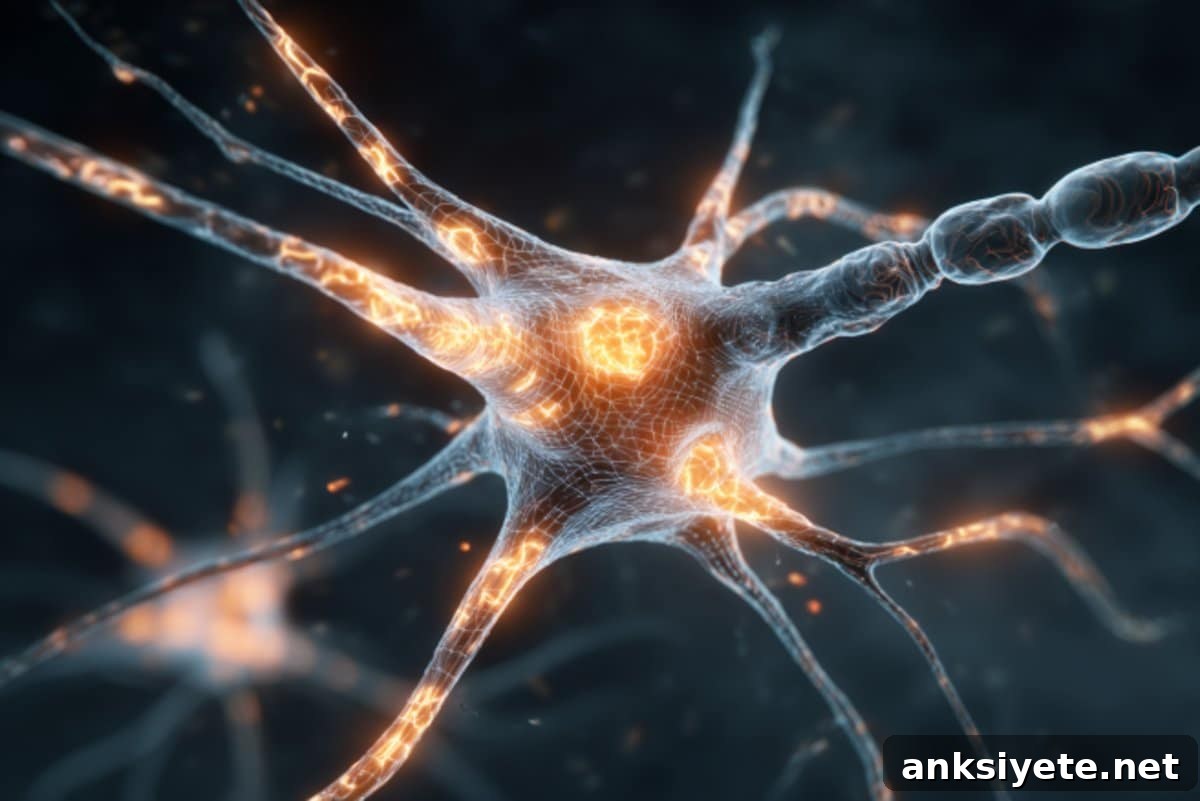
Each neuron extends long, branching dendrites studded with hundreds of spines — small, bulb-like protrusions that host many excitatory synapses. When a spine forms, that neuron can receive a new input; when a spine disappears, that input is lost. The turnover of spines therefore reflects the neuron’s ability to reconfigure its connectivity.
“When spines are lost they rarely reappear at the exact same spot; instead, new spines form at alternative locations,” explains Katherine Villa, a graduate student and co-first author of the study. “It’s as if the cell decides that a particular connection is no longer valuable and then seeks a different partner.”
Seeing spines at work
Using advanced three-color labeling and spectrally resolved two-photon microscopy developed in collaboration with Peter So (MIT professor of mechanical and biological engineering), the research team tracked the daily structural dynamics of every dendritic spine on single neurons in the living mouse visual cortex. Crucially, the methods allowed simultaneous visualization of both excitatory and inhibitory postsynaptic sites in vivo — an achievement that has only recently become feasible.
Direct observation revealed a surprising distribution: while many inhibitory synapses sit on dendritic shafts, about 30 percent are located on dendritic spines alongside excitatory synapses. Even more striking was the behavior of these inhibitory synapses: they often disappear and then reappear repeatedly at the same spine location.
“This pattern suggests a different role for inhibitory contacts,” says Kalen Berry, co-first author. “Rather than switching partners like many excitatory synapses do, inhibitory synapses at these sites appear to act as gatekeepers, transiently turning off excitatory inputs as needed.”
The spines that host both excitatory and inhibitory synapses tend to be larger and far more stable than singly innervated spines. The excitatory connections on these dual-purpose spines remain steady over time, indicating that they are effectively a fixed element of the circuit. Yet the nearby inhibitory input can be rapidly removed and reinstated, offering a mechanism to modulate otherwise stable excitatory connections.
These observations raise key questions: why can excitatory connections on singly innervated spines be restructured while those on dually innervated spines remain stable? How does reversible insertion and removal of inhibitory synapses affect overall circuit function and sensory processing? Answering these questions could provide strategies to enhance adaptive plasticity in the adult brain and to address synapse-related disorders.
Funding: This study was supported by the National Eye Institute.
Source: Picower Institute for Learning and Memory, MIT
Image Credit: Mark Steele
Original Research: Neuron — “Inhibitory Synapses Are Repeatedly Assembled and Removed at Persistent Sites In Vivo” by Katherine L. Villa, Kalen P. Berry, Jaichandar Subramanian, Jae Won Cha, Won Chan Oh, Hyung-Bae Kwon, Yoshiyuki Kubota, Peter T.C. So, and Elly Nedivi. Published online February 4, 2016. doi:10.1016/j.neuron.2016.01.010
Abstract
Inhibitory Synapses Are Repeatedly Assembled and Removed at Persistent Sites In Vivo
Highlights
• In vivo microscopy can track daily structural dynamics of all synapses on a single neuron.
• Excitatory synapses on dually innervated spines are highly stable.
• Inhibitory synapses on spines are repeatedly removed and then recur at the same site.
• Sensory experience changes inhibitory synapse lifetimes and recurrence intervals.
Summary
Long-held views of a hard-wired adult brain have been overturned by in vivo imaging studies that reveal ongoing synaptic remodeling. Using three-color labeling combined with spectrally resolved two-photon microscopy, the authors monitored the daily assembly and removal of excitatory and inhibitory postsynaptic sites on the same neurons in mouse visual cortex. They discovered that inhibitory synapses often disappear and later reappear in the exact same location, a reversible structural dynamic that contrasts with the relative permanence of excitatory contacts on dually innervated spines. Manipulations of sensory input, such as monocular deprivation, shortened inhibitory synapse lifetimes and delayed their recurrence, producing a state with reduced inhibitory presence. These reversible dynamics suggest a distinct role for inhibitory synaptic remodeling: flexible, input-specific modulation of otherwise stable excitatory connections.
“Inhibitory Synapses Are Repeatedly Assembled and Removed at Persistent Sites In Vivo” by Katherine L. Villa, Kalen P. Berry, Jaichandar Subramanian, Jae Won Cha, Won Chan Oh, Hyung-Bae Kwon, Yoshiyuki Kubota, Peter T.C. So, and Elly Nedivi. Neuron. Published online February 4, 2016. doi:10.1016/j.neuron.2016.01.010