
Summary: Researchers have identified a two-pronged strategy that restores myelin on regenerated axons in a mouse model of optic nerve injury. These results may inform future approaches to treat conditions driven by myelin loss, including multiple sclerosis.
Source: Children’s Hospital of Boston
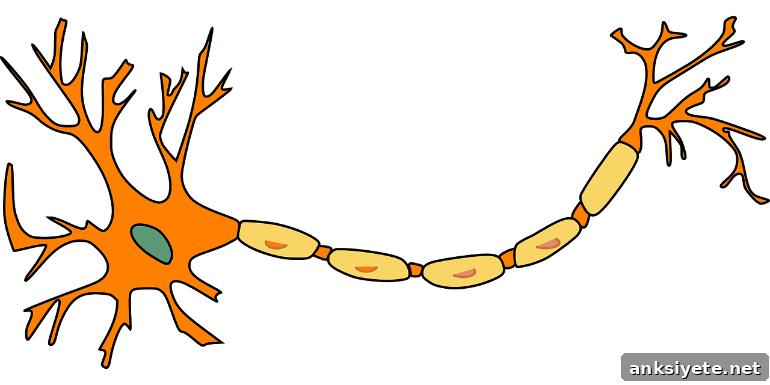
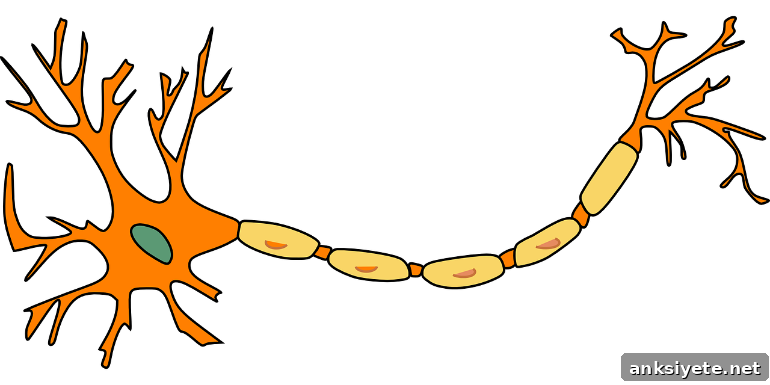
Myelin, the fatty insulating layer that wraps axons, is essential for rapid nerve signaling. Loss of myelin after injury or in disease reduces the ability of neurons to communicate efficiently, which impairs function and recovery.
New work from Zhigang He, Ph.D., and colleagues at the F.M. Kirby Neurobiology Center shows that combining two interventions can robustly restore myelin on regenerated axons in a mouse model of optic nerve injury. The study clarifies why regenerated axons often remain unmyelinated and demonstrates a practical approach to promote remyelination.
“This work represents an important step toward restoring functional circuits in the adult central nervous system,” says Dr. He.
Why regenerated axons often remain unmyelinated
Previous studies from He’s lab identified methods to stimulate axon regrowth after optic nerve damage, but those regenerated axons typically fail to recover function because they are not wrapped in myelin. The new study, published in Neuron, examines the cellular barriers that prevent remyelination.
In the adult central nervous system, oligodendrocyte precursor cells (OPCs) are responsible for producing new oligodendrocytes that form myelin. The team found that after optic nerve injury OPCs proliferate but fail to complete differentiation into mature, myelination-competent oligodendrocytes.
Two mechanisms underlie this blockade. First, injured nerves induce OPC expression of a G protein–coupled receptor, GPR17, which inhibits the initial step of OPC differentiation. Second, chronically activated inflammatory cells—microglia—interfere with later stages of OPC maturation, preventing full myelin formation.
Combination therapy restores myelin on regenerated axons
Screening available compounds, co-first author Jing Wang, Ph.D., identified montelukast—an anti-inflammatory medication commonly used for asthma and allergies—that blocks GPR17 activity. Treatment with montelukast restored some remyelination, but only in roughly 15% of regenerating axons.
Targeting the microglial contribution produced a stronger effect. The drug PLX3397, which depletes microglia, increased remyelination to about 21% when used alone. Critically, combining montelukast with PLX3397 yielded a synergistic effect, leading to remyelination in roughly 60% of regenerated axons.
Microglia normally act as immune sentinels and debris scavengers in the central nervous system, but when they remain chronically activated after injury they block OPCs from maturing. The researchers found that delaying microglia removal until two weeks after the injury allowed OPC development to proceed more normally, suggesting that timing of intervention matters.
“In a mouse model of optic nerve injury, combining montelukast to block GPR17 and later removal of microglia led to remyelination of the majority of regenerated axons,” Dr. He explains.
Implications for multiple sclerosis and progressive myelin loss
Progressive stages of multiple sclerosis are characterized by failure of remyelination and chronic degeneration of neural circuits. Although this study did not use an MS model, the mechanisms identified—OPC differentiation blockade via GPR17 and microglial inhibition of maturation—mirror barriers observed in progressive MS. Therefore, co-targeting these pathways could offer a translational strategy for promoting de novo myelination in disease contexts that share similar cellular dysfunction.
The findings suggest a two-step therapeutic concept: first, relieve OPC-intrinsic blockers of differentiation such as GPR17; second, modulate the inflammatory microenvironment, particularly chronically activated microglia, at an appropriate post-injury time point to permit full maturation of oligodendrocytes and formation of myelin.
About this neurology research news
Source: Children’s Hospital of Boston
Contact: Press Office – Children’s Hospital of Boston
Image: The image is in the public domain
Original Research: Closed access. “Robust Myelination of Regenerated Axons Induced by Combined Manipulations of GPR17 and Microglia” by Jing Wang et al., Neuron. DOI: 10.1016/j.neuron.2020.09.016
Abstract
Robust Myelination of Regenerated Axons Induced by Combined Manipulations of GPR17 and Microglia
Highlights
- •OPCs proliferate after optic nerve injury but exhibit a differentiation blockade
- •Inhibiting GPR17 promotes OPC differentiation toward mature oligodendrocytes
- •Chronically activated microglia prevent full oligodendrocyte maturation
- •Co-manipulation of GPR17 signaling and microglial activity enables robust remyelination of regenerated axons
Summary
Myelination enables rapid axonal conduction and efficient neural communication. After optic nerve injury and during axon regeneration in the adult CNS, OPCs can proliferate but often fail to complete the stepwise program of differentiation required to form functional myelin. This study demonstrates that OPC-intrinsic signaling through GPR17 and sustained microglial activation inhibit distinct stages of this maturation process. By combining pharmacological inhibition of GPR17 with timed reduction of microglial activity, the authors achieved extensive remyelination of regenerated axons, revealing a potentially translatable strategy for promoting de novo myelination after CNS injury and in disorders characterized by remyelination failure.