
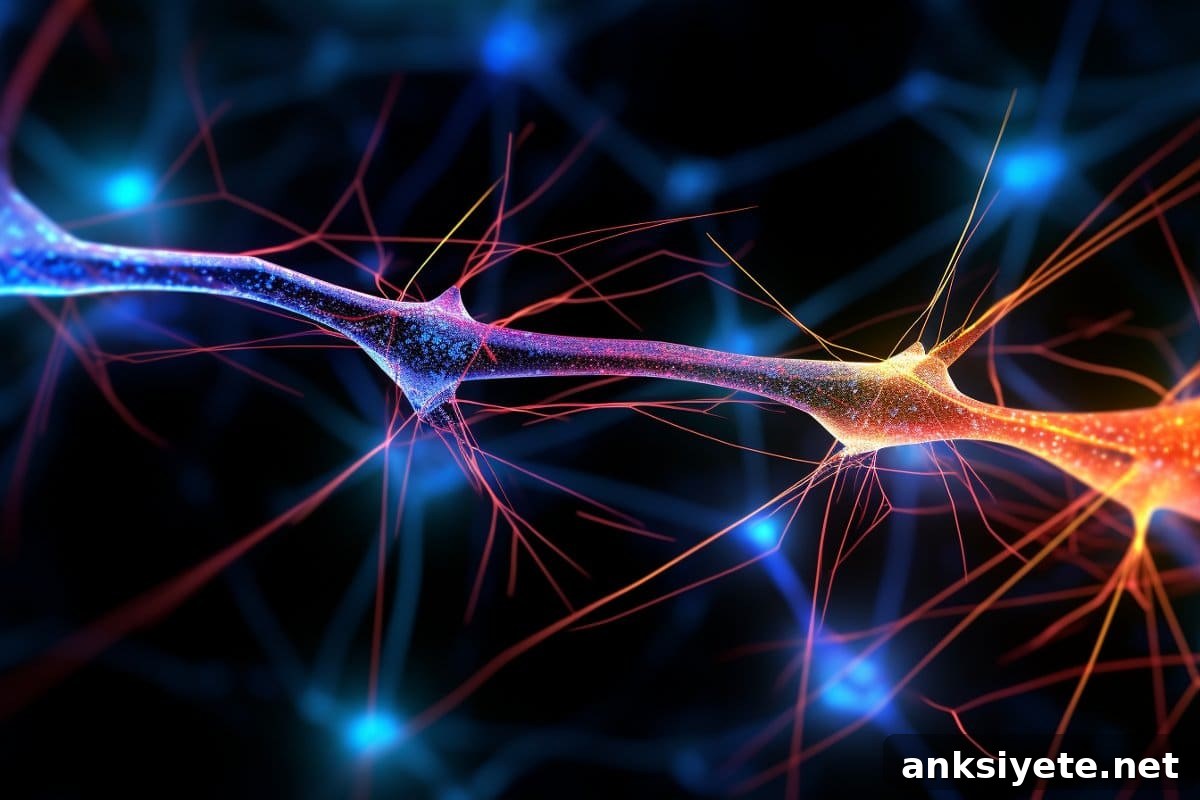
Summary: Researchers have built an experimental computing system modeled on the biological brain that learned to identify handwritten digits with 93.4% accuracy.
This result was achieved using a novel online training algorithm that supplies continuous, real-time feedback during learning, outperforming a standard batch-training approach that reached 91.4% accuracy. The platform integrates memory and processing within a self-organizing network of nanowires laid over electrodes, rather than separating memory and computation as in conventional silicon-based designs.
The brain-inspired architecture promises energy-efficient, real-time processing of complex, evolving data and could open new directions for edge AI and other applications where power and latency are critical.
Key Facts:
- The neuromorphic nanowire network achieved 93.4% accuracy on a handwritten-digit recognition benchmark.
- A custom online learning algorithm delivered continuous feedback and exploited memory embedded in the device’s physical structure.
- The nanowire platform demonstrates potential for low-power, real-time processing of dynamic data streams.
Source: UCLA
An experimental neuromorphic system modeled on the brain identified handwritten digits with an overall accuracy of 93.4%.
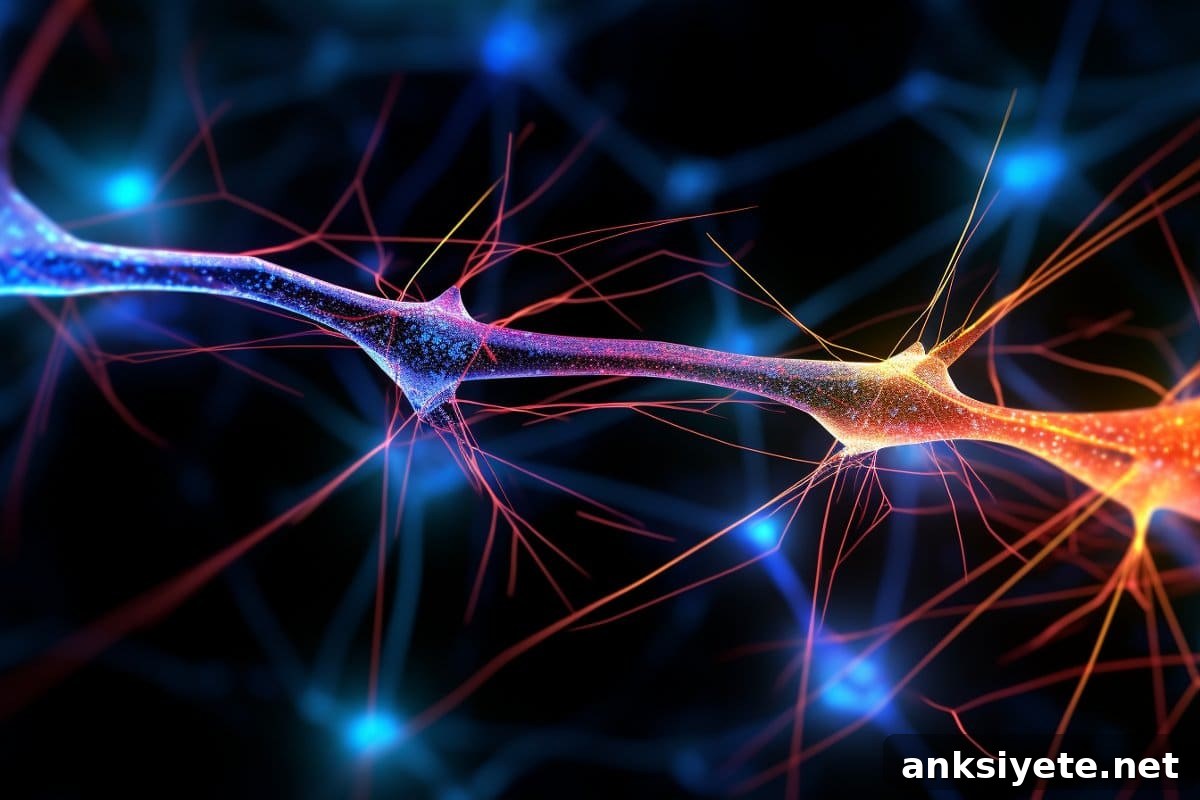
The main advance in this work is an online training algorithm that continuously reports task performance while the nanowire device learns. Compared with conventional machine-learning methods that train after processing batches of data, the online approach improved recognition accuracy from 91.4% to 93.4%. The researchers also demonstrated that memory of prior inputs, stored physically within the network, improves learning—contrasting with typical systems where memory is implemented separately in hardware or software.
BACKGROUND
For more than a decade, researchers at the California NanoSystems Institute at UCLA (CNSI) have developed a neuromorphic platform based on a tangled network of nanoscale wires containing silver. This self-organizing network sits on an array of electrodes and receives inputs and delivers outputs as brief electrical pulses. Because the wires measure only billionths of a meter across, their collective structure can reconfigure under stimulation: junctions where wires cross can form or break, changing conductance much like synapses in a biological brain.
Unlike conventional computers—where memory and processing are distinct, fixed modules—these nanowire networks combine memory and computation in the same physical fabric. That physical memory arises from the network’s atomic-scale arrangements and its evolving conductive pathways, enabling dynamics that can be harnessed for temporal and sequence-based learning.
Collaborators at the University of Sydney helped design a streamlined algorithm for driving inputs and interpreting outputs. That algorithm was tailored to exploit the device’s intrinsic dynamical behavior and its ability to process multiple data streams concurrently.
METHOD
The device was fabricated from a material containing silver and selenium that self-assembled into an entangled nanowire network atop a 16-electrode array. The team trained and tested the network using the MNIST dataset of handwritten digits, a widely used benchmark for machine-learning models.
Individual images were presented to the device pixel-by-pixel as short electrical pulses—each pulse lasting one millisecond—with different voltages representing light and dark pixels. The online learning algorithm provided continuous task feedback while the network evolved its internal conductive patterns, enabling the system to adapt in real time.
IMPACT
Although still in an early stage of development, neuromorphic nanowire networks could require far less energy than comparable silicon-based AI systems to perform similar tasks. Their native ability to encode memory and processing in the same physical substrate makes them well-suited to problems that involve changing, time-dependent data—such as weather modeling, traffic analysis, and other systems where patterns evolve and context matters.
Because this approach emphasizes co-design—developing hardware and algorithms together—nanowire networks could complement existing silicon electronics. Their capacity for continuous adaptation and low-power operation makes them attractive for edge computing, where devices must analyze complex data on-site without offloading to distant servers.
Potential applications include robotics, autonomous navigation for vehicles and drones, distributed sensor networks and Internet of Things devices, health monitoring systems, and multi-sensor coordination in which local, low-latency processing is essential.
AUTHORS
Corresponding authors include James Gimzewski, UCLA distinguished professor of chemistry and CNSI member; Adam Stieg, UCLA research scientist and associate director of CNSI; Zdenka Kuncic, professor of physics at the University of Sydney; and Ruomin Zhu, a University of Sydney doctoral student and the paper’s first author. Other contributors are Sam Lilak (PhD, UCLA 2022), Alon Loeffler, and Joseph Lizier (University of Sydney).
FUNDING
This research was supported by the University of Sydney and the Australian-American Fulbright Commission.
About this computational neuroscience research news
Author: Nicole Wilkins — UCLA
Source: UCLA
Contact: Nicole Wilkins, UCLA
Image: Image credit: Neuroscience News
Original Research (open access): “Online dynamical learning and sequence memory with neuromorphic nanowire networks” by James Gimzewski et al., published in Nature Communications. The study demonstrates online learning from spatiotemporal dynamics using a nanowire network device and reports a 93.4% accuracy on the MNIST digit classification task.
Abstract
Online dynamical learning and sequence memory with neuromorphic nanowire networks
Nanowire Networks (NWNs) are an emerging class of neuromorphic systems that leverage the physical properties of nanostructured materials to generate neural-like dynamics. Their tangled physical layout and resistive switching at nanowire junctions create synapse-like conductance changes in response to electrical input.
Prior work has shown NWNs can support temporal learning tasks. This study extends those findings by demonstrating online learning from spatiotemporal dynamics using image classification and sequence-memory recall tasks on an NWN device. Applied to MNIST digit classification, the online dynamical learning approach achieved 93.4% overall accuracy.
The researchers also observed correlations between per-class classification accuracy and measures of mutual information, and they showed how embedded dynamical memory patterns enable online learning and recall of spatiotemporal sequences. These results provide proof of concept that NWNs can learn from spatiotemporal dynamics and highlight how physical memory in the network can enhance learning performance.