
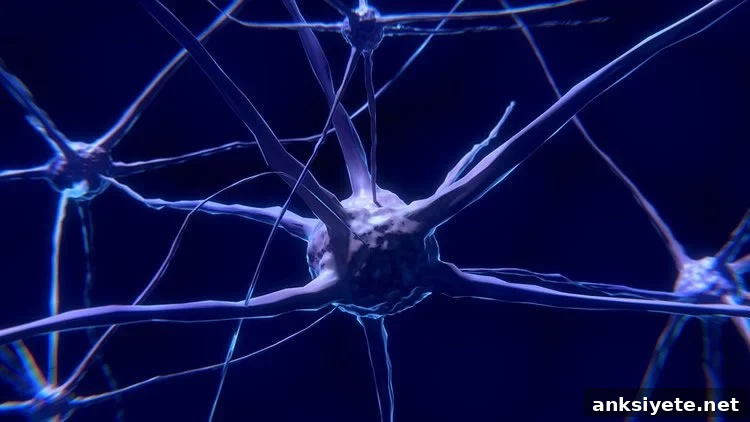
Summary: New research challenges long-standing ideas about how memories are formed and stored in the brain and proposes an alternative learning mechanism that operates over a much longer time scale.
Source: AAAS
New Findings Challenge the Classical View of Memory Formation
Researchers report a novel mechanism of learning in the brain that calls into question the widely accepted Hebbian model of memory formation. These results offer fresh insight into how humans and animals form lasting memories of places and the sequences of events that occur as they move through those places.
Hebbian Plasticity: The Traditional Model
For decades, neuroscientific thinking about learning and memory has relied on the Hebbian principle often summarized as “neurons that fire together, wire together.” According to this view, short, tightly timed bursts of coordinated neural activity — typically on the order of tens of milliseconds — strengthen synaptic connections between neurons. This strengthening, known as long-term potentiation (LTP), has been a central explanation for how repeated, coincident activity produces durable changes in neural circuits and underlies learning and memory.
A Different Time Scale: Behavioral Time Scale Synaptic Plasticity (BTSP)
In contrast to Hebbian models, Katie Bittner and colleagues describe a form of synaptic plasticity that unfolds over seconds rather than milliseconds. Termed behavioral time scale synaptic plasticity (BTSP), this mechanism can generate robust synaptic changes even when presynaptic input and postsynaptic activation are separated by longer intervals. In practice, BTSP permits the potentiation of inputs that occurred seconds before or after a key postsynaptic event such as a complex spike or calcium plateau potential.
This extended time window implies that synaptic strengthening does not require a strict causal or temporally proximal relationship between input and postsynaptic firing. Instead, BTSP can link inputs that are separated in time into a coherent memory trace. That property makes it well suited to encode sequences of behaviorally relevant events — for example, the sequence of locations an animal traverses during exploration — and to produce an overrepresentation of places associated with reward or other significant outcomes.
Implications for Place Cells and Spatial Memory
The hippocampus, and specifically area CA1, contains neurons known as place cells that become active when an animal is in a particular location. The researchers show that BTSP can produce place fields — the spatially tuned firing patterns of these cells — in a single trial by potentiating synaptic inputs that occurred seconds before and after a postsynaptic complex spike. This mechanism enables the rapid formation of predictive place cell responses that reflect an entire behavioral sequence, rather than just moment-to-moment coincidences of activity.
Because BTSP operates over seconds and can associate inputs that are not strictly causal or tightly synchronized, it provides a plausible neural substrate for linking sequences of experiences and emphasizing locations or events of behavioral importance, such as reward sites. The authors suggest that this type of plasticity could help explain how animals quickly learn and remember routes, landmarks, and the temporal order of events.
Expert Perspective
A related Perspective by Julija Krupic reviews the study in greater depth and highlights potential implications of BTSP for our understanding of memory formation and spatial coding. The commentary situates BTSP alongside existing models and discusses how this longer time scale of plasticity may complement or revise current theories of learning.
Source: AAAS
Image source: NeuroscienceNews.com image in the public domain.
Original research: Bittner KC, Milstein AD, Grienberger C, Romani S, Magee JC. “Behavioral time scale synaptic plasticity underlies CA1 place fields.” Published online September 7, 2017 in Science. DOI: 10.1126/science.aan3846
MLA: AAAS. “A New Learning Rule for Memory Formation and Storage Revealed.” NeuroscienceNews. 7 September 2017.
APA: AAAS (2017, September 7). A New Learning Rule for Memory Formation and Storage Revealed. NeuroscienceNews.
Chicago: AAAS. “A New Learning Rule for Memory Formation and Storage Revealed.” NeuroscienceNews. Accessed September 7, 2017.
Abstract (Research Summary)
Learning is largely driven by activity-dependent changes in synaptic strength within neural circuits. The authors discovered that place fields in hippocampal area CA1 arise from a synaptic potentiation that differs markedly from Hebbian plasticity. In vivo, place fields could be induced in a single trial by potentiation of inputs that arrived seconds before and after complex spiking. The potentiated synaptic inputs were not initially coincident with postsynaptic action potentials or depolarization. This rule, named behavioral time scale synaptic plasticity, rapidly modifies inputs that were neither causal nor tightly time-locked to postsynaptic activation. In slice experiments, five pairings of subthreshold presynaptic activity with calcium plateau potentials produced large potentiation with an asymmetric, seconds-long time course. BTSP efficiently stores complete behavioral sequences in synaptic weights, producing predictive activity in place cells.
“Behavioral time scale synaptic plasticity underlies CA1 place fields” — Katie C. Bittner, Aaron D. Milstein, Christine Grienberger, Sandro Romani, and Jeffrey C. Magee. Science. Published online September 7, 2017. DOI: 10.1126/science.aan3846