
Summary: A new study in Scientific Reports suggests that infection with the brain-dwelling parasite Toxoplasma gondii can change — and in some cases amplify — biological pathways linked to neurological disorders such as Alzheimer’s, Parkinson’s disease and epilepsy.
Source: University of Chicago Medical Center
More than two billion people—nearly one in three worldwide, including around 60 million in the United States—carry a lifelong infection with the parasite Toxoplasma gondii.
In a paper published September 13, 2017 in Scientific Reports, a team of 32 researchers from 16 institutions examined how T. gondii infection may influence the human brain and potentially alter the course of several neurologic conditions and certain cancers.
When infection occurs during pregnancy and is transmitted to the fetus, congenital toxoplasmosis can cause severe and lasting damage to the developing brain, eyes and nervous system. Increasingly, however, scientists have questioned whether infections acquired later in life—often considered latent or dormant—are truly benign.
“We wanted to understand how this parasite, which persists in the brain, might contribute to the development or worsening of other brain diseases,” said Rima McLeod, MD, professor of ophthalmology & visual science and pediatrics and medical director of the Toxoplasmosis Center at the University of Chicago. The investigators propose that disease risk may arise from the convergence of parasite traits, parasite gene expression in the infected brain, host susceptibility genes, and additional factors such as pregnancy, stress, co-infections or an altered microbiome.
For years, researchers have documented subtle behavioral changes linked to latent T. gondii infection in animals. Infected rodents lose their innate fear of cat odor, increasing the chance they will be eaten and thereby helping the parasite complete its life cycle in feline hosts. Similar effects have been observed in other species: infected chimpanzees, for example, may lose aversion to scents from predators such as leopards.
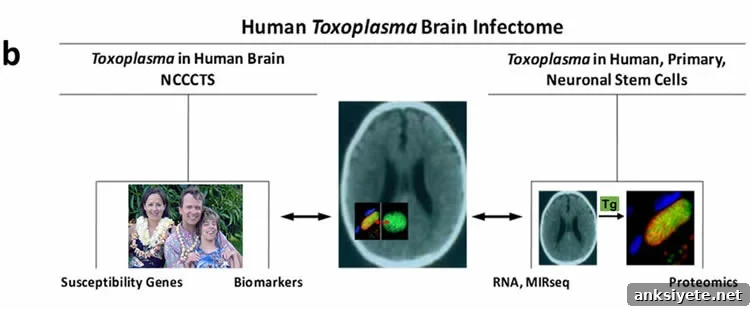
To explore whether comparable effects might occur in humans, the research team analyzed what they call the human “infectome”: the network of parasite-secreted proteins, host microRNA responses, neural chemistry changes, and the host pathways disrupted by infection.
The investigators drew on data from the National Collaborative Chicago-Based Congenital Toxoplasmosis Study (NCCCTS), which has followed 246 congenitally infected individuals and their families since 1981. Combining clinical biomarker data with laboratory studies, the team performed a comprehensive systems analysis to identify parasite-driven changes likely to affect brain function.
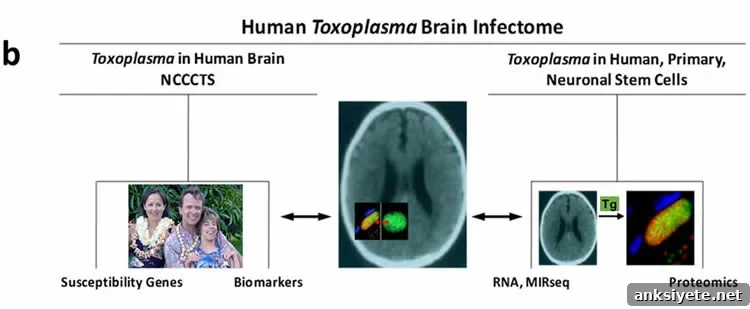
Laboratory work included infections of primary human neuronal stem cells and monocytic cells in culture to assess changes in gene expression and protein levels. Collaborators from institutions including the J. Craig Venter Institute, the Institute for Systems Biology, Northwestern University and others integrated host genetics, proteomics, transcriptomics and circulating microRNA data to build a unified model of how T. gondii impacts the human brain.
Using a reconstruction-and-deconvolution strategy, the researchers identified disrupted molecular pathways linked to neurodegenerative conditions and established connections between toxoplasmosis, several brain disorders and some cancers. Key findings included:
- Small regulatory biomarkers—specific microRNAs and proteins detected in children with severe toxoplasmosis—matched patterns seen in patients with neurodegenerative diseases such as Alzheimer’s and Parkinson’s disease.
- The parasite influenced expression of a set of human olfactory receptor genes in ways that could parallel the predator-avoidance changes observed in infected animals.
- Evidence suggested T. gondii infection could raise seizure risk, possibly by disrupting inhibitory GABAergic signaling in the brain.
- Infection-associated networks implicated more than 1,100 human genes, many of which are also altered in various cancers.
“Our results provide mechanistic insight into how this parasite could contribute to these conditions under certain circumstances,” the authors wrote. They propose that the systems-level roadmap generated by this study could guide development of therapies and vaccines to prevent or repair Toxoplasma-related neuropathology.
Co-author Dennis Steindler, PhD, director of the Neuroscience and Aging Lab at the Jean Mayer USDA Human Nutrition Research Center on Aging at Tufts University, called the study “a paradigm shifter.” He emphasized the need to include infectious disease considerations in research on neurodegeneration, epilepsy and neural cancers and to translate these findings into preventive strategies—including drugs, dietary measures and lifestyle interventions—to delay disease onset and progression.
Funding: Supported by the National Institutes of Health and private family foundations including the Mann Cornwell Family, Engel family, Rooney, Drago, and the Morel Families, and the Taking out Toxo initiative.
Source: John Easton, University of Chicago Medical Center
Abstract (condensed)
One third of humans harbor lifelong infection with the protozoan parasite Toxoplasma gondii; approximately fifteen million cases are congenital. To clarify how this organism affects the human brain, researchers combined genetic susceptibility data from an established cohort with transcriptomic and quantitative proteomic analyses of infected primary neuronal and immune cells. The integrated analyses revealed effects on neurodevelopment, synaptic plasticity and networks linking neural, immune and endocrine function. Circulating protein and microRNA biomarkers in affected children reflected brain injury and infection. Systems biology deconvolution identified pathways and protein interaction clusters involved in lipid metabolism, immune cell migration and olfaction, and associated parasite-brain interactions with epilepsy, movement disorders, Alzheimer’s disease and cancer. This reconstruction-deconvolution approach outlines molecular components and progenitor cell responses that may potentiate human brain parasitism and disease.
This summary reframes published research exploring connections between Toxoplasma gondii infection and human neurological disease. The original peer-reviewed study appears in Scientific Reports (September 13, 2017).