
U‑M Study Uses Patient Skin Cells to Reveal Unexpected Mechanism in Dravet Syndrome
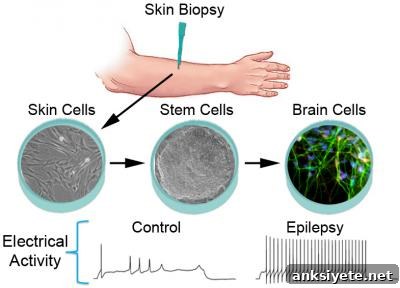
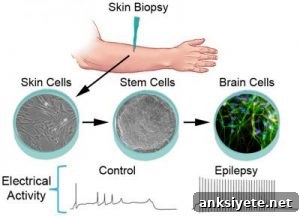
A University of Michigan research team has used a stem cell–based method to recreate epilepsy in a laboratory dish and uncovered a surprising cellular mechanism behind Dravet syndrome, a severe genetic epilepsy. The approach converts patient skin cells into induced pluripotent stem cells and then into neurons, producing human nerve cells that carry each patient’s exact genetic mutation for detailed study.
Epilepsy in a Dish: How the Model Works
By reprogramming skin cells from children with Dravet syndrome into induced pluripotent stem cells and differentiating them into neurons, researchers created a human cellular platform to monitor electrical activity. Using electrophysiological recordings, the team measured sodium currents passing through sodium channel proteins—tiny portals that govern neuronal signaling.
Key Discovery: Elevated Sodium Currents and Hyperexcitability
Neurons derived from Dravet syndrome patients showed abnormally high sodium current activity and spontaneous bursts of electrical signaling, a state described as hyperexcitability that can promote seizures. In contrast, neurons derived from individuals without epilepsy did not display this hyperactive behavior. These findings were published in Annals of Neurology and highlight how patient-derived cells can reveal disease mechanisms that differ from animal models.
Role of SCN1A and Nav1.1
Most patients with Dravet syndrome carry de novo mutations in SCN1A, the gene that encodes the Nav1.1 sodium channel protein. These mutations typically reduce Nav1.1 channel expression by roughly half in patients’ brains. Unexpectedly, the team observed that human neurons appear to overcompensate for this reduced channel number, producing larger sodium currents than anticipated given the partial loss of Nav1.1. The researchers have shown this effect arises downstream of the gene’s loss of function, though the precise compensatory mechanism remains under investigation.
Timing Mirrors Clinical Course
Importantly, the induced neurons did not display hyperexcitability immediately after differentiation. The hyperactive electrical behavior emerged after several weeks in culture, corresponding to the clinical observation that infants with Dravet syndrome often experience their first seizures months after birth. This temporal pattern supports the model’s relevance to human disease development.
Intrinsic Neuronal Changes Independent of Brain Circuits
Co‑author Miriam Meisler emphasizes that reproducing hyperactivity in isolated cell cultures demonstrates an intrinsic change within patient neurons that does not require input from complex brain circuits. This indicates that cell-autonomous alterations contribute substantially to seizure susceptibility in Dravet syndrome.
A Platform for Drug Screening
Because many patients with Dravet syndrome respond poorly to existing anti‑seizure medications and face increased risks such as SUDEP (sudden unexpected death in epilepsy), there is a pressing need for new therapies. The patient‑derived neuronal model provides a platform to test compounds that might reduce sodium currents or otherwise normalize neuronal excitability. The team plans to screen candidate drugs, including repurposed FDA‑approved compounds from existing drug libraries, to find agents that dampen hyperexcitability in patient neurons.
To accelerate testing, researchers are developing higher-throughput readouts such as microelectrode arrays and calcium imaging, which will allow faster assessment of compound effects and broaden application to both genetic and non‑genetic forms of epilepsy.
Collaborative, Patient‑Centered Research
The study illustrates the value of multidisciplinary collaboration—combining induced pluripotent stem cell biology, sodium channel physiology, and epilepsy genetics—and close engagement with patients and families. More than 100 families have contributed to the International Ion Channel Epilepsy Patient Registry based at the University of Michigan and Miami Children’s Hospital, helping to supply patient samples and enabling future clinical testing of candidate therapies.
Team, Funding and Acknowledgments
The research was led by Jack M. Parent, M.D., with major contributions from Yu Liu, Ph.D., Lori Isom, Ph.D., and Miriam Meisler, Ph.D., and included investigators Luis F. Lopez‑Santiago, Ph.D., Yukun Yuan, Ph.D., Julie M. Jones, M.S., Helen Zhang, M.S., Heather A. O’Malley, Ph.D., Gustavo A. Patino, Ph.D., Janelle E. O’Brien, Ph.D., Raffaella Rusconi, Ph.D., Robert C. Thompson, Ph.D., Ajay Gupta, M.D., and Marvin R. Natowicz, M.D., Ph.D. Funding sources included the National Institute of Neurological Disorders and Stroke, the National Heart, Lung, and Blood Institute, the National Institute of General Medical Sciences, the Epilepsy Foundation, the American Epilepsy Society, the University of Michigan Rare Disease Initiative and other institutional and international partners.
The team continues to expand induced pluripotent stem cell lines from patients with Dravet syndrome and other genetic epilepsies and aims to translate these cellular discoveries into therapies that reduce seizure burden and improve quality of life for affected children and families.
Contact: Kara Gavin, University of Michigan Health System
Source: University of Michigan Health System press release. Original research published in Annals of Neurology: “Dravet syndrome patient‑derived neurons suggest a novel epilepsy mechanism” (authors include Yu Liu, Luis F. Lopez‑Santiago, Yukun Yuan, Julie M. Jones, Helen Zhang, Heather A. O’Malley, Gustavo A. Patino, Janelle E. O’Brien, Raffaella Rusconi, Ajay Gupta, Robert C. Thompson, Marvin R. Natowicz, Miriam H. Meisler, Lori L. Isom and Jack M. Parent). DOI referenced in the research publication.