
Understanding the brain’s recovery process could improve treatment for many types of central nervous system injury.
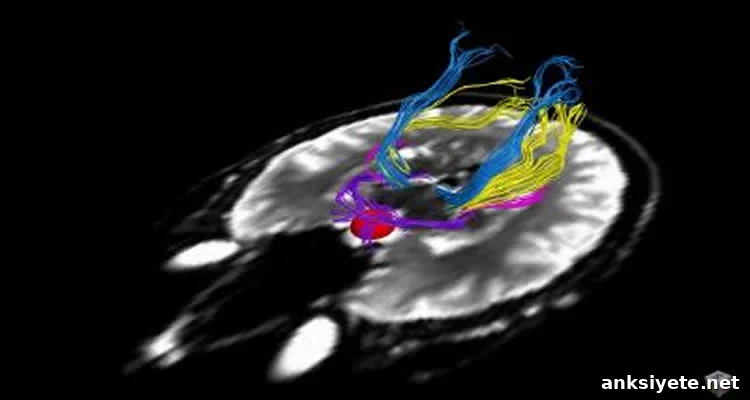
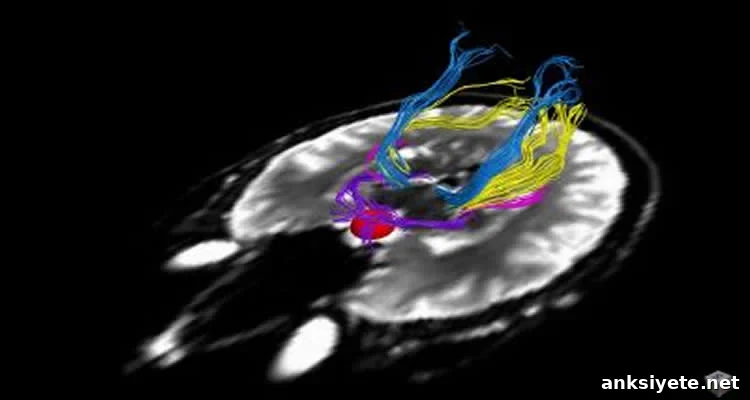
An interdisciplinary team of neuroscientists and neurosurgeons at the University of Rochester has applied an advanced imaging method to chart how the human brain restores visual function within weeks after surgical removal of a pituitary tumor.
Published on the cover of Science Translational Medicine, the study demonstrates that the extent of visual recovery after tumor removal is closely linked to the condition of myelin—the fatty insulation that surrounds axons—in the optic nerves and related visual white matter pathways.
“Before this work, clinicians could not reliably predict how much vision a patient would regain after surgery,” said David Paul, an M.D. candidate in the Department of Neurobiology and Anatomy and the study’s lead author.
Large pituitary tumors often press on the optic chiasm, the crossing point for the optic nerve fibers that carry signals from the eyes to the brain. Compression of these fibers can cause partial or major loss of vision. When the tumor is removed—typically through a minimally invasive endonasal approach—many patients experience rapid improvement in visual ability.
To understand the structural changes behind that improvement, the team used diffusion tensor imaging (DTI), an MRI-based technique that maps how water molecules move through tissue. DTI can reveal microstructural features of white matter, including disruptions in myelin that alter the directional movement of water.
“DTI provides quantitative markers of nerve fiber integrity,” explained Bradford Mahon, assistant professor in Brain and Cognitive Sciences and in Neurosurgery, and the study’s senior author. “Healthy myelin restricts radial water movement across axons. When myelin is damaged, water spreads more freely, and DTI captures that change.”
One DTI metric, radial diffusivity, reflects how readily water moves perpendicular to axons and serves as an indicator of myelin integrity. Higher radial diffusivity values point to reduced insulation around nerve fibers. In this patient group, increased radial diffusivity in the optic pathways predicted poorer visual performance both before and after tumor decompression.
Paul noted that patients with large pituitary tumors offer a uniquely consistent model for studying human brain repair. Unlike stroke, traumatic brain injury, or multiple sclerosis—conditions with highly variable lesion locations and mechanisms—pituitary tumors compress the optic chiasm in a predictable anatomical region. Removing the compressive lesion provides a reproducible opportunity to observe the timeline and biology of recovery.
“Because the surgery is minimally invasive and visual recovery often occurs quickly, these patients allow us to study repair processes in a controlled clinical setting,” said G. Edward Vates, director of the Pituitary Program in the Department of Neurosurgery and a co-author on the report.
The imaging markers defined in the study offer a new way to quantify structural integrity in white matter tracts. Those measures could be adapted to investigate recovery and treatment response across a broad range of neurological conditions where myelin damage or white matter disruption plays a role.
“Recovery after brain injury varies widely between patients,” Mahon said. “By identifying features that predict good recovery in this well-defined visual system, we hope to develop models and tools that can be applied to more complex brain systems—such as predicting language recovery after stroke or improving outcomes in traumatic brain injury.”
Bradford Berk, director of the Rochester Neurorestorative Institute, emphasized the translational potential of the findings: “Understanding how the brain remyelinates and restores function after decompression opens the door to therapies that accelerate repair. These insights could ultimately benefit people with multiple sclerosis, stroke, traumatic brain injury, and other disorders of the nervous system.”
The research team also included Elon Gaffin-Cahn, Eric B. Hintz, Giscard J. Adeclat, and Zoë R. Williams from the University of Rochester School of Medicine, and Tong Zhu from the University of Michigan Medical Center.
This study received support from the National Institute of Neurological Disorders and Stroke and the National Eye Institute.
Contact: Monique Patenaude – University of Rochester
Source: University of Rochester press release
Image Source: Image credited to David A. Paul, University of Rochester School of Medicine and adapted from the press release
Original Research: Abstract for “White Matter Linked to Visual Recovery After Nerve Decompression” by David A. Paul, Elon Gaffin-Cahn, Eric B. Hintz, Giscard J. Adeclat, Tong Zhu, Zoë R. Williams, G. Edward Vates and Bradford Z. Mahon in Science Translational Medicine. Published online December 10, 2014. doi:10.1126/scitranslmed.3010798