
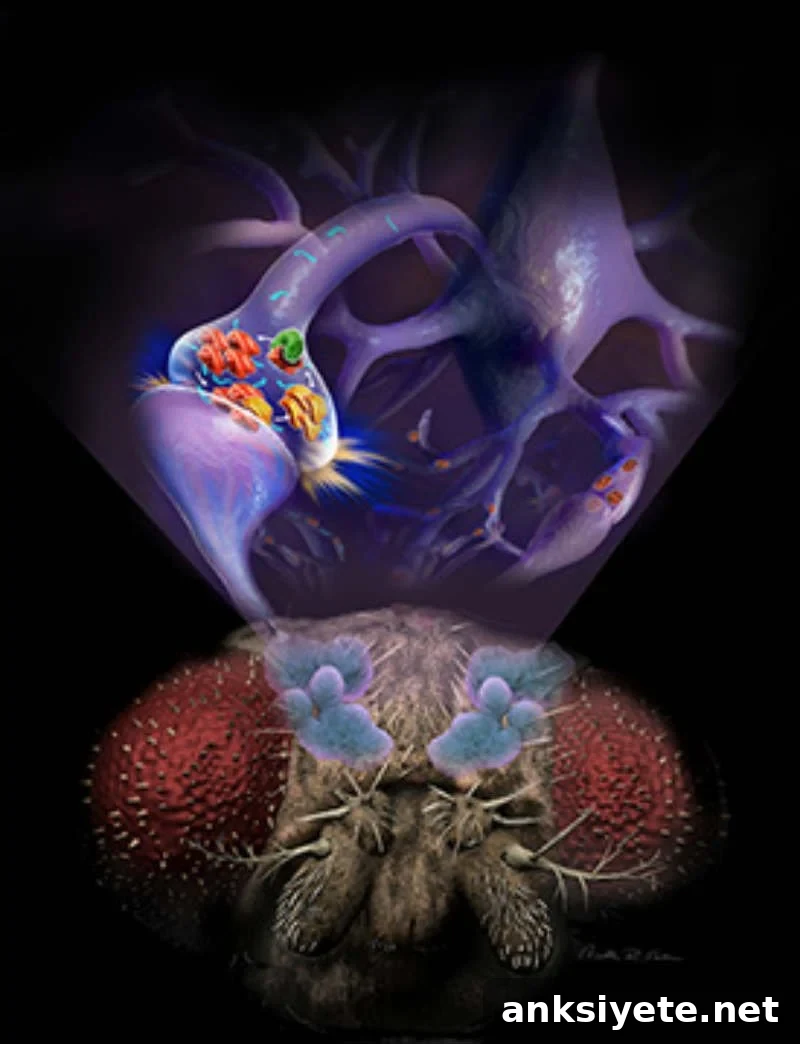
Stowers researchers identify protein that initiates the formation of stable, long-term memories
Prions are often associated with damaging effects because they can trigger proteins to misfold and spread uncontrolled through cells. However, new research from the Stowers Institute for Medical Research demonstrates that certain prion-like proteins can be tightly controlled and produced only at specific times and in specific neurons. Rather than causing disease, these regulated prion-like proteins play a critical role in forming and maintaining long-term memories.
“This protein is not toxic; it’s important for memory to persist,” says Kausik Si, Ph.D., a senior researcher at the Stowers Institute who led the study. The work explains how neurons restrict prion-like conversion so that it occurs only in response to appropriate stimuli in the correct neural circuits. By revealing these biochemical controls, the study clarifies how stable, long-lasting memories can be formed without widespread, uncontrolled prion activity.
Si’s laboratory investigates the molecular changes that encode memories in particular neurons and allow those memories to endure for days, months, or even years despite normal protein turnover. A growing body of evidence from Si’s group and others points to prion-like proteins as essential regulators of long-term memory because of their unique ability to adopt a self-sustaining structural state.
In earlier work, Si and colleagues showed that prion-like conversion is necessary for memory persistence in fruit flies. The key property that makes prion-like proteins suitable for this role is their self-perpetuating structural change: once a protein shifts into the prion-like conformation, it can recruit additional copies to adopt the same stable state without ongoing triggers. In fruit flies, the protein Orb2 is required for long-term memory. Flies that express a mutated Orb2 incapable of forming prion-like assemblies can learn, but their memories fade quickly—becoming unstable after a day and disappearing within a few days.
This raised a central question: if prion formation can encode persistent memory, how do neurons ensure it happens only when appropriate? Not every experience becomes a long-term memory, so prion-like conversion must be regulated rather than purely stochastic. The new study examined how neurons control the availability and activity of the specific Orb2 species that seed prion formation.
Orb2 exists in two forms: Orb2A and Orb2B. Orb2B is abundant across the fruit fly nervous system, while Orb2A is rare, present in only a few neurons at very low concentrations and characterized by rapid degradation. Orb2A has a short half-life of roughly an hour, which limits its ability to act as a seed for conversion under resting conditions.
Si and colleagues found that Orb2A serves as the nucleating seed for the prion-like conversion of the more common Orb2B. When Orb2A binds to Orb2B, it triggers conversion into the prion-like state and initiates a self-sustaining process: once conversion begins, additional Orb2 molecules convert regardless of continued presence of Orb2A. Therefore, controlling the abundance and stability of the Orb2A seed provides a mechanism by which neurons can confine prion-like conversion to specific times and locations.
The team discovered that a protein called TOB binds to Orb2A and dramatically stabilizes it. Association with TOB increases Orb2A’s half-life from about one hour to roughly 24 hours, allowing the seed to persist long enough to promote prion-like conversion when appropriate stimuli arrive. This regulated stabilization explains how the nervous system can spatially and temporally restrict Orb2’s conversion into a memory-storing prion-like state.
These findings open new questions that Si and colleagues plan to pursue: what precisely changes at synapses when Orb2 adopts its prion-like conformation, and in which specific brain regions does this mechanism operate? Fruit flies provide a tractable model to dissect the molecular and circuit-level details, but related proteins to Orb2 and TOB have been detected in mice and humans, suggesting the basic mechanism may be evolutionarily conserved. Si has previously shown that a similar prion-like switch promotes long-term synaptic changes in the sea slug Aplysia, supporting the idea that regulated amyloid-like oligomerization can serve as a general molecular basis for long-term memory.
Research team and funding
Contributors to the study include Liying Li and Repon Mahammad Khan from the Department of Molecular and Integrative Physiology at the University of Kansas Medical Center, along with Erica White-Grindley, Fengzhen Ren, Anita Saraf, and Laurence Florens at the Stowers Institute for Medical Research. The research was funded by the Stowers Institute for Medical Research.
Contact and sources
Kausik Si – Stowers Institute for Medical Research
Source: Stowers Institute press release
Image credit: Nicolle Rager Fuller and Sayo-Art; image adapted from the Stowers Institute press release.
Original research: “Contribution of Orb2A Stability in Regulated Amyloid-Like Oligomerization of Drosophila Orb2” by Erica White-Grindley, Liying Li, Repon Mohammad Khan, Fengzhen Ren, Anita Saraf, Laurence Florens, and Kausik Si, published in PLOS Biology.
Keywords: prion-like proteins, Orb2, Orb2A, TOB, long-term memory, memory persistence, synaptic plasticity, Drosophila, regulated amyloid-like oligomerization.