
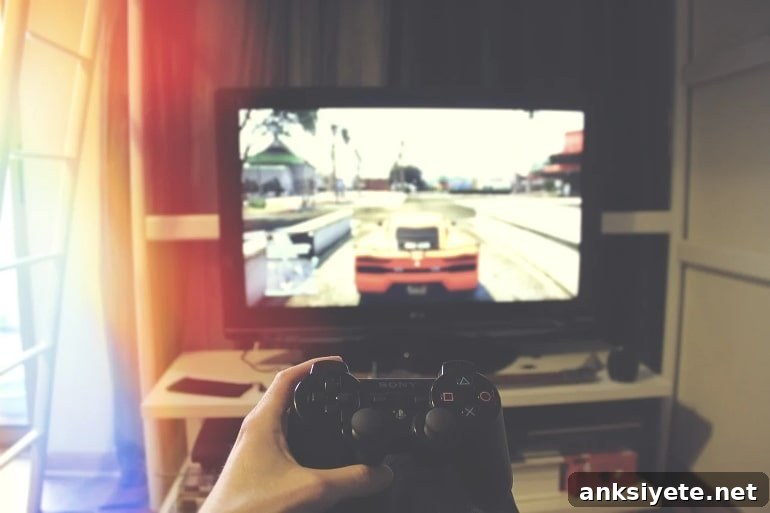
Summary: Researchers report that action-packed video games help players learn new tasks more quickly by improving perceptual and cognitive processing.
Source: University of Wisconsin-Madison
New research shows that playing video games rich in fast-paced action can improve how quickly people learn a variety of new tasks. The study suggests these games sharpen perceptual and cognitive skills—such as visual attention and processing speed—which in turn speeds up learning when those abilities are needed.
“Think of increasing someone’s physical fitness through training,” says C. Shawn Green, a psychology professor at the University of Wisconsin-Madison who studies learning. “Even if a very fit person has never played rugby, their athleticism puts them in better positions to pick up the game more rapidly than someone less fit. The same logic applies to perceptual and cognitive abilities shaped by action games.”
Action titles—often exemplified by first-person shooters—reward players for quickly and accurately tracking moving elements on screen and reacting to rapidly changing situations. According to Green, boosting the perceptual equivalent of athleticism should allow players to learn new tasks that depend on those perceptual and cognitive skills more efficiently.
Understanding this mechanism helps explain why game-based training has shown benefits across diverse real-world settings, from training laparoscopic surgeons and drone pilots to therapeutic uses for amblyopia and attention-related difficulties. Although games are complex and produce a variety of behavioral changes, isolating the specific features that drive learning can guide better design for training applications.
The study also highlights that not all training is the same. Some practice regimes create highly specialized skill improvements that transfer poorly to other tasks, while other kinds of training produce a more flexible learning advantage that accelerates performance across multiple tasks. That distinction matters when the goal is broad transfer or faster learning rather than narrowly improving a single task.
Green illustrates this with a basketball example: “If you have someone practice only free throws, they will improve at free throws but may not show improvement at other shots on the court. That is a failure of transfer. By contrast, training that enhances underlying abilities—like visual tracking or rapid decision-making—can support learning across different contexts.”
In two experiments reported in Communications Biology, researchers assigned participants to 45 hours of gameplay in either action games (for example, Call of Duty-style titles) or slower-paced popular games that rely less on rapid visual attention and reaction (such as life-simulation or strategy games). The first experiment involved 25 participants at the University of Rochester, and the second included 52 participants at the University of Geneva. Researchers from Rochester, Geneva, New York University and the University of California, Irvine collaborated on the work.
Before training, all participants completed tests measuring visual perception and working memory. The perceptual tests required brief glances to judge the direction of motion or the orientation of stripes across a shape. Working memory tests were more demanding: participants listened for pairs of letters and watched for shapes appearing at different locations, reporting when current items matched those from several turns earlier.
Initial assessments found the groups roughly equivalent. After the gaming period, players who had trained with action games showed a notable difference. They not only displayed a small immediate advantage, but importantly they improved more rapidly on the orientation and memory tasks than the group that played other types of games.
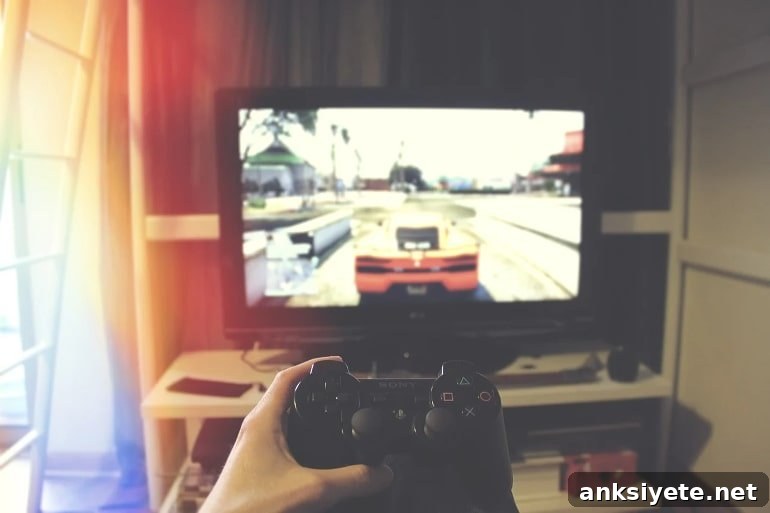
Researchers chose these tests because simple motions and orientation judgments tap into early stages of visual processing and basic working memory operations. Constantly updating and distinguishing new information from old—a demand common across many real-world tasks—is something action games exercise repeatedly, which likely explains the faster learning observed.
Green notes that action games have aspects that may be undesirable, such as violent content, which likely are not necessary to gain the cognitive benefits. Identifying the specific gameplay elements that drive faster learning will allow developers to design training-focused games that maximize benefits while minimizing unnecessary or harmful content.
About this gaming and learning research news
Author: Press Office
Source: University of Wisconsin-Madison
Contact: Press Office – University of Wisconsin-Madison
Image: The image is in the public domain
Original Research: The findings will appear in Communications Biology