Low-dose clonazepam reverses autistic-like behaviors in mice carrying a Dravet syndrome mutation, University of Washington researchers report.
Dravet syndrome is a severe early-onset epilepsy marked by frequent seizures, developmental delays and behavioral features that overlap with autism spectrum disorders. The condition most often arises from a spontaneous mutation in the SCN1A gene in an affected child, and studies in genetically engineered mice are illuminating how this single-gene defect disrupts brain circuits that underlie cognition and social behavior.
Researchers led by Dr. William Catterall at the University of Washington examined mice carrying one defective copy of Scn1a — the mouse equivalent of the human SCN1A mutation found in many people with Dravet syndrome. Their findings, published in Nature, link impaired inhibitory signaling in the forebrain to the autistic-like traits, learning deficits and abnormal behaviors observed in these animals. Importantly, the team showed that a single low dose of the benzodiazepine clonazepam restored normal social behavior and reduced anxiety-like freezing without sedating the animals.
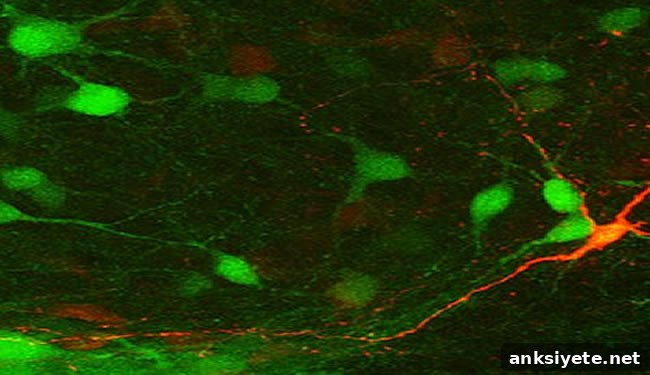
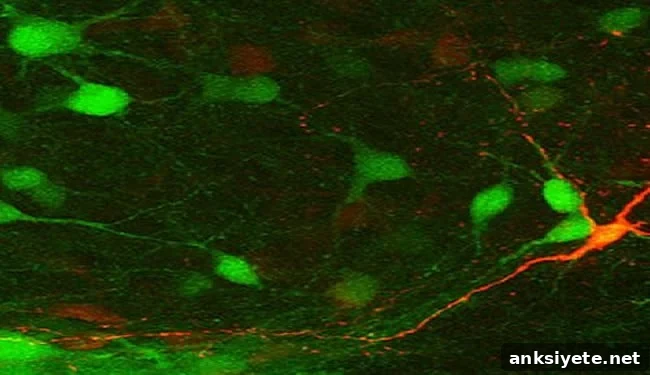
SCN1A encodes a specific type of voltage-gated sodium channel (Nav1.1) that is essential for the electrical activity of many neurons. Loss-of-function mutations reduce the activity of these channels. While two mutated copies are lethal early in development, having a single mutated copy causes the hallmark seizures and neurological impairments of Dravet syndrome. In the Catterall lab’s mouse model, the Nav1.1 deficit predominantly affected inhibitory interneurons — cells that release the neurotransmitter GABA to dampen activity across neural circuits.
Electrophysiological studies showed that although the number of GABAergic interneurons remained normal, a substantial subset of these cells lacked functional Nav1.1 channels and therefore failed to fire reliably. As a result, excitatory neurons were less restrained, shifting the balance of cortical activity toward excessive excitation. This excitatory/inhibitory imbalance provides a plausible mechanistic explanation for seizures, hyperexcitability, anxiety, sleep disruption and the social and cognitive impairments observed in affected individuals.
Behaviorally, Scn1a+/- mice exhibited clear deficits consistent with autistic-like traits. In standard social assays, mutant mice showed little interest in novel conspecifics, avoided investigating unfamiliar mice and often froze rather than approach or interact. They also demonstrated reduced exploration of new odors, impaired spatial learning and memory, increased repetitive grooming and circling, and altered responses in open-field anxiety tests — traveling more, spending less time in the center and exhibiting stereotyped movements.
Given that the primary deficit lay in reduced inhibitory GABAergic signaling, the team tested whether modestly enhancing GABA-mediated neurotransmission could normalize behavior. They administered a single low dose of clonazepam, a benzodiazepine that potentiates GABA-A receptor function, carefully chosen to avoid sedation. The result was striking: treated Scn1a+/- mice showed restored social interest in unfamiliar mice, no longer froze in novel situations, explored new odors, and performed more like their unaffected peers. The same low dose did not alter behavior in normal control mice, and the rescue was reversible as the drug cleared from the animals’ systems over several days.
Additional recordings from brain tissue supported the behavioral findings: bolstering GABAergic transmission compensated for the impaired firing of interneurons and rebalanced network excitability. The study suggests that the cognitive and social impairments in Dravet syndrome reflect an intrinsic failure of inhibition due to Nav1.1 deficiency, rather than being solely a downstream consequence of recurrent seizures.
These results carry potential therapeutic implications. Low-dose benzodiazepine treatment, by selectively strengthening inhibitory signaling, may offer a targeted strategy to alleviate core autistic-like traits and cognitive deficits in Dravet syndrome if clinical trials confirm safety and efficacy in humans. More broadly, many forms of autism spectrum disorder involve an imbalance between excitation and inhibition in cortical circuits, raising the possibility that enhancing GABAergic function could benefit subsets of individuals across the autism spectrum.
Dravet syndrome is one of several genetic neurodevelopmental disorders that include autistic features; others include Rett syndrome, fragile X syndrome and Timothy syndrome. Understanding the specific cellular and molecular causes of excitation/inhibition imbalance in each condition will be essential for designing precise interventions.
Notes about this Dravet syndrome research
Written by Leila Gray
Contact: University of Washington news office
Source: University of Washington press release
Image source: Image adapted from University of Washington press release image
Original research: Research abstract for “Autistic-like behaviour in Scn1a+/− mice and rescue by enhanced GABA-mediated neurotransmission” by Sung Han, Chao Tai, Ruth E. Westenbroek, Frank H. Yu, Christine S. Cheah, Gregory B. Potter, John L. Rubenstein, Todd Scheuer, Horacio O. de la Iglesia and William A. Catterall in Nature (2012), DOI: 10.1038/nature11356